Search This Blog

Showing posts with label website article. Show all posts

Writing a Concept note

by Marian Fuchs-Carsch

Definition: Concept Note

A concept note is a BRIEF summary of a project. A concept note (or a concept paper, as some people call it) is a short version of a project proposal. A concept note for submission to a donor is ideally between 3 to 7 pages long.

Definition: Project

A project is a combination of inputs managed in a certain way to achieve one or more desired outputs, and ultimately one or more desired impact. Here is a nice metaphor to illustrate the definition of a project and its components as described in a concept note:

Cooks are constantly designing and implementing projects. Ingredients (inputs) are cooked (managed) according to a recipe (work plan) to achieve a warm, balanced meal (output), and a happy feeling or fullness and wellbeing (impact).

How to Prepare a Concept Note

A concept note has a specific format. The final version of the concept note has the following headings:

  1. Title
  2. Background
  3. Objectives
  4. Outputs
  5. Activities and duration
  6. Beneficiaries and impacts
  7. Project management (includes monitoring and evaluation)
  8. Budget

However, the concept note should be prepared in the final format order. Instead prepare the concept note in the following order:

  1. Objectives
  2. Inputs
  3. Activities and duration
  4. Outputs
  5. Beneficiaries and impacts
  6. Project management
  7. Draft budget
  8. Background
  9. The problem and why it is urgent (for the background section)
  10. What has already been done (for the background section)
  11. Title

Step 1. Objectives (what do you want to do?)

The objectives are the single most important part of your project design. They tell the reader what it is you want to do. They are one of the first parts of the concept note that your reader will look at. You need to think very carefully about your objectives before you start to write.

An ideal way to start is to get a small group of colleagues together to brainstorm with you. Try to get colleagues from different disciplines to enrich your discussions. Say what it is you have in mind, and then take an hour or more to throw out ideas and write them all on a flipchart. From these ideas you should be able to select those that really express what it is you want to do in your project.

Project objectives should a) correspond to a core problem, b) define the strategy to overcome the problem, and c) contribute to the achievement of higher-level development goals.

Before brainstorming the project objectives, reflect on the underlying problems and areas of work which the project is trying to resolve. The problems should be clear. To explain the objective, the core problem is re-formulated from a negative statement into a positive statement, e.g., if the problem is "low maize yield," the objective will be positively re-formulated as "increased maize yields."

Then the objective will be detailed further. Often a problem may be overcome by using various strategies to find a solution. For example, the objective "Increased maize yields in drought-prone areas" may be achieved by a) adopting drought-tolerant maize varieties, or by b) improving agronomic or farming practices. The choice of strategy has to be made according to the constraints underlying the core problem, which have been assessed in the field. Considering criteria like: resource availability, time needed, likelihood of success to carry out the work. The project objectives should clearly show which strategy the project will pursue.

A donor may not fund the project unless the project contributes to a development goal. Therefore the statement of the objective has to indicate in what way the project will contribute to development (e.g. food security in the area; improved health).

The full hierarchy of objectives, including the contribution to a development goal for the example we used above, may read like this:

  • National Development Goal: Increase nutritional health of the population
  • Program Objective: Increase average maize yields per hectare
  • Project Objective: Drought-tolerant maize varieties adopted

When formulating objectives, keep in mind that objectives should be SMART!!

S Specific
M Measurable
A Achievable
R Realistic
T Timebound

Each objective should specify the QUANTITY of achievements (e.g., numbers of beneficiaries, area covered by project), and the QUALITY (e.g., poor farmers, marginal lands, drought-tolerant varieties). Objectives should also include an indication of TIME when the objective will be achieved (e.g., in January 2008, three years after the start of the project). Remember objectives are more achievable if quality, quantity and time are clarified.

Step 2. Inputs (What do you need to achieve the objectives?)

The inputs you will need to implement your project (i.e. achieve your objectives) may include:

  • people (researchers, broadcasters, and other partners’ staff-time)
  • travel costs (bus tickets, meals allowance)
  • vehicles (rental, petrol, driver’s time)
  • equipment (tools, office)
  • supplies (paper, seed, fertilizer, etc.)
  • services (phone, fax, e-mail, etc.)
  • facilities (radio station, offices, demonstration sites)

Some inputs may come from many different partners, e.g. farmer groups, individual farm families, other NGOs, international organizations, donor groups, government agencies, etc. Remember that all partners will also have travel, supplies, services and other input requirements.

You will only need a list of inputs to prepare your budget. It does not appear in a section of the concept note UNLESS you have substantial inputs from another donor or the community. But you will need to brainstorm all costs and inputs to arrive at a realistic set of activities and budget.

Step 3. Activities and Duration (What will you do? How long will it take?)

Describe (in summary only for a concept note) what you and your partners plan to do to achieve the project objectives. Remember that donors are mostly geared up to supporting projects of three years.

Tips:

  • Be brief and clear
  • Be positive – use the future tense and the active voice
  • Do not use "we" (use "the project")

Important note: in the full proposal each activities section sentence should explain who will do what, when, and how.

Step 4. Outputs (What will have been achieved at the end of the project?)

The outputs of the project should be directly related to the project objectives. Outputs may include:

  • events, such as workshops or harvests
  • intangible things, like decisions
  • tangible things, like new buildings
  • information, perhaps in the form of publications or videos

It is worth spending time with colleagues, partners, and friends brainstorming all the possible outputs, as well as those directly related to the objectives.

Key outputs that are achieved during the life of the project may be useful milestones that you can refer to when writing the full proposal.

Step 5. Beneficiaries and Impacts (Who will benefit from the project and how?)

Brainstorm this section with the design team or other colleagues. Think of all the possible groups who may benefit from project activities and as many different benefits as may occur.

Impact is what the donor is "buying." In making promises about the impact of a project, you need to:

  • describe the benefits you expect, how many of them can be expected, and when and where they will occur.
  • present your reasoning for why you expect the benefits to accrue to a given group – if necessary, state the assumptions you are making.
  • consider whether to suggest that the project will have either an impact assessment component or will be assessed by a separate impact measurement project.

Possible beneficiary groups

  • Poor individuals (age? sex? location?)
  • Farm families (including dependents)
  • Refugees
  • Poor urban consumers
  • Other population groups

Benefits also accrue to radio stations, NGOs, and other organizations, but you should play down these (although not omit them altogether) and play up the benefits to partners such as farmers and their organizations who are the poorest and the target of the donor’s development aims.

Show impact in terms of the Development Goals, such as:

  • poverty alleviation
  • food security
  • preserving the environment
  • improved nutrition and health

Develop your own impact checklist

Will your project result in:

  • more education for the poor?
  • higher family incomes?
  • better health for poor families?
  • gender-specific or age-specific impact?
  • enhanced community participation?
  • new use of indigenous knowledge?
  • more public sector accountability?
  • inputs for improved decision-making?
  • new food source for the urban poor?
  • new jobs created?
  • import substitution?
  • other economic benefits? Which sectors?
  • improved child nutrition?
  • other human benefits?

Important note: Explain how you will measure the above. Impacts that can be quantified are the most impressive, and are more likely to sell your project to the donor.

Step 6. Project Management (How will you achieve the objectives? How will the project be managed and evaluated?)

The best objectives in the world can only achieve the desired outputs and impacts if the project can be effectively managed. Your design needs to include a plan covering the roles and responsibilities of the various people who will manage the project. In a concept note you need only to briefly describe who will lead the project and who will be responsible (and when) for the main project tasks including financial management, monitoring and evaluation.

Step 7. Budget

Unwillingness to prepare project budgets is one of the two most common failings of inexperienced project designers. Even top-quality projects will not get funded if their cost estimates are unrealistic, overly greedy, or full of gaps that will cause future delays and frustrations.

Budget preparation skills are an essential tool for all who seek funds to implement good science projects.

Go back to your list of inputs. Remember to make an allowance (as generous as you have been to yourself) for the budget of possible partners, and to include indirect costs for both you and your partners. If your project will receive funds from other sources (in kind from beneficiaries and partners, contributions from the radio station’s core program, etc.), be sure to highlight these contributions in the concept note and perhaps mention them in the covering letter.

Depending on its size, your project may be approved by a donor in the field or at its headquarters. Field approval is usually much quicker and easier to obtain. As a rough guide, you may consider:

small: <$100k for 3 years – usually approved at the donor’s country field office medium: $100k - $300k for 3 years – may be approved at donor’s headquarters large: >$300k for 3 years – approved at donor’s headquarters

Be sure to include and label all projects costs, even if you are not asking for money for them in your concept note. It is very important for all parties to understand the true and full project costs, and to avoid hidden expenses.

Important note: Remember that nothing is so frustrating as an under-funded project due to a poorly designed budget. For this reason you should develop a budget which is as accurate as possible to include in your concept note.

Step 8. Background Material

In the concept note, organize background material in two sections.

  1. Under "The Problem and Why It is Urgent", discuss the project in terms of Development Goals of poverty alleviation, food security, preservation of the environment, and nutrition and health. In this section provide background statistics if available, citing sources, writing in a general sort of style.
  2. Under "What Has Already Been Done", be sure not to focus only on only one organization’s activities. Donors will want you to acknowledge the contributions others have made and are still making – some may be organizations that they are supporting; some may be your proposed partners. (If this is a follow-on project or second phase, describe the outcomes of the earlier work in detail.)

Step 9. Selecting a Good Title

Titles need to be catchy, informative, and distinctive. Try using a two-part title. The first part should be short, snappy, catchy; the second part can be more serious and informative. Test your title out with a few colleagues.

Examples:

  • Fishers for the Future: radio listening groups for fishermen and fishermongers in Ghana
  • Mothers of Invention: sharing ideas for business women in Malawi
  • Why do the Chickens Die? – Communicating low-cost and simple techniques for improved poultry raising
  • Did We Make a Difference? – Assessment of past and expected impact of FM Radio 91.1’s work (1999-2005)
Special Thanks to: http://www.farmradio.org/english/partners/archives/bdg/bdg5b.asp

Indian Christians unite with Civil Society and demand end of Orissa violence against rural Christian

Source: http://indianchristians.in/news/content/view/1789/42/

Today’s rally in Delhi results in promises from National Commission for Minorities and Union Home Minister, but Christian delegation not satisfied

NEW DELHI – Dec. 27, 2007 – About 1,000 Christians from churches across Delhi rallied today to demand that the Central Government halt escalating anti-Christian violence in Orissa. A memo presented to the Prime Minister resulted in a meeting with the Union Home Minister this evening. Earlier in the day, Christian leaders met with the head of the National Commission for Minorities.

The rally, held in front of the gates of Orissa Bhavan in Delhi from 4–6pm, Dec. 27, 2007, revealed support from across the political and religious spectrum. Protestors were united in their call for an end to the communal violence against Christians in Orissa. The All India Christian Council (aicc) was a key organiser of the rally.

Speakers included: V.P. Singh, former Prime Minister; Binda Karat, CPI(M) spokesperson; Shabnam Hashmi, Director of ANHAD; Swami Agnivesh; and more. India’s largest Christian groups were represented including the Evangelical Fellowship of India (EFI), All India Catholic Union (AICU), Catholic Bishops’ Conference of India (CBCI) and more. Church members from many denominations across Delhi participated in the rally.

A memo was presented to the office of Prime Minister Dr. Manmohan Singh. The PM’s office instructed the Union Home Minister, Shivraj V. Patil, to schedule a meeting with a delegation of Christians immediately. The delegation met Shri Patil at 6pm, Dec. 27, 2007, and was told that roadblocks and communication breakdowns are making it difficult to restore security in the villages of Orissa. Shri Patil said he will likely visit Orissa and promised he is doing everything possible to stop the attacks, culprits will be booked, and compensation will be provided to victims.

“Sadly, the delegation was not satisfied with the promises of the Union Home Minister since most violence continues in rural villages and the government didn’t give specific plans to halt the violence in villages nor a planned amount for compensation of victims,” said Rev. Abraham Sahu, aicc Delhi Chapter President.

Earlier in the day a delegation of Christians met with and received assurances from the head of the National Commission for Minorities, Mohamed Shafi Qureshi, that Christians will be protected in Orissa. He said he plans to visit the state.

“It is clear that the local police and Orissa state government have not been able to protect the Christian minority. While Orissa’s leaders claim they were prepared and are fully committed to stopping communal violence, we have doubts. For example, why does Orissa not have a state minorities commission? The Central Government must act now.” said John Dayal, aicc Secretary-General.

“The VHP and other groups clearly don’t believe in freedom of religion nor freedom of speech. They use accusations of forced and fraudulent conversions as an excuse for violence. Has there been a proven case in the courts of a missionary forcing someone to become a Christian recently? No! We are requesting immediate action to protect peaceful Christians and the arrest of miscreants from radical Hindutva groups,” said Sam Paul, aicc Secretary of Public Affairs.

Also, the Orissa chapter of the aicc met Orissa Chief Minister Neevan Patnaik this evening who gave assurances to the delegation and ensured protection for the Christian minorities. Yet, his inability to stop the violence against Christians is doubtful in light of the Sangh Parivar's organised attacks from the time violence broke out on December 23.

According to media reports, NGO press statements, and calls from aicc leaders on the ground in Orissa, at least 30 churches, Christian schools, and convents have been damaged or destroyed since December 24th, Christmas Eve. Four Christians were reported killed and many roads are blocked by radical Hindutva activists which prevents both police and fact finding teams from reaching victims. Despite a supposed helicopter tour of the affected districts by the Orissa Chief Minister, Naveen Patnaik, and his repeated statements in various media channels that everything is under control, reports of attacks on Christians and churches continue to reach aicc and similar groups.

The violence allegedly began when Christians in a village 150 kms from the district headquarters of Phulbani began to celebrate Christmas Eve. Local Hindu fundamentalists opposed the event and a fight ensued. Also, a Hindutva leader, Swami Saraswati, was attacked by unknown assailants -- allegedly Christians -- near Daringbadi while he was travelling. The next day the Vishwa Hindu Parishad (VHP) called for a strike and its members began attacking Christians across the state.

The All India Christian Council (www.aiccindia.org), birthed in 1998, exists to protect and serve the Christian community, minorities, and the oppressed castes. The aicc is a coalition of thousands of Indian denominations, organizations, and lay leaders.


Mr. Madhu Chandra,
All India Christian Council,
Regional Secretary
aiccdelhi@gmail.com
(0) 9868184939

FORUM-ASIA welcomes the adoption of the Resolution for a Global Moratorium on the death penalty

Wednesday, 19 December 2007

FORUM-ASIA welcomes the adoption of the resolution by the United Nations General Assembly (UNGA) calling for a global moratorium on death penalty. The General Assembly adopted the resolution on 19 December 2007, and is considered an important step towards the abolition of the death penalty worldwide. FORUM-ASIA hopes this landmark resolution will prompt Asian governments still practicing the death penalty to take action and move towards its abolition.

Eleven countries in Asia still impose the death penalty: Bangladesh, China, Indonesia, Japan, Malaysia, North Korea, Pakistan, Singapore, South Korea, Thailand and Vietnam. Human rights groups have been campaigning for the abolition of the death penalty since it is considered as one of the gross violations of human rights – particularly, the right to life. The resolution had the support of 104 UN Member States. Fifty-four Member States voted against the resolution, including two from Asia: Singapore and Japan. Interestingly, Japan just recently executed three murder convicts on 7 December, amid the intense debate over this resolution since its proposal last month. FORUM-ASIA considers this move to be an affront against the international trend towards the abolition of the death penalty.

The UNGA resolution calls on all countries imposing the death penalty to “establish a moratorium on execution with a view to abolishing the death penalty”. The resolution likewise states that “there is no conclusive evidence of the death penalty’s deterrent value and that any miscarriage or failure of justice in the death penalty’s implementation is irreversible and irreparable”.

FORUM-ASIA urges Asian governments that still impose the death penalty to implement this resolution and take necessary provisions to abolish death penalty from their legislation. FORUM-ASIA further urges these countries to ratify and implement immediately the Second Optional Protocol to the International Covenant on Civil and Political Rights (ICCPR-OP2) which aims at the abolition of the death penalty. Only Nepal, Timor-Leste and the Philippines are State Parties to ICCPR-OP2.

FORUM-ASIA views this resolution for the global moratorium as vital in the promotion and protection of human rights in Asia.


For more information, please contact the Human Rights Defenders Programme at hrd@forum-asia.org. Click here http://www.forum-asia.org/index.php?option=com_content&task=view&id=1383&Itemid=32 to view the content from the site.

Farmers' suicide in Karnataka

A fact finding team comprising of Peoples Union for Civil Liberties(PUCL), P.D.F., Agricultural labours association, Samata vedike, Revolutionary Youth Association and Pedestrian Pictures, visited Hosapura village of Nanjangud taluk, Mysore district and Harave village of Chamaraj Nagar Taluk & district , on 26th Dec 2007 to investigate the suicide of two farmers Manjunath and Siddaraju of respective villages , Who had availed loans from ICICI Bank for purchase of tractor.

Click here http://www.pucl.org/Topics/Industries-envirn-resettlement/2007/farmer_suicide.html to read the Report of the Fact finding Team on Farmers’ suicide in Mysore and Chamaraj Nagar districts

Coral mining made tsunami more destructive in Sri Lanka

by: P.K.Balachandran
Source: http://www.earthtimes.org/articles/show/164359.html

Colombo, Dec 26 - The destruction wrought by the tsunami of Dec 25, 2004 on the southwestern coast of Sri Lanka would have been much less if successive governments had heeded Sir Arthur Clarke's persistent call to stop the mining of corals.

The British-born science writer and diving enthusiast, who had been living in Sri Lanka since 1956, was campaigning for coral reef protection and other matters relating to coastal preservation for long. But few in the island listened.

'He did create an awareness at the international level, but the message never percolated to the local level here in Sri Lanka,' said Vinod Moonesinghe, an environmental activist who had worked with the NGO 'Friends of the Earth.'

'The coral reefs from Akurela to Hikkaduwa were being mined for years to make lime which is used in the construction of buildings. The area had, in fact, become very famous for its lime. But the depletion of the corals had resulted in the killer waves lashing the shore with an unprecedented ferocity,' Moonesinghe told IANS on the third anniversary of the deadly tsunami..

In a place called Peraliya, 96 km south of Colombo, 1,500 people were killed in a matter of minutes, when the railway train in which they were traveling was struck by giant waves twice in quick succession. Peraliya town too lost heavily, with 2,500 dead and 450 families rendered homeless.

The battered, dented and rusted train quickly became a major tourist attraction, being the last vestige of the tsunami in the area, and the grimmest reminder of it.

'The corals in the 'coral garden' at Hikkaduwa and Akurela have survived the fury as they are better able to stand the waves than the species on land. And they continue to be a tourist attraction,' Moonesinghe said.

'The authorities must stop not only the mining of corals, as a matter of great urgency, but control the discharge of effluents from the beach hotels, that dot the coast,' he said.

The palm fringed coastline from Colombo to Galle has been a major tourist attraction, especially for Westerners looking for sun and sand. The place bristles with small and large lodges and hotels, several of them right on the shoreline.

Tsunami had induced some awareness of coastal management. The government had introduced a rule that there should be no construction within hundred metres of the shoreline. But the conservation measures are being implemented in a very 'desultory' manner, says Moonesinghe..

Over the years, the sea has eroded the southwestern coast greatly, and beaches are becoming scarce all along the Colombo-Galle road. In many places, the shoreline is barely a few yards away from the main road and rail line. And it is feared that due to global warming, erosion will only increase in the years to come, hitting tourism, which is already declining due to the war and the terrorist bombings.

Andaman tsunami victims cope with tardy rehabilitation

By Sujoy Dhar, IANS
Source: http://www.indianmuslims.info/news/2007/dec/16/andaman_tsunami_victims_cope_tardy_rehabilitation.html

Port Blair : They came back from the jaws of death when the devastating tsunami devoured their habitats three years ago. But for thousands of survivors in makeshift camps in the Andamans, the process of rebuilding a life torn asunder remains incomplete.

In the makeshift tenements of tsunami victims around the Andaman and Nicobar Islands capital Port Blair, resentment is brewing even as apparently shiny and quakeproof houses are getting ready for the victims.

The victims are protesting the tardy progress of relief work, including the construction of the houses, and inadequate support for their livelihood.

On Dec 26, 2004, the Andaman and Nicobar archipelago suffered massive destruction when one of the fiercest tsunamis struck the islands after a severe earthquake, killing at least 3,513 people besides wiping out villages and ruining farmlands.

Impatient over the delays, Apparao, in his 30s, gives vent to his anger before government officials and visiting dignitaries in one of the camps at Bamboo Flat, an island just 10 minute ferry ride from Port Blair.

"We have been living in temporary shelters for the past 19 months. We have not yet got the houses. The hardship we face every day is immense," an agitated Apparao told IANS right in front of the relief commissioner.

"The ration is not enough. We have not got rice for the past three months," he said as more camp inhabitants joined the chorus of protest.

Another victim, Banu, a photographer from Nicobar, is nearly jobless since the tsunami destroyed his habitat forcing him to live in a relief camp in Andaman.

Banu did manage to open a photo studio at Bamboo Flat but there are simply no visitors to his shop.

"I have virtually no employment. I have college-going children and only I know how each day passes," Banu said.

"The houses have not yet been delivered," he said.

"It is sheer laziness of the government which delayed our project. The slow progress makes us impatient. If they had wanted they could have delivered earlier," Banu said.

Andaman and Nicobar Relief Commissioner Dharam Pal admitted the delay but attributed it to the failure of NGOs, which had over-committed themselves.

"The relief phase is now over. We are now in the final phase of rehabilitation. We started constructing in 2006 and are now almost nearing completion in 2007. The first batch is ready for handing over to the victims.

"NGOs had committed 2,500 houses but they can now only deliver 709. They were given the task in south Andaman. They found it difficult to construct," Dharam Pal said.

"The costs are high in the islands, which the NGOs had not foreseen initially. Everything has to be brought from the mainland. A cost of Rs.500,000-600,000 can go up to Rs.1.1 million in Car Nicobar. The average cost of the house is Rs.900,000," Pal said.

"In places like Great Nicobar it is very difficult to construct since you don't even have access all the time. You have to wait for good weather conditions and go in a dingy. The sea condition there is so rough. Moreover, there is no harbour, no beach, nothing," he said.

But several of the victims in Andaman want to build their own house and have demanded the money.

"Give us money instead of building houses in places where we don't want them. If they give us money we can build our houses for much less and spend the rest for starting small business since we have lost everything in the tsunami," said 45-year-old Harichand Roy at the Namunaghar shelter in Port Blair.

But Dharam Pal said such demands are impractical.

"We cannot give them money. Because they would spend the money on liquor as we have found in many families who got monetary compensation. Also, this time we are building houses which are earthquake resistant," he said.

Andaman's noted tribal expert Samir Acharya, who runs the NGO named Society for Andaman and Nicobar Ecology (SANE) and acts as the spokesman of the Nicobarese community, is critical of the government policy as well.

"Any fool can say that the construction is delayed. Ideally they should not have built 70 percent of the houses.

"If you go by records, you will find Nicobar houses were inherently earthquake resistant. They get 100 earthquakes every year but because of low density of population there was never too much human loss," he said.

"The houses we are building have been vetted by IIT Chennai. Also remember that the tribal population in Andaman is only eight percent of the population.

"The houses we are building here is like a model for India," he said.

While the NGO-government spat continues, in the Andamans the sufferers continue to be the tsunami victims whose life, since the natural disaster, has become a jigsaw of broken pieces they are yet to put together.

Exclusive elders' village inaugurated in Tamil Nadu

Tamaraikulam (Tamil Nadu), Dec 17 - India's first elders' eco-friendly village was inaugurated here Monday to house at least 100 senior citizens who were victims of the 2004 tsunami. Much of the funding was by viewers of prominent news channel NDTV.

Renowned media personality and NDTV chief Prannoy Roy inaugurated the village, 175 km south of Chennai, under the auspices of HelpAge India. It was funded to the extent of Rs.15 million by NDTV viewers.

'It is in the fitness of things that we have begun our endeavour here because the highest number of viewers for our first essay in the arena of television - 'World This Week' - was in Tamil Nadu. And it is my privilege to tell you that we are in the process of creating many more such facilities all over India,' Roy told the senior citizens.

Apart from being landscaped beautifully, the dwellings have four immovable beds, a spacious living room, attached toilets with running water and a sit out. A common kitchen, dining and recreational hall are the other facilities.

'I do not agree with the common belief that Indians are miserly when making donations for good causes. Being sure that their money is going to fund a good cause, our viewers contributed handsomely. On this day, it is my duty to assure all donors that their munificence will be put to good and apt use under the watchful eyes of an overseeing committee,' Roy said.

'Beneficiaries who reside in the Elders' Village are identified by village level groups as well as panchayats. Only the neediest have been housed here,' added Mathew Cherian, chief executive, HelpAge India.

Union Minister of State for Finance S.S. Palanimanickam was slated to inaugurate the facility, but could not make it. The organisers explained that he had been held up on the way back from Tirunelveli, where the ruling DMK conference concluded on Sunday.

Similar facilities are to be created in 660 districts all over India, thanks to a legislation to help senior citizens, a press release issued by Helpage said.

Though the clusters of dwellings have been inaugurated, it will be sometime before they become completely functional. While electricity and water connections are yet to be given final touches, the rest of the groundwork - especially landfills - are yet to be completed.

UNICEF releases Tsunami 2007 report


New York/Geneva, 18 December 2007 - Three years after the Indian Ocean Tsunami claimed the lives of more than 200,000 people and devastated towns and communities, UNICEF has released its 2007 Tsunami report (http://www.unicef.org/emerg/disasterinasia/) highlighting progress made for children since the 2004 catastrophe.

Including a detailed financial analysis of funds collected and expenditures to date, the report shows significant gains in education, particularly in the area of school construction in the eight affected countries. Since 2004, more than 150 million US dollars have been spent on education – more than a third of which were put into use in the past year. UNICEF has completed construction on more than 100 schools, and the building process is underway for another 254.

The report also highlights progress in UNICEF’s other programme areas, including health and nutrition, water and sanitation, HIV/AIDS and child protection in India, Indonesia, Malaysia, Maldives, Myanmar, Sri Lanka and Thailand. Some of the achievements in these areas include:

• Construction on 59 health facilities has been completed, while construction is underway on an additional 115;
• More than 20,000 water points have been restored, serving over 730,000 people, and over 42,000 latrines constructed;
• Insecticide-treated mosquito nets have been distributed, benefiting nearly 3.5 million people;
• Over 1.2 million children have benefited from UNICEF’s psycho-social activities;
• HIV/AIDS awareness and education campaigns have reached over 330,000 people.

In addition to UNICEF’s achievements to date, the 2007 Tsunami Monitoring Report also highlights the challenges that often hinder recovery programmes. For example, work in Sri Lanka and Somalia has in some cases been halted due to a resurgence of violence in the past year. Also, construction in Indonesia has been hampered by the lack of new roads and unresolved land titles, monitoring and evaluation in the Maldives by the dispersed geography, and access in Myanmar by geography and security.

Realizing that lasting recovery will take years, UNICEF tries not only to move quickly, but also to be accountable and ensure its work has lasting impact. The aim is not to find quick solutions that cannot be sustained, but to build back better, involving communities and local governments in the recovery and rebuilding process. With these long-term goals in mind, UNICEF’s tsunami programmes and corresponding funding are planned through the end of 2009.

About UNICEF

UNICEF is on the ground in over 150 countries and territories to help children survive and thrive, from early childhood through adolescence. The world’s largest provider of vaccines for developing countries, UNICEF supports child health and nutrition, good water and sanitation, quality basic education for all boys and girls, and the protection of children from violence, exploitation, and AIDS. UNICEF is funded entirely by the voluntary contributions of individuals, businesses, foundations and governments.

For further information, please contact:

Patrick McCormick, UNICEF New York, + 1 212 326 7426, pmccormick@unicef.org
Veronique Taveau, UNICEF Geneva. +41 22 909 5716, vtaveau@unicef.org
Miranda Eeles, UNICEF Geneva. +41 22 909 5715, meeles@unicef.org

Tsunami survivors photograph their lives three years on

Date: 03 Dec 2007

Three years on from the tsunami, which devastated vast swathes of Asia, people whose lives were torn apart have taken part in a photography project to show how they are putting their lives back together.

The British Red Cross project involved photographer Ruth Robinson working with around 90 tsunami survivors in Indonesia, the Maldives and Sri Lanka, taking photographs and explaining them in their own words.

Ms Robinson said: “Taking part in this project and speaking to people about their photographs was incredibly moving.

“One picture that really stands out was by a man in Indonesia called Bakhtiar. At first it looks like an amusing picture of a toddler in a nappy with sunglasses on, but when the individual explained his picture to me a heart-wrenching story was behind it.”

She explained: “He took the picture for remembrance of his family members who died in the tsunami, in particular his nephew who Bakhtiar was trying to hold onto but the tsunami swept him away.”

The project aims to be empowering for those involved and offers a unique insight into their thoughts and feelings.

One of the participants, 34-year-old, Soufan from Addalachchenai, Sri Lanka, explained: “I have taken these pictures to touch your minds and hearts and I hope the people who come to see these pictures at the exhibition will be inspired by our communities and our lives.”

Matthias Schmale, director of international at the British Red Cross said: “It is important that we feed back to the public how their donations have made a difference to people’s lives – and what better way than to enable those who were caught up in this tsunami to tell their own stories of their recovery?”

The exhibition is open to the public from Thursday 6 December to Sunday 6 January at the.gallery@oxo on the South Bank in London.

Open daily (except closed 24-25 Dec and 1 Jan), Open from 11am to 6pm (except 26 and 31 Dec, 11am to 4pm).

The British Red Cross would like to thank all those organisations and individuals who have offered generous support, without whom this event would not have been possible. They include Coin Street Community Builders, Ruth Robinson, Swansea Institute Art & Design Faculty, Eric Armstrong of Murain Frames, Passion Organic and Nick Wilcock of Jessops, Swansea.

The exhibition is on display at the.gallery@oxo, Oxo Tower Wharf, Bargehouse Street, South Bank, London. SE1 9PH.

Opening times:

11- 6pm - Thursday 6 December - Sunday 23 December
Closed: 24 & 25 December
11-4pm - Wednesday 26 December
11-6pm - Thursday 27 - Sunday 30th December
11-4pm - Monday 31 December

Closed: Tuesday 1 Jan

11-6pm: Wednesday 2 Jan - Sunday 6 Jan

or further information visit: http://www.redcross.org.uk/ or http://www.coinstreet.org/

Srilanka - Only their parents' home

Report Source: http://www.himalmag.com/2007/april/report_2.htm

Sri Lanka's new refugee policy only deals with Sri Lanka's internally displaced, and not the refugees in Tamil Nadu. But what if the latter don't want to return home?

BY Dilrukshi Handunnetti

The Colombo government's new initiative to resettle displaced Sri Lankans has not only angered many of the people it is targeted to serve, but also fails to address the concerns of over 100,000 refugees who live in Tamil Nadu. On 16 March, international watchdog Human Rights Watch claimed that authorities were using "threats and intimidation" to force Sri Lankans who had fled because of recent fighting to return to their homes, although this has been widely disputed. According to UNHCR, there are more than 130,000 displaced people from within the northeastern district of Batticaloa alone – 40,000 of whom had fled during the second week of March. Nevertheless, by mid-March 800 people are reported to have been sent back to Batticaloa, as part of the government's plan to 'return' 2800 people back home.

Even as the internally displaced are being relocated, the new scheme, the brainchild of Abdul Risath Bathiyutheen, the Minister of Resettlement and Disaster Relief Services, does nothing to address the situations of Sri Lankans who have fled to Tamil Nadu. This silence is a clear departure from the tone set by a 2002 government initiative, which sought to repatriate individuals living in the more than 130 camps in the Indian state. Some say that such an initiative is doubly important in the current context, with more than 18,000 Sri Lankans having fled to Tamil Nadu since the outbreak of the war in July last year. The refugee camps are now bursting beyond capacity.

If there is reluctance on the part of the Sri Lankan government to offer repatriation options to its refugees in Tamil Nadu, recent times have also seen a greater ambivalence within the refugee community as to how desirable it would be to cross back over the Palk Strait. Among the refugees now living in temporary camps within Sri Lanka, too, few seem to like the idea of repatriation. The position of the displaced on both sides of the strait is encapsulated in the views of 65-year-old Yogeshwari Kanakapillai, who lives in a transient camp in eastern Batticaloa: "We made this camp our home nearly two decades ago. Our children braved the seas to seek refuge in Tamil Nadu. If they return, they will be consumed by the violence here."

At least a quarter of those displaced from the northeastern provinces of Sri Lanka have relatives or friends living in South Indian refugee camps. "We know the difficulties they have," said one internally displaced woman, referring to her sons who fled the island years ago. "They cannot find employment. They live in poverty. Education for the young is a problem. But they have one guarantee which we do not have – that they will not fall victim to shell attacks and turn to ashes from aerial bombing."

The sentiment among many in the older generation of displaced within Sri Lanka is that, despite the harassment and the lack of options they must face, their children and relatives are better off in the relative safety of the South Indian camps. This is in direct contrast to the refugees own sentiments as expressed as recently as 2002, when a majority of those living in Tamil Nadu volunteered to repatriate under a government scheme. Then, 6000 had returned to Sri Lanka. "That was in the afterglow of the Ceasefire Agreement," says R Sampanthan, the parliamentary group leader of the Tamil National Alliance (TNA). "There was so much hope then. The conditions are very different now."

Married and settled here

For most internally displaced, the resettlement plan introduced in March is a case of too little too late. "In fact, nearly a quarter-century late," points out Sampanthan's fellow TNA parliamentarian Suresh Premachandran, "And it still excludes the displaced living in Tamil Nadu. One has to accept that they are a forgotten community. Resettlement to the government means resettling the internally displaced. It does not address the needs of Tamils who fled this island fearing for their lives since 1983 – and who continue to flee."

But would an approach such as that which the Colombo government is currently using in the northeast really help the refugees in Tamil Nadu? M Rasamma, a mother who is living in a transit camp in Anuradhapura, in the northwest of the island, says no. "Tell us why our children have to come back here?" she demands. "What do they have here except renewed war and temporary shelter?"

Colombo has no answers to such questions. For a state that has neither long- or short-term plans to address the refugee question, Sri Lanka will have fresh problems if the displaced refuse to repatriate under a future scheme. While Minister Bathiyutheen says he wants to introduce a repatriation scheme at a "future date", problems will undoubtedly arise if an eventual plan is put into action with Indian assistance at a time when refugees are still reluctant to leave. In the past, any effort to repatriate refugees in Tamil Nadu has been viewed either with suspicion or as an infringement of their right to choice. Perhaps the larger issue is that, having been left in limbo for up to two decades, these refugees have now come to consider Tamil Nadu their permanent home.

"Our children do not know Sri Lanka," says Sugunan Kishor, a Jaffna Tamil living in a camp just outside Madras. "They identify themselves with Tami Nadu. Some are married and settled there. To them, Sri Lanka is only their parents' home and nothing more. We were hopeful of returning after 2002. But with the increased violence, we have no desire now to return." Kishor once fished for a living, and he recalls with sadness how his once-fervent wish to "return home" has died: "I have my parents living in the northern district of Mullativu. I will never be reunited with them."

For Vellamma Kadirsamy, a 56-year-old woman who has lived in the same camp as Kishor for several years, the lack of government efforts to repatriate, coupled with the now-intensified war, signifies a complete separation in the minds of many refugees. "Any hope of returning home to Sri Lanka is now over. We have nothing to go there for," she says. "Our children are here. Some members of our families living there warn us against our return."

Suresh Premachandran agrees. "Most refugee children in Tamil Nadu now have access to education. Though certainly our conditions of living need to be improved, some kind of continuity of life happens there. Why should they upset everything and return to this simmering volcano?" he asks. LTTE spokesman Daya Master says he understands these feelings. Following the 2002 truce, the LTTE requested the United Nations High Commissioner for Refugees for help in repatriating the refugees living in Tamil Nadu back in Sri Lanka. "But now the conditions are different," Master notes. "This is war zone, where they would be victimised yet again. It is not a question of sentiment anymore, but about human safety."

Resettlement Minister Bathiyutheen stresses that though the refugees living in Tamil Nadu are not addressed under his new scheme, they are a "high priority". The minister's new plan, which seeks to establish a National Resettlement Authority, concentrates only on the internally displaced. "We are about to commence drafting a national policy for resettlement which will address many facets of the question of displacement. There are the war displaced and those displaced due to natural disasters. The refugees in South India are a different category, and need to be addressed separately." Badiudeen has given himself a target of two years to resettle half the island's displaced. As for the National Resettlement Authority, it is yet to start on the formulation of a resettlement policy, a policy which will categorically not address the needs of the refugees in South India.

Hour of need

While Colombo has been unsure about what to do with the Tamil Nadu refugees, India has done little better. The refugees have long been a major political issue for Madras politicians, with which to criticise both Colombo and New Delhi. The former is pilloried for its approach to the ethnic conflict and its lack of recognition of Tamil rights; the latter, for its lack of a coherent policy, even as great numbers of Sri Lankan refugees continue to arrive on South Indian shores.

Official Indian estimates claim that besides those Sri Lankans living in the designated refugee camps, 25,000 or more live outside. Besides these, there are also around 2000 undocumented Sri Lankan migrants detained in 'special' camps, who are liable for prosecution under Indian migration and anti-terrorism laws. In March, the Tamil Nadu police finally took steps to issue identity cards to Sri Lankan refugees who have been living in camps for more than 12 years.

New Delhi's approach to the matter is straightforward, says Nagma M Mallick, an Indian diplomat in Colombo. India has given Sri Lankan refugees shelter on humanitarian grounds. "What better policy is there than that?" Mallick asks. "They are not citizens of India, but refugees. In their hour of need, India has given them a home – that's all."

Clearly, however, that is not all, at least as far as the Colombo government and the refugees themselves are currently concerned. As Vellamma Kadirsamy notes: "Sri Lanka is only a memory for most refugees. Whether they feel connected or not, it is a home they have no wish to return to, not even for nostalgic reasons." When and if the time comes, it may take some effort to convince them otherwise.

Indian Ocean Tsunami warning system by 2007

Source: www.dnaindia.com

Monday, May 15, 2006, dnaindia.com, NEW YORK - The government is setting up its own Early Warning System for Tsunami and Storm Surges in Indian Ocean at the total cost of Rs 125 crore, Science and Technology minister Kapil Sibal informed the Rajya Sabha.

The system would have components like installation of tsunami warning sensors close to the ocean bottom at appropriate locales in Indian Ocean with real time connectivity.

He said it would include tide gauge and data buoys networking to validate arrival of tsunami waves at the coast, strengthening of the existing seismological network to indicate, near real time occurrence of tsunamigenic earthquakes, Modelling of the inundation scenarios for the entire coast and mapping of potential risk areas, collection of information, analysis and generating status advisories.

A centre would be set up at Indian National Centre for Ocean Information Services, Hyderabad on round the clock basis. The system is scheduled to be operational by September, 2007.

The earmarked fund for the tenth plan is Rs 115 crore, he informed. An interim early warning mechanism is presently operational at INCOIS, Hyderabad. Under this project eleven tide gauges have already been installed and they have been connected through GSM for real time data transmission.

These will be upgraded to satellite link.

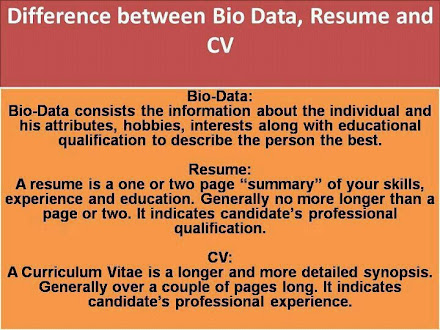
Biodata, Resume and CV

Biodata, Resume and CV

Social Issues Headline Animator

Popular Posts


free counters

My Headlines


Disclaimer:

This blog is designed to provide and encourage access within the social work community to sources of current and comprehensive information. Therefore, Indiansocialworker.blogspot.com itself places no restrictions on the use or distribution of the data contained therein.

Some Indiansocialworker.blogspot.com web pages may provide links to other Internet sites for the convenience of users. Indiansocialworker.blogspot.com is not responsible for the availability or content of these external sites, nor does Indiansocialworker.blogspot.com endorse, warrant, or guarantee the products, services, or information described or offered at these other Internet sites. Users cannot assume that the external sites will abide by the same Privacy Policy to which Indiansocialworker.blogspot.com adheres. It is the responsibility of the user to examine the copyright and licensing restrictions of linked pages and to secure all necessary permissions.

- Indian Social Worker Team