Search This Blog

Showing posts with label News paper article. Show all posts

Annual deficit of 8,000 girls in Tamil Nadu in 2002: study

Source: http://www.hindu.com/2007/12/25/stories/2007122555430700.htm

Aarti Dhar

NEW DELHI: There was a deficit of 8,000 girls annually in Tamil Nadu in 2002 with a pre-birth shortfall accounting for 68 per cent. This is a decline from the annual deficit of 11,000 daughters reported in 1996-99 when the pre-birth deficit accounted for 60 per cent. The decline in the number of ‘missing girls’ in 2002 was driven by the sharp reduction in post-birth shortage.

According to a study “Declining Daughter Deficits in Tamil Nadu, India?” conducted by Arjun Singh Bedi and Sharada Srinivasan of the Institute of Social Sciences at The Haugue, the post-birth daughter deficit declined spectacularly in Salem and Dharmapuri, accounting for 87 per cent of the reduction.

The decline appears to be durable as the differential between estimated and expected female infant mortality rate (FIMR) based on Sample Registration System (SRS) data collected in 2004 is in the same range as in 2002. There has been no evidence of increases in pre-birth daughter deficit during this period, the survey points out attributing the decline to a number of measures taken by the State Government for the protection of girl child.

Given the range of interventions including Cradle Baby Scheme (CBS) and Girl Child Protection Scheme (GCPS), we cannot draw a casual link between a specific intervention and reduction. However, it does seem that the various interventions have led to a sharp reduction in pre-birth daughter deficit, the survey suggests while pointing out that relying on these two schemes is not enough and tackling the deficit required a broader coalition which brings together government pressure, administrative zeal and participation of self-help groups and non-governmental organisations.

Daughter elimination


Daughter elimination in Tamil Nadu came to light in 1985-86 in the form of female infanticide among the Kallar community of Maduri. About 6,000 female babies were reportedly poisoned between 1975 and 1985.

But then it was thought to be limited to a geographical area and certain socio-economic groups. However, in 1992 and 1993, female infanticide was reported among Gounders, a relatively wealthy group in Salem and Vellore. By 1997, female infanticide was reported from 8 districts and 35 self-ascribed caste groups.

As far as the Infant Mortality Rate is concerned, Salem and Dharmapuri have also experienced sharp declines in the gap between estimated and expected female infant mortality rates with the figure declining from 82 to 17 per 1,000 live births in Salem and 66 to 13 in Dharmapuri.

The 0-6 sex ratio in Tamil Nadu in 2001 was 942 as compared to the national average of 933, though it was a decline from 948 in 1991.

75 per cent of projects in India are over: French Red Cross

Friday, Dec 14, 2007

CHENNAI: “Humanitarian action is not only emergency action,” says the president of the French Red Cross and former French Health Minister, Jean-Francois Mattei. “If you save someone from drowning in the sea, you don’t abandon him on the beach.”

Nearly three years on from the tsunami, this is perhaps one of the most significant lessons learned — besides bringing devastation to the lives of fisherfolk along the coast of India, the tsunami exposed the more persistent problems of poverty, including gender and caste inequality. As more and more international and local non-governmental organisations bring their projects to a close, The Hindu spoke to Professor Mattei at the end of his two-day visit to Tamil Nadu to review progress in the field.

Selection of partners

The French Red Cross was not a natural fit for tsunami reconstruction and it arrived late. “We have been working in India for just over two years in a new way … The French Red Cross does not normally finance NGOs,” Professor Mattei says. Since the French people gave a lot of money to the Red Cross for tsunami relief, they selected partners they deemed trustworthy in the State.

As many donors discovered, not everyone involved in tsunami work was interested in relief — projects with two out of 14 organisations were terminated.

“We are controlled officially by the government of France, therefore, we had to impose on our partners the same rules that we have in France,” he stressed. There are several basic procedures involved in the auditing process: money is given at each stage in the project and no increases in the budget are accepted, it retains tight control on the quality of the project, sends an audit company from France to visit the projects to ensure compliance.

Despite these hiccups, says Professor Mattei, it is through its work here in India that the French Red Cross has developed what he now calls sustainable humanitarian action.

In India, he says, the Red Cross found all the elements crucial to helping people rebuild their lives: housing, training, education for children and agricultural productivity. It is by working together, he stresses, they have found success: 1,745 houses have been constructed, 200 young people have been employed (some of those for grandmasters such as Jean-Francois Lesage), and a microfinance project for small landowners near Puducherry, teaching them how to make and use organic fertilizers, brought a 50 per cent increase in crop yield.

“Life is winning the battle against death,” he says. Children are the incarnation of that, he adds, commenting on the smiles of the children seen in two projects in particular — SOS children’s villages of India, which runs homes for children, and Speed Trust, which works with children in the slums of T. Nagar in Chennai.

Seventy-five per cent of the Red Cross projects are now complete. By the end of 2008, the French Red Cross will withdraw completely. “The goal of humanitarian action is to help people to become autonomous,” he says. But what about the unfinished work in the villages, the stories of casteism and gender discrimination that the tsunami revealed?

“Humanitarian action,” he says “is not supposed to become assistance … The Red Cross opposes all forms of discrimination … If it is written in the story of the country, that country has to invoke the right to equality … These are basic human rights.”

Source: http://www.hindu.com/2007/12/14/stories/2007121461121700.htm

Nine Indians indicted for human trafficking to US

Washington, December 15: The authorities in the United States have announced that 9 persons from India have been indicted for their alleged roles in a global human trafficking racket aimed at transporting illegal immigrants through southeast Asia to the US.

The acting United States Attorney for Pennsylvania and the Department of Homeland Security have announced that 9 persons from India have been indicted for their alleged roles in a major international alien smuggling ring.

A federal grand jury has returned a three-count indictment against nine persons from India -- Naresh Patel, Dinesh Diwan, Rakesh Patel, Hiren Mehta, Rajesh Katwa, Jitendra Sheth, Asha Varma, Bibin Balachandran and Sandip Kumar Patel -- charging them with conspiring to illegally smuggle undocumented aliens from India to Pennsylvania through Thailand, Los Angeles and Philadelphia.

The indictment returned by the grand jury alleged that the racket extended from 2003 through December 5, 2007.

The grand jury said that over the past five years the defendants - eight Indian nationals and a naturalised US citizen - brought a dozen immigrants into the US on false passports and fabricated documents.

Eight suspects were arrested on December 5 in Chicago and Pennsylvania, while the ninth, 22-year-old Katwa of the Chicago area, is considered a fugitive.

According to the indictment, which has been posted by the Attorney's Office in Pennsylvania, the conspirators were paid thousands of dollars for each alien smuggled into the US.

Source: http://www.expressindia.com/latest-news/Nine-Indians-indicted-for-human-trafficking-to-US/250728/

Road map to fight climate change

BALI: India played a key role in the drama of “extra-time” negotiations at the United Nations climate change talks here on Saturday as 190 countries finally agreed on a road map for the future fight against climate change, following a last-minute collapse of the opposition from the United States.

The “Bali road map” will guide negotiations over the next two years to shape the global fight against climate change in the period after 2012, when the first commitment period of the Kyoto Protocol, which requires 36 industrial nations to cut greenhouse gas emissions by 5 per cent below 1990 levels, ends. The U.S. is the only rich nation which has not ratified the Protocol.

Union Science and Technology Minister Kapil Sibal, who led the Indian delegation here, described the road map as a “historic breakthrough,” especially since it brought the U.S. on board the global effort to mitigate climate change, which was already causing rising temperatures and extreme weather events.

The agenda for the journey to 2009 now includes action to reduce greenhouse gas emissions, to help developing countries adapt to the impact of climate change, to deploy climate-friendly technologies and to finance both adaptation and technology measures. However, it does not include any target range of emission reduction goals for the developed countries, a measure aggressively pushed by the European Union and bitterly opposed by the U.S.

For the first time, the developing countries have also agreed to take some measurable action to mitigate climate change, although they are not required to do so under the U.N. Framework Convention on Climate Change, since development goals are their first priority. “They have binding commitments, we have responsibilities. How we discharge our responsibilities depends on how they enable technology and financing,” said Mr. Sibal.

In a key intervention that delayed the approval of the road map by several hours, India ensured that the language of the text included means to keep the developed countries’ accountable for their commitments with regard to enabling technology, financing and capacity building measures in the developing countries.

Source: http://www.hindu.com/2007/12/16/stories/2007121658570100.htm

“330,000 children die every year for want of vitamin A”

NEW DELHI: India has the highest number of vitamin A deficient children in the world, with 330,000 of them dying annually because of this malady.

Despite years of various supplementation approaches, deficiencies of these micronutrients are still largely prevalent, according to Sesikeran, Director, National Institute of Nutrition, Hyderabad.

In a paper presented at a conference on “Role of Micronutrients in Child Development: Give Kids a Good Start,” organised by the International Life Sciences Institute here on Friday, Dr. Sesikeran said studies carried out by various agencies showed that the prevalence of anaemia, vitamin

A deficiency and iodine deficiency disorders continue to be high, though there is a small decline in the prevalence of iodine deficiency disorders.

Inaugurating the conference, D.H. Pai Panandiker, chairman of the Institute, said 75 per cent of the children in the country were anaemic, 57 per cent were deficient in vitamin A and 26 did not have enough intake of zinc.

Source: http://www.hindu.com/2007/12/15/stories/2007121556451500.htm

Tamil leaders ask India to help end Lanka strife


Tuesday, December 18, 2007

Chennai, Dec. 17: The messy Sri Lankan ethnic conflict is taking yet another little twist in the next couple of days with three senior Tamil leaders opposed to the LTTE flying to Delhi to seek Indian involvement for ending the war that has so far consumed over 70,000 lives in about 25 years.

With the Sri Lankan government stepping up its military operations, having tasted success pushing the LTTE out of the eastern region, and the Tigers too matching the bloodletting through suicide attacks, claymore mine blasts and raids by their newly acquired "air force", it only seems that the island nation will not taste peace in the near future. Unless India takes an active role in the search for a negotiated political settlement, feel the moderates among the Sri Lankan Tamils.

Three of them, Mr V. Anandasangaree of the Tamil United Liberation Front (TULF), Mr D. Sitharthan of the Peoples’ Liberation Organisation of Tamil Eelam (PLOTE) and Mr T. Sritharan of the Eelam Peoples’ Revolutionary Liberation Front (EPRLF), will arrive in Delhi on Wednesday to lobby for the Indian involvement to end the conflict. The three Tamil leaders, opposed to the LTTE, are expected to meet some Central ministers, MPs, political leaders and government officials, for this purpose, according to information reaching here. The TULF and EPRLF have split over supporting the LTTE and a large chunk of their members are with the Tigers.

The three Tamil leaders would like to canvas support for their initiative aimed at pressuring Colombo to give up its obsession with military option as a means to end the war with the Tigers. By pursuing such a strategy, the Mahinda Rajapaksa government was causing enormous suffering on the common Tamil people, still weathering it out in the heat of the stepped-up conflict unlike thousands of their brethren who fled the island to safe refugee shelters abroad. The government is pushing its military strategy hoping to capture the Tiger territory in the north and hopes to force the Tigers to negotiate from a position of weakness — a near-impossible prospect if one really knows the LTTE supremo Velupillai Prabhakaran. Though the government appears to have gained an upper hand in recent months, thanks to help from some foreign powers providing critical military hardware.


Source: http://www.asianage.com/presentation/leftnavigation/news/india/tamil-leaders-ask-india-to-help-end-lanka-strife.aspx

Farmers threaten mass suicide

15 Dec 2007, 0251 hrs IST,TNN

AMRAVATI: Affected by damage to orange and banana crops and betel leaf plantations due to brick kilns, the farmers of village Shirasgaon Kasba in Chandur Bazaar tehsil have threatened to commit mass suicide on December 20 if the authorities concerned do not take immediate action.

There are 7-8 brick kilns near Megha river bank which are damaging nearby farms. Recently, the betel leaf plantation was damaged while orange and banana crops face the danger of drying up due to the high temperature surrounding the kilns.

Around 29 affected farmers had given a representation to tehsildar S H Shirsudhe on October 15, following which permission was refused to these kilns. Raw material for making bricks was also seized by the talathi.

However, despite orders, the kilns are still working and damaging oranges and bananas spread over 30 acres of land. Though the farmers had demanded compensation for damage, they were paid nothing. Shirsudhe said that permission for these kilns had already been denied by the government and they had stopped operating.


Source: http://timesofindia.indiatimes.com/Cities/Farmers_threaten_mass_suicide/articleshow/2623678.cms

Alleged kidney broker held in Chennai

Source: www.ndtv.com

Monday, January 22, 2007 (Chennai):

A man alleged to be a kidney broker has been detained in Chennai.NDTV had brought a story of Malliga who was driven out of the house by her husband.

He had taken the money given to her by brokers for donating a kidney. Malliga's kidney had been taken away at a private hospital in Madurai.

The accused, Raji, has been detained in connection with selling kidneys of fisherwomen from the coastal areas affected by the 2004 Tsunami.


Tsunami kidney racket busted in Chennai

Sanjay Pinto, Sam Daniel
Tuesday, January 16, 2007 (Chennai):

Most government departments in the country, like passport offices, rely on the ration card as almost conclusive proof of residence and relationship. In a shocking finding by NDTV, the ration card has been misused over the last few years in Chennai to get over the strict legal requirement of relative donors for kidney transplants.

Investigation reveals that touts lured the tsunami survivors in North Chennai to sell their kidneys for transplants allegedly in four private hospitals, one in Madurai and three in Chennai. Screening by a Committee appointed by the health department is mandatory to verify if the donor is a relative. And so, the touts 'set up' people to pose as relatives, with a bunch of ration cards as proof of address and relationship.

As ration cards that are accepted by all government departments, including passport offices, have only the husband's or father's photograph, they rustle up fake relatives for the other names mentioned on the cards to get the required clearance.

That explains why there have been so many women donors."They will present women before the committee, claiming that they are related to the person whose photograph is on the ration card," said Thilakavathy, donor and victim.

Exploitation of the poorMany fingers point towards one man, a regular broker who has allegedly cashed in on the poverty and helplessness of tsunami survivors in this colony."

"His name is Prakash Babu. People call him Karrupiah. He is working in a pencil factory near Korrukpet," said Maria Selvam, President, Tsunami Nagar Welfare Association.

After the media expose, the broker has gone into hiding. NDTV managed to trace his mobile phone number which is 98401 62999. When contacted, he initially he denied he was Prakash. But when the NDTV team posed as relatives of a patient in need of a transplant, he opened up but refused to meet them and denied involvement in the organ trade.

"I had donated a kidney myself about five years ago. I am not involved in this at all," said Prakash alias Karrupiah, donor, Chennai.A copy of the discharge summary of a patient in a Madurai hospital, records the name of a "voluntary" donor, not a relative donor, which itself is illegal.

The police is yet to receive a complaint from the victims. Officials say 25 transplants have taken place over the last couple of years but locals say it's at least thrice that number. What's peculiar is that the police say many of the brokers are also donors and one-time victims of the organ trade.

No case has been registered as yet but some groundwork is being discreetly done by the cops to get to the bottom of the racket.

Change of brigade: Karunanidhi sworn in as Tamil Nadu CM

[ Saturday, May 13, 2006 11:40:44 am IANS ]
Source: http://timesofindia.indiatimes.com/articleshow/1528236.cms

CHENNAI: DMK president Muthuvel Karunanidhi was sworn in here on Saturday as chief minister of Tamil Nadu for the fifth time, two days after leading his alliance to a grand victory in the assembly elections.

Governor Surjit Singh Barnala administered the oath of office and secrecy to the veteran politician as tens of thousands of supporters cheered him at a packed Nehru Indoor Stadium.

Also sworn in among 30 ministers was Karunanidhi's son and former Chennai Mayor M.K. Stalin, who is becoming a minister for the first time and who is seen as the heir apparent to the DMK chief.

Karunanidhi will head Tamil Nadu's first minority government, prompting warnings from ousted chief minister and AIADMK leader Jayaram Jayalalitha that the DMK government will not last long.

The new government enjoys the legislative backing of the Congress, the PMK, the Communist Party of India-Marxist (CPI-M) and the Communist Party of India (CPI), all of which contested the May 8 elections together.

Two boys drowned in Uppanar

Special Correspondent

Source: http://www.hindu.com/2006/05/19/stories/2006051906550300.htm

CUDDALORE: Two students namely M. Kalaivanan (11) and S. Manikandan (12) reportedly drowned in the Uppanar when they had gone there to take bath on Wednesday.

Both belonged to Kudikadu near Old Town area. The families of the two boys searched for them throughout the night but could not locate them.

However, the bodies were found floating in the Uppanar on Thursday.

The police have sent the bodies to Cuddalore headquarters government hospital for post-mortem.

"Tsunami relief measures inadequate"

Special Correspondent
Source: http://www.hindu.com/2006/05/19/stories/2006051909860400.htm

  • Only NGOs built a few houses: Karunanidhi Says Mettur storage level satisfactory
  • Sethu project progressing fast Uzhavar Sandhai,'
  • Samathuvapuram' schemes to be revived
  • New Delhi visit will be planned either by the month-end or after June 3

CUDDALORE:
Tamil Nadu Chief Minister M. Karunanidhi on Thursday said the erstwhile Jayalalithaa Government did not take adequate relief measures in the tsunami-hit areas.
Addressing a press conference here on Thursday, Mr. Karunanidhi said only non-governmental organisations had constructed a few permanent houses.

The affected kept on sending petitions seeking suitable compensation.

Assurance

Mr. Karunanidhi assured them that the petitions would be scrutinised and appropriate action initiated. About the water release for irrigation from the Mettur dam on June 12, the Chief Minister said he could only say that the storage level was satisfactory. Since, the Assembly was in session, he would not commit on the date.

About the setting up of a desalination plant to tide over the drinking water crisis in Chennai, Mr. Karunanidhi said the problem would be resolved.

Asked whether the New Veeranam Project would be reviewed, he shot back, "Can it [the water drawn so far from the tank for Chennai] be brought back [to the tank]?" The proposal to raise the tank bund level would get due consideration.

Sethu project

He said the Sethusamudhram Channel Project was progressing fast.

Referring to the issue of reservation for Other Backward Classes in Central educational institutions, Mr. Karunanidhi said the DMK was always interested in safeguarding social justice.
He alleged that instead of encouraging `Uzhavar Sandhai', the AIADMK government ruined it. He said the `Uzhavar Sandhai' and `Samathuvapuram' schemes would be revived.

Moving response

About the first three orders passed by him, soon after assuming office of Chief Minister, Mr. Karunanidhi said these had been well received by the people. The rousing reception he received on his way to and from Tiruvarur indicated this. He was moved by the response.

Mr. Karunanidhi said his New Delhi visit to meet Prime Minister Manmohan Singh would be planned either by the month-end or after June 3. (The Rs. 2 a kg scheme is scheduled for inauguration that day).

MP underlines need for school disaster preparedness programme

Source: http://www.newkerala.com/news2.php?action=fullnews&id=54235
Posted on 05 May 2006 # PTI

Port Blair: Disaster preparedness programmes were needed to be organised for school children to make them better prepared to face natural calamities like tsunami, Lok Sabha member of Andaman and Nicobar Islands Manoranjan Bhakta said here today.Bhakta told PTI that during the recent meeting held here by the National Disaster Management Authority he underlined the need for school-level disaster preparedness programme and also suggested that those affected by the tsunmai be provided building materials so that they can construct their houses on their own land.Besides efforts should be made to provide remuneration to the local labourers proportionate to the project cost of the rehabilitation work prepared by the Border Roads Organisation at great Nicobar island for the construction of roads.The MP also suggestged for engaging local educated youth in BSNL for manning the telephone exchanges in far-flung areas of the Union Territory.

Ex-Armymen to be used in disaster management

Source: Monday, May 01, 2006 02:21:29 amTIMES NEWS NETWORK

DANAPUR: Chief minister Nitish Kumar said the state government has taken a decision to raise a separate unit of Special Auxiliary Police (SAP) to deal specifically with disaster management incidents in the state.

Ex-servicemen who have been inducted in the SAP to fight the growing Naxal menace in the state, can be better utilised to tackle any clamities effectively. Bihar which is a flood prone state, needs a separate wing to tackle such situation, he said.

Kumar, who was addressing an ex-servicemen rally at Danapur cantonment on Sunday, said the SAP project which has been concieved in Bihar has earned appreciation from defence minister Pranab Mukherjee as a step towards ameliorating the lot of ex-servicemen and their family members.

According to chief minister, the state cannot depend on the Centre for its forces all the time. The government has a plan to recruit at least 5,000 ex-servicemen in the first phase under the SAP project, out of which only 3,000 have been so far inducted in the police force, he said adding that the government would recruit ex-servicemen from other states to fulfil the objective of the SAP in the state.

Kumar welcomed the move of the ex-servicemen league to build a war memorial on the pattern of India Gate at Saguna Mor in Danapur. He also assured the league members that he would take up the issue of opening a defence academy in Bihar with Centre's help to cater to the needs of the youth in the state.

The army canteen will be kept out of the purview of VAT in Bihar, he added. Danapur sub area commander Brig S K Bijeshwar lauded the efforts of Kumar to provide ex-servicemen jobs in the state to tackle the extremist problems in the state.

Describing the SAP project as Kumar's vision of new Bihar, Brig Bijeshwar said most of the Armymen retired at a very young age between 30 and 40. Their services can be fully utilised in the constructive work of the society by re-employing them, he said.

According to Brig Bijeshwar, the SAP project would become popular in the world due to the fact that this project is yet to be conceived in other countries.

Ex-servicemen belonging to any country in the world are the most well-trained forces who could still contribute to the society from the development point of view, he said.

Speaking on the occasion, ex-servicemen league president Colonel (retd) V K Singh said ex-servicemen could be utilised in the intelligence services also in the state at a time when the state government has cracked down on extremists, he said.

About 100 war widows were honoured on the occasion by chief minister. They were presented sewing machines, pressure cookers and clothes on behalf of Red Cross Society. Altogether 10 senior soldiers above 80 years were also honoured in the rally.

Youth and Sports minister J P Segriwal, junior industry minister Gautam Singh, BRC commandant Brig D K Mohan and many other army officers and their wives were present on the occasion.

Ex-servicemen league later presented mementos to Kumar and others. The rally which will conclude on Monday, was held amidst tight security of the Army.

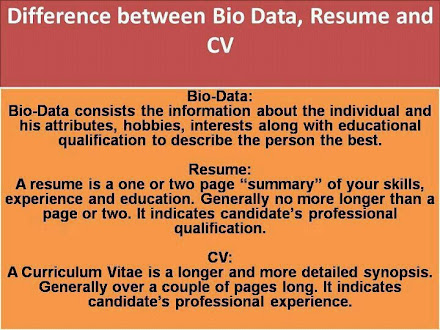
Biodata, Resume and CV

Biodata, Resume and CV

Social Issues Headline Animator

Popular Posts


free counters

My Headlines


Disclaimer:

This blog is designed to provide and encourage access within the social work community to sources of current and comprehensive information. Therefore, Indiansocialworker.blogspot.com itself places no restrictions on the use or distribution of the data contained therein.

Some Indiansocialworker.blogspot.com web pages may provide links to other Internet sites for the convenience of users. Indiansocialworker.blogspot.com is not responsible for the availability or content of these external sites, nor does Indiansocialworker.blogspot.com endorse, warrant, or guarantee the products, services, or information described or offered at these other Internet sites. Users cannot assume that the external sites will abide by the same Privacy Policy to which Indiansocialworker.blogspot.com adheres. It is the responsibility of the user to examine the copyright and licensing restrictions of linked pages and to secure all necessary permissions.

- Indian Social Worker Team