Search This Blog

Showing posts with label Performance Appraisal. Show all posts

Essential Characteristics of an Effective Appraisal System

Performance appraisal system should be effective as a number of crucial decisions are made on the basis of score or rating given by the appraiser, which in turn, is heavily based on the appraisal system. Appraisal system, to be effective, should possess the following essential characteristics:

Reliability and validity

Appraisal system should provide consistent, reliable and valid information and data, which can be used to defend the organization – even in legal challenges. If two appraisers are equally qualified and competent to appraise an employee with the help of same appraisal technique, their ratings should agree with each other. Then the technique satisfies the conditions of inter-rater reliability. Appraisals must also satisfy the condition of validity by measuring what they are supposed to measure. For example, if appraisal is made for potential of an employee for promotion, it should supply the information and data relating to potentialities of the employee to take up higher responsibilities and carry on activities at higher level.

Job relatedness

The appraisal technique should measure the performance and provide information in job related activities/areas.

Standardization

Appraisal forms, procedures, administration of techniques, ratings, etc., should be standardized as appraisal decisions affect all employees of the group.

Practical viability

The techniques should be practically viable to administer, possible to implement and economical to undertake continuously.

Legal sanction

Appraisals must meet the laws of the land. They must comply with provisions of various acts relating to labor.

Training to appraisers

Because appraisal is important and sometimes difficult, it would be useful to provide training to appraisers viz., some insights and ideas on rating, documenting appraisals and conducting appraisal interviews. Familiarity with rating errors can improve rater’s performance and this may inject the needed confidence in appraisers to look into performance ratings more objectively.

Open communication

Most employees want to know how well they are performing the job. A good appraisal system provides the needed feedback on a continuing basis. The appraisal interviews should permit both parties to learn about the gaps and prepare themselves for future. To this end, managers should clearly explain their performance expectations to their subordinates in advance of the appraisals period. Once this is known, it becomes easy for employees to learn about the yardsticks and, if possible, try to improve their performance in future.

Employee access to results

Employees should know the rules of the game. They should receive adequate feedback on their performance. If performance appraisals are meant for improving employee performance, then withholding appraisal result would not serve any purpose. Employees simply cannot perform better without having access to this information. Permitting employees to review the results of their appraisal allows them to detect any errors that may have been made. If they disagree with the evaluation, they can even challenge the same through formal channels.

Due process

It follows then that formal procedures should be developed to enable employees who disagree with appraisal results (which are considered to be inaccurate or unfair). They must have the means for pursuing their grievances and having them addressed objectively.

Performance appraisal should be used primarily to develop employees as valuable resources. Only then it would show promising results. When management uses it as a whip or fails to understand its limitations, it fails. The key is not which form or which method is used (Mathis and Jackson).

Employees Performance Appraisal - Introduction

Introduction

After an employee has been selected for a job, has been trained to do it and has worked on it for a period of time, his performance should be evaluated. Performance Evaluation or Appraisal is the process of deciding how employees do their jobs. Performance here refers to the degree of accomplishment of the tasks that make up an individual’s job. It indicates how well an individual is fulfilling the job requirements. Often the term is confused with efforts, which means energy expended and used in a wrong sense. Performance is always measured in terms of results. A bank employee, for example, may exert a great deal of effort while preparing for the CAIIB examination but manages to get a poor grade. In this case the effort expended is high but performance is low.

Definition

Performance appraisal is method of evaluating the behavior of employees in the work spot, normally including both the quantitative and qualitative aspects of job performance. It is a systematic and objective way of evaluating both work-related behavior and potential of employees. It is a process that involves determining and communicating to an employee how he or she is performing the job and ideally, establishing a plan of improvement.

Performance appraisal is broader term than Merit Rating. In the past managers used to focus on the traits of an employee while ranking people for promotions and salary increases. Employee’s traits such as honesty, dependability, drive, personality, etc., were compared with others and ranked or rated. The attempt was to find what the person has (traits) rather than what he does (performance); the focus was on the input and not on the output. This kind of evaluation was open to criticism because of the doubtful relationship between performance and mere possession of certain traits.

Features

The main characteristics of performance appraisal may be listed thus:
  • The appraisal is a systematic process. It tries to evaluate performance in the same manner using the same approach. A number of steps are followed to evaluate an employee’s strength and weaknesses.
  • It provides an objective description of an employee’s job’s relevant strengths and weaknesses.
  • It tries to find out how well the employee is performing the job and tries to establish a plan for further improvement.
  • The appraisal is carried out periodically, according to a definite plan. It is certainly not a one-shot deal.
  • Performance evaluation is not job evaluation. Performance appraisal refers to how well someone is doing an assigned job. Job evaluation, on the other hand, determines how much a job is worth to the organization, and therefore, what range of pay should be assigned to the job.
  • Performance appraisal may be formal or informal. The informal evaluation is more likely to be subjective and influenced by personal factors. Some employees are liked better than others and have, for that reason only, better chances of receiving various kinds of rewards than others. The formal system is likely to be more fair and objective, since it is carried out in a systematic manner, using printed appraisal forms
Objectives

Performance appraisal could be taken either for evaluating the performance of employees or for developing them. The evaluation is of two types: telling the employee where he stands and using the data for personnel decisions concerning pay, promotions, etc. The developmental objectives focus on finding individual and organizational strengths and weaknesses; developing healthy superior-subordinate relations; and offering appropriate counseling/coaching to the employee with a view to develop his potential in future.

Appraisal of employees serves several useful purposes:

(a) Compensation decisions: It can serve as a basis for pay raises. Managers need performance appraisal to identify employees who are performing at or above expected levels. This approach to compensation is at the heart of the idea that raises should be given for merit rather than for seniority. Under merit systems, employee receives raises based on performance.

(b) Promotion decisions: It can serve as a useful basis for job change or promotion. When merit is the basis for reward, the person doing the best job receives the promotion. If relevant work aspects are measured properly, it helps in minimizing feelings of frustration of those who are not promoted.

(c)Training and development programs: It can serve as a guide for formulating a suitable training and development program. Performance appraisal can inform employees about their progress and tell them what skills they need to develop to become eligible for pay raises or promotions or both.

(d)Feedback: Performance appraisal enables the employee to know how well he is doing on the job. It tells him what he can do to improve his present performance and go up the ‘organizational ladder’.

(e)Personal development: Performance appraisal can help reveal the causes of good and poor employee performance. Through discussions with individual employees, a line manager can find out why they perform as they do and what steps can be initiated to improve their performance.

What is to be appraised?

Every organization has to decide upon the content to be appraised before the programme is approved. Generally, the content to be appraised is determined on the basis of job analysis. The content to be appraised may be in the form of contribution to organizational objectives (measures) like production, savings in terms of cost, return on capital, etc. Other measures are based on: (1) behaviors which measure observable physical actions, movements, (2) objectives which measure job related results like amount of deposits mobilized, and (3) traits which are measured in terms of personal characteristics observable in employee’s job activities. The content to be appraised may vary with the purpose of appraisal and type and level of employees.

Who will appraise?

The appraiser may be any person who has thorough knowledge about the job content, contents to be appraised, standards of contents and who observes the employee while performing a job. The appraiser should be capable of determining what is more important and what is relatively less important. He should prepare reports and make judgments without bias. Typical appraisers are: supervisors, peers, subordinates, employees themselves and users of services and consultants.

Supervisors

Supervisors include superiors of the employee, other superiors having knowledge about the work of the employee and departmental head or manager. The general practice is that immediate superiors appraise the performance, which in turn, is reviewed by the departmental head/manager. This is because supervisors are responsible for managing their subordinates and they have the opportunity to observe, direct and control the subordinates continuously. Moreover, they are accountable for the successful performance of their subordinates. Sometimes other supervisors, who have close contact with employee work also appraise with a view to provide additional information.

On the negative side, immediate supervisors may emphasize certain aspects of employee performance to the neglect of others. Also, managers have been known to manipulate evaluations to justify their decisions on pay increases and promotions. However, the immediate supervisor will continue to evaluate employee performance till a better alternative is available. Organizations, no doubt, will seek alternatives because of the weaknesses mentioned above and a desire to broaden the perspective of the appraisal.

Peers

Peer appraisal may be reliable if the work group is stable over a reasonably long period of time and performs tasks that require interaction. However, little research has been conducted to determine how peers establish standards for evaluating others or the overall effect of peer appraisal on the group’s attitude. Whatever research was done on this topic was mostly done on military personnel at the management or pre-management level (officers or officer candidates) rather than on employees in business organizations. More often than not in business organizations if employees were to be evaluated by their peers, the whole exercise may degenerate into a popularity contest, paving the way for the impairment of work relationships.

Subordinates

The concept of having superiors rated by subordinates is being used in most organizations today, especially in developed countries. For instance in most US universities students evaluate a professor’s performance in the classroom. Such a novel method can be useful in other organizational settings too provided the relationships between superiors and subordinates are cordial. Subordinates’ ratings in such cases can be quite useful in identifying competent superiors. The rating of leaders by combat soldiers is an example. However, the fear of reprisal often compels a subordinate to be dishonest in his ratings. Though useful in universities and research institutions, this approach may not gain acceptance in traditional organizations where subordinates practically do not enjoy much discretion.

Self-appraisal

If individuals understand the objectives they are expected to achieve and the standards by which they are to be evaluated, they are to a great extent, in the best position to appraise their own performance. Also, since employee development means self-development, employees who appraise their own performance may become highly motivated.

Users of services

Employees’ performance in service organizations relating to behaviors, promptness, speed in doing the job and accuracy can be better judged by the customers or users of services. For example, a teacher’s performance is better judged by students and the performance of a conductor a bus is better judged by passengers.

Consultants

Sometimes consultants may be engaged for appraisal when employees or employers do not trust the supervisory appraisal and management does not trust the self-appraisal or peer appraisal or subordinate appraisal. In this situation, consultants are trained and they observe the employee at work for sufficiently long periods for the purpose of appraisal.

In view of the limitations associated with each and every method discussed above, several organizations follow a multiple rating system wherein several superiors separately fill out rating forms on the same subordinate. The results are then tabulated.


360 Degree performance appraisal

What is 360 Degree?
360-Degree Appraisal is basically a Multi-Rater Appraisal and Feedback System. Almost every Fortune 500 Company is using this in some form or the other. In this system:
  • The candidate is assessed periodically (once in a year and some times even half yearly) by a number of assessors including his boss, immediate subordinates, colleagues, internal customers and external customers.
  • The assessment is made on a questionnaire specially designed to measure behaviors considered as critical for performance.
  • Others do the appraisal anonymously and the assessment is collected by an external agent (consultant) or specially designated internal agent.
  • The Assessment is consolidated; feedback profiles are prepared and given to the participant after a workshop or directly by his boss or the HRD department in a performance review discussion session.
T.V Rao and team as Top Management Styles And organization Effectiveness program started 360-degree feedback in mid-eighties at the Indian Institute of Management, Ahmedabad; it was not branded till 1998 as 360-degree appraisal. Once it was branded in the US as 360-degree appraisal, it caught the attention of many corporations and today a large percentage of Fortune 500 companies use it in some form or the other. Experiences with it as a development tool have been good, though experiences as an appraisal tool are mixed.

Objectives of 360 Degree Feedback
It is possible to aim at the following through 360-degree or MAFS:
  • Insights into the strong and weak areas of the candidate in terms of the effective performance of roles, activities, styles, traits, qualities, competencies (knowledge, attitudes and skills), impact on others and the like.
  • Identification of developmental needs and preparing development plans more objectively in relation to current or future roles and performance improvements for an individual or a group of individuals.
  • Data generation to serve as a more objective basis for rewards and other personnel decisions.
  • Reinforcement of other change management efforts and organization effectiveness directed interventions. These may include: TQM efforts, customer focused or internal customer satisfaction enhancing interventions, flat structures, quality enhancing and cost reducing interventions, decision process changes etc.
  • Basis for performance linked pay or performance rewards.
  • Alignment of individual and group goals with organizational vision, values and goals.
Aid in:
  • Culture building.
  • Leadership Development.
  • Potential Appraisal and Development.
  • Career Planning and Development.
  • Succession Planning and Development.
  • Team building.
  • Planning Internal customer satisfaction improvement measures.
  • Role clarity and increased accountabilities.
Advantages of the 360 Degree or MAFS
360-Degree appraisal systems have certain advantages. These advantages are not substitutes for those of traditional appraisals but in addition to them. Normally MAFS should be viewed as supplements to the regular KPA or KRA based appraisal systems rather than as replacements of the same.

Additional advantages offered by MAFS are:
  • It is more objective than a one-person assessment of traits and qualities.
  • It adds objectivity and supplements the traditional appraisal system.
  • It provides normally more acceptable feedback to employee.
  • It can serve all the purposes served by the traditional appraisal system like identifying the developmental needs, reward management, performance development etc.
  • It helps focus on internal customer satisfaction.
  • It has the potential of pointing out the supervisory biases in the traditional appraisal systems.
  • It is a good tool for enhancing customer service and quality of inputs and service to internal customers.
  • It provides scope for the candidate to get multiple inputs to improve his role, performance, styles and ideas and enhances the acceptability of the individual.
  • It is more participative and enhances the quality of HR decisions
  • It is suitable for new organizational cultures being promoted by most world-class organizations (participative culture, learning culture, quality culture, competency based performance culture, team work, empowering culture, leadership culture, etc.)

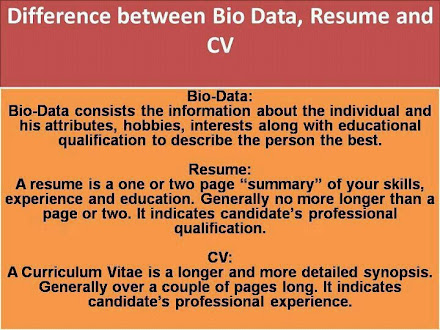
Biodata, Resume and CV

Biodata, Resume and CV

Social Issues Headline Animator

Popular Posts


free counters

My Headlines


Disclaimer:

This blog is designed to provide and encourage access within the social work community to sources of current and comprehensive information. Therefore, Indiansocialworker.blogspot.com itself places no restrictions on the use or distribution of the data contained therein.

Some Indiansocialworker.blogspot.com web pages may provide links to other Internet sites for the convenience of users. Indiansocialworker.blogspot.com is not responsible for the availability or content of these external sites, nor does Indiansocialworker.blogspot.com endorse, warrant, or guarantee the products, services, or information described or offered at these other Internet sites. Users cannot assume that the external sites will abide by the same Privacy Policy to which Indiansocialworker.blogspot.com adheres. It is the responsibility of the user to examine the copyright and licensing restrictions of linked pages and to secure all necessary permissions.

- Indian Social Worker Team