The mission of the social work profession is rooted in a set of core values. These core values, embraced by social workers throughout the profession's history, are the foundation of social work's unique purpose and perspective: *service *social justice *dignity and worth of the person *importance of human relationships *integrity *competence.
Search This Blog
Introduction to iVolunteer Overseas (IVO)
Introduction to Contingency Plan Live website
Tamilnadu Kidney Research (TANKER) Foundation
TANKER cares for those, the underprivileged, who suffer kidney problems of any kind, reversible or terminal, regardless of caste, creed, sex or religion.
The Foundation helps poor patients from all over India by offering them one-time contributions ranging from Rs.1,500/- to Rs.20,000/- towards dialysis, transplantation, investigation and post-transplantation medication costs. Upto March 2009 financial help for dialysis, transplantation, medication and investigation costs has been given to the tune of Rs. 49.20 lakhs helping 762 patients.
To know more about this Foundation, visit this link
Blood Bank support in India
1. Bharat Blood Bank
2. Indian blood donors
3. Blood givers
4. Jeevan
5. Blood Donations
6. AABB
7. Red Cross
8. Blood Bank Online
9. India Blood Bank
10. Rotary Blood Bank
11. Pooja Blood Bank
12. Blood Bank Delhi
13. Blood Bank
14. Lion's Blood Bank
NGO partnership initiative by the Government of India
All VOs / NGOs, are requested to Sign Up (one time) with the Portal to help create a data base of existing VOs / NGOs and to access information on various schemes of the participating Ministries/ Departments/ Government Bodies open for grants. Later the registered NGOs/VOs also be able to apply online for government grants to the participating Ministries/Departments/Government Bodies and track the status of the applications through this system.
To register your NGOs/VOs with this government initiative, visit this link
Trust deed - Sample
WHEREAS the settlors are desirous of creating a trust in respect of the sum of Rs. (in figures), [Rupees ________________(in words) only] in the manner hereinafter appearing.
AND WHEREAS the trustees have consented to act as the first trustees of these presents and to accept the trusts under these presents as testified by their being parties to and executing the same.
NOW THIS INDENTURE WITNESSETH AS FOLLOWS:
1) The trust created by these presents shall be known as “ (name of trust) ” (hereinafter called “the said trust”).
2) The trustees do declare that they, the trustees, shall hold and stand possessed of the sum of Rs. (in figures), [Rupees (in words) only]
(hereinafter, for brevity’s sake, referred to as “the trust fund” which expression shall, unless repugnant to the subject or context, also include any other property and investments of any kind whatsoever into which the same or any part thereof may be converted, invested or varied, from time to time, and those which may be acquired by the trustees or come to their hands by virtue of these presents or by operation of law or otherwise howsoever in relation to these presents, including all donations either in cash or other properties, movable or immovable, which may be received by the trustees, from time to time, from any person or persons for the purposes of these presents) upon the trusts and with and subject to the powers, provisions, agreements and declarations hereinafter appearing and contained of and concerning the same.
It shall be lawful for the trustees to augment the resources of the trust by raising funds in every lawful and permissible way, through public entertainment programmes like charity shows, concerts, carnivals, festivals, printing, publishing and selling books, magazines, greeting cards, calendars, diaries and undertaking income-generating activity which may be incidental, or ancillary to, the attainment of the objects of the trust.
It shall also be lawful for the trustees to accept voluntary donations from individual or institutional sources, either Indian or foreign, and whether in cash or in kind or by way of a legacy or bequest.
The trustees may also allow a donor or sponsor to erect a building or buildings on any land belonging to the said trust for the furtherance of any object of the trust. All donations may be accepted either with or without any special conditions, as may be agreed upon between the donor and the trustees, PROVIDED THAT such conditions are not inconsistent with the intents and purposes of these presents and PROVIDED FURTHER that the name of the said trust mentioned in clause 1 hereof shall not be altered. All donations, including those of lands, buildings and other immovable properties, shall be treated as forming part of the trust fund being the subject matter of these presents and be applied accordingly. The trustees shall also be at liberty to refuse any donation, legacy or gift, without giving any reason for such refusal.
3) The trustees shall hold and stand possessed of the trust fund upon the following trusts, viz.,:
a) to manage the trust fund and collect and recover the interest, dividends and income thereof and to pay thereout the expenses of collection and other outgoings, if any;
b) to pay or utilise the balance of such interest, dividends and income of the trust and, if the trustees so desire, the corpus or part of the corpus for all, or any one or more of, the following purposes to the intent that such income or corpus shall be applied to such purposes (and that such income shall be applied or accumulated for application to such charitable purposes) and to the further intent that all such purposes shall be carried out without reference to religion, caste, creed or colour and in such shares and proportions and in such manner in all respects as the trustees shall, in their absolute discretion, think fit, that is to say:
* to encourage, assist and support the cause of education, research, science, medicine, arts, culture, human resource development, removal of poverty and human suffering and the advancement of any other object of general public utility without distinction to caste, creed, colour, community, gender or religion. Without prejudice to the generality of the foregoing, the trustees at their absolute discretion, may carry out any one or more of the following purposes:
a) to undertake various programmes for conservation of natural resources as well as to carry out scientific research in the field of energy conservation and other allied fields;
b) to establish, fund and support new institutions for training or research or a chamber or federation of energy institutions;
c) to undertake, assist and finance any programme of conservation of natural resources in general and thermal and other forms of energy in particular;
d) to create nationwide awareness of energy conservation through presentation of Energy Conservation Awards, providing training through lectures, seminars and workshops and educational and professional institutions and associations, through funding of research scholarships, endowments and other forms of financial assistance for research scholars in the field;
e) to carry out, organise, sponsor, promote, establish and conduct scientific research activities of all kinds in general and in the field of conservation of natural resources in particular, including development and application of non-depleting and non-polluting sources of energy (such as solar, wind, tidal and ocean-thermal energy) as well as development and application of achieving fuller and less polluting utilisation of fossil and/or nuclear fuel;
f) to edit, print, publish or cause to edit, print, publish books, magazines, journals, periodicals, brochures and/or any other audio or audio-visual material for the advancement and dissemination of useful information on energy conservation or any other subject;
g) to promote, maintain or assist all activities by individuals or institutions anywhere in the Republic of India which are in conformity with the objects of the trust and are conducive to the wellbeing and general welfare of the society.
AND the trustees shall do all other acts and things necessary for or incidental or conducive to effectuating the foregoing purposes or which would further or fulfil the objectives mentioned herebefore. The trustees shall have powers, by due process of law, to add any other object or objects of general public utility to the objects hereinbefore set out, provided the majority of the trustees agree to the same and the objectives added are of a charitable nature only.
4) It is expressly provided that if any one or more of the objects hereinbefore specified, or hereafter added, are held not to be objects of a public charitable nature, the trustees shall not carry out such object or objects, but the validity of the said trust as a trust, for public charitable purposes, shall not be affected in any manner.
5) It shall be lawful for the trustees to provide aid by way of donations out of the income or the corpus of the trust fund (to any extent they deem fit), or otherwise to different philanthropic institutions, societies, organisations, trusts or other agencies which may have been established for charitable purposes mentioned in clause 3) of these presents, to enable such institutions, societies, organisations, trusts or agencies to start, maintain or carry out such charitable objects.
6) a) Any trustee may, at any time, retire or resign from the office of trustee.
b) The trustees, for the time being (or in the event of there being, at any time, only one remaining trustee, then the said sole remaining trustee) may, at any time, appoint any other person or persons as trustee or trustees of the said trust, after receiving the written consent of the person or persons to be appointed as a trustee or trustees and passing a formal resolution, either at a duly convened meeting of the trust or by circular.
AND UPON every such appointment, the trust fund hereby settled and the investments for the time being representing the same shall be so transferred as to become vested in the trustee or trustees so appointed, and every trustee so appointed may as well before as after such transfer act as fully and effectually as if he had been originally appointed a trustee, PROVIDED ALWAYS that without prejudice to any other provisions of the law, any trustee of these presents shall stand discharged from the office of trustee on his/her tendering resignation of his/her office and on the same being accepted by the remaining trustee/s of these presents.
All the founder-trustees, and the trustees appointed subsequently, may remain trustees for life unless they voluntarily resign, die or are removed for reasons of continuous neglect of duty, misconduct or breach of trust, under the provisions of the Bombay Public Trusts Act.
The total number of trustees shall not be less than 3 (three) and not more than 9 (nine).
7) The trustees shall appoint one of them to act as the chairman of the board of trustees. The chairman shall preside at all meetings. In the absence of the chairman at any meeting, the majority of trustees who may be present at the meeting, shall elect a chairman for the meeting. The trustees shall frame and regulate their own procedure relating to the meeting of the board of trustees. The trustees shall be entitled to set up a committee or committees for the purpose of effective management, resource mobilisation, finance, projects and any other broad or specific purpose or purposes for fulfilling the aims and objectives of the trust. It shall be lawful for the trustees to appoint directors, executives and officers, on such terms and conditions as may be agreed upon.
The trustees, at their absolute discretion, may also frame from time to time a scheme or schemes for membership to provide members of the scientific/research community or members of the general public to feel a sense of involvement with the trust and participate more actively and effectively in furthering the objects of the trust. The powers and duties of such members shall be regulated by the trustees from time to time and the trustees shall reserve the right to remove any erring member or terminate the membership scheme if and when found necessary and in the best interests of the trust.
All the trustees of the trust will be jointly and severally responsible. However, the day-to-day management of the trust may be handled by the chairman or a duly appointed managing trustee, with the help of paid employees.
8) The trustees shall be entitled, from time to time, to open, operate and maintain a banking account or accounts in the name of the said trust, at such scheduled bank or banks as they may, from time to time, decide and may at any time pay, or cause to be paid, or withdraw any moneys forming part of the trust fund or the income thereof to the credit of any such account or accounts and either by way of fixed deposit or current account or any other account. The banking account or acounts may be operated jointly by any two or more authorised trustees of the trust.
9) Any investment or investments in which the trustees may be authorised by law for the investment of the trust property in India, may be made payable or transferable by any two or more of the trustees.
10) It shall be lawful for the trustees to acquire by purchase or on lease or on ownership basis or otherwise, lands, buildings and movable and immovable properties comprised in the trust fund, in any manner they think fit and to expend for all, or any of the above purposes, such moneys out of the trust fund or the income thereof as the trustees may, in their absolute discretion, think fit and proper.
11) With the sanction of the charity commissioner, it shall be lawful for the trustees at such time or times, as they may in their absolute discretion think fit, to sell or acquire by public auction or private contract or exchange or transfer or assign or grant leases or sub-leases for any term, however long, or otherwise dispose of or surrender all or any part of the trust fund including the immovable properties comprised therein and on such terms and conditions relating to title or otherwise and in all respects as they may think proper and to buy and rescind or vary any contract for sale, exchange, transfer, assignment, lease, sub-lease, or other disposition or surrender or release and for such purposes to execute all necessary conveyances, deeds of exchange, assignments, transfers, leases, sub-leases, surrenders, releases, counterparts and other assurances, instruments and writings and to pass, give and execute necessary receipts, releases and discharges for the consideration moneys or otherwise relating to the documents and assurances. All moneys arising from any such transfer or other assurances shall be deemed to be part of the trust fund and shall be applicable accordingly.
12) Upon any sale or other transfer by the trustees, under the power aforesaid, any purchaser or transferee dealing bonafide with the trustees shall not be concerned to see or inquire whether the occasion for executing or exercising such power has arisen or whether the provisions as to the appointment and retirement of trustees herein contained, have been properly and regularly observed and performed. Neither shall the purchaser or transferee be concerned to see to the application of the purchase moneys or other consideration or be answerable for the loss, misapplication or non-application thereof.
13) It shall be lawful for the trustees, from time to time, at their discretion and, if necessary, with the prior permission of the charity commissioner, to borrow or raise or secure the payment of any sum or sums of money and to mortgage or charge all or any part of the trust fund.
14) The receipt of any two trustees, as authorised by the board of trustees, for any income of the trust fund or for any documents of title or securities, papers or other documents or for any other moneys or property forming part of the trust fund, shall be sufficient and shall effectually discharge the person or persons paying or giving or transferring the same from being bound to see to the application or being answerable for the loss, misapplication or non-application thereof.
15) The trustees shall have the power at their discretion, instead of acting personally, to employ and pay any agents (including banks) to transact any business or do any act whatsoever in relation to the said trust, including receipt and payment of money, without being liable for loss and shall be entitled to be allowed and paid all charges incurred thereby.
16) It shall be lawful for the trustees to settle all account and to compromise, compound, abandon, withdraw or refer to arbitration any actions, proceedings or disputes, claims, demands or things relating to any matter in connection with the said trust and to do all other things proper for such purpose, without being responsible for any loss occasioned thereby.
17) The trustees shall be respectively chargeable for such trust funds and income including money, stocks, funds, shares and securities as they shall actually receive, notwithstanding their respectively signing any receipts for the sake of conformity and shall be answerable and accountable only for their own acts, receipts, neglects or defaults and not for those of the other or others of them nor for any banker, broker, auctioner or agent or any other person with whom, or into whose hands, any trust fund or trust income may be deposited or come, nor for the insufficiency or deficiency of any stocks, funds, shares, or securities, nor for any other loss unless the same shall happen through their own wilful default or dishonesty respectively and, in particular, no trustee shall be bound to supervise or to check on any co-trustee or to take any steps or proceedings against a co-trustee for any breach, or alleged breach, of trust, committed by such co-trustee.
18) The trustees may reimburse themselves and pay and discharge out of the trust funds or moneys in their hands, all expenses incurred in or about the execution of the said trust. It is, however, expressly agreed and declared that the trustees shall be entitled to be paid their actual expenses for travel, boarding and lodging, or any other bonafide expense, which may be incurred by them in the performance of their duties as trustees. There shall be no remuneration payable to any trustee.
19) If any trustee, other than the settlor, shall be a lawyer, broker, accountant or person carrying on a profession, he or his firm shall be entitled to charge for his or their services, including all profits, costs and charges and including charges for work not strictly appertaining to a lawyer’s or accountant’s profession, in spite of the fact that he shall be a trustee of these presents, as if he had not been a trustee hereof.
20) The said trust shall be and remain irrevocable for all times, and the settlor doth hereby also release, relinquish, disclaim, surrender and determine all his/her rights, titles, interest or powers in the trust fund.
21) In all matters wherein the trustees have a discretionary power or wherein there shall be a difference of opinion regarding the construction of these presents of the management of the trust fund, or any part thereof, or the execution of any of the trusts or powers of these presents, or as regards any act or thing to be done by the trustees, the votes of the majority of the trustees, for the time being, voting in the matter shall prevail and be binding on the minority as well as on those trustees who may not have voted, and if the trustees shall be equally divided in opinion, the matter shall be decided according to the casting vote of the chairman.
22) Every power, authority or discretion conferred upon the trustees may be exercised or signified, either by some instrument in writing to be signed by a majority of the trustees or such of them as may be present in India, or by a resolution of the majority of the trustees or a majority of such of them as may be in the city and are present and voting at a meeting of the trustees. It shall be necessary to give at least ten days’ notice of any meeting of the trustees, and it shall be necessary to send an agenda and intimate the trustees of what is proposed to be decided at the meeting. Whereas the trustees shall endeavour to meet at least thrice a year and review the progress of the trust, the various sub-committees should meet as often as required, for the effective attainment of the goals and objectives of the trust.
23) If the majority of the trustees for the time being send any notice in writing to any trustee, other than the first trustees above-named, intimating that they think it is desirable in the interest of the trust that the trustee to whom the said notice is sent do cease to be a trustee, then from the date of the receipt of such notice by the said trustee, the said trustee shall be deemed to have resigned from his office as a trustee. Such notice shall be valid irrespective of the fact that there might be any disputes or differences between the trustees to whom the notice is sent, either relating to the affairs of the trust or otherwise. It shall be proper to state in, or with regard to, any such notice the reasons why the trustees giving the notice think it desirable in the interest of the trust, that the trustee to whom the said notice is given, do cease to be a trustee. It is also recommended in the interest of natural justice to give hearing, personal or otherwise, to the trustee to whom any such notice is, or is to be, given. Any such notice as aforesaid shall be deemed to have been received by the trustee to whom it has been sent, if it is duly sent to the said trustee by registered post at his last known place of residence or business.
24) The trustees shall keep, or cause to be kept, all statutory records, including all legal documents, registers, books of account, minute books and have the accounts audited annually by qualified chartered accountants. The financial year of the trust shall begin on 1st April and end on 31st March.
25) It shall be lawful for the trustees, from time to time, to frame such rules and regulations for the management and administration of the trust, as they shall think fit, and to alter or vary the same, from time to time, and to make new rules and regulations, provided that such rules and regulations shall not be inconsistent with the terms and intents of these presents.
26) The trustees may, with the permission of the charity commissioner or any other competent authority in law, make amendments in the trust deed by execution of such deeds or deed-polls, as may be expedient, so as to bring the provisions of the trust in consonance and conformity with the provisions of the law for the time being in force, from time to time, relating to public charitable trusts including compliance with any legitimate directions or requisitions of any authorities or officers which may be deemed expedient for carrying out the objectives of the trust, PROVIDED ALWAYS that no changes shall be made by the trustees which may result in the trust ceasing to be a public charitable trust.
IN WITNESS WHEREOF, the parties hereto have set and subscribed their respective hands and seals, the day and year first hereinabove written.
SIGNED, SEALED AND DELIVERED
by the withinnamed settlors
______________________________
______________________________
______________________________
______________________________
in the presence of
SIGNED, SEALED AND DELIVERED
by the withinnamed trustees
________________________________
________________________________
________________________________
________________________________
in the presence of
Procedures for registering a NGO under Trust, Society and not-for-profit Companies act
I. Summary
A. Types of Organizations
1. Trusts
Public charitable trusts can be established for a number of purposes, including the relief of poverty, education, medical relief, provision of facilities for recreation, and any other object of general public utility. Indian public trusts are generally irrevocable. No national law (except the broad principles of the India Trusts Act 1882, which governs private trusts) governs public charitable trusts in India, although many states (particularly Maharashtra, Gujarat, Rajasthan, and Madhya Pradesh) have Public Trusts Acts.
2. Societies
Societies are membership organizations that may be registered for charitable purposes. Societies are usually managed by a governing council or a managing committee. Societies are governed by the Societies Registration Act, 1860, which has been adapted by various states. Unlike trusts, societies may be dissolved.
3. Section 25 Companies
A section 25 company is a company with limited liability that may be formed for "promoting commerce, art, science, religion, charity or any other useful object," provided that no profits, if any, or other income derived through promoting the company's objects may be distributed in any form to its members.
B. Tax Laws
India’s tax laws affecting not-for-profit organizations (NPOs) are similar to the tax laws of other Commonwealth nations.
The income of certain NPOs carrying out specific types of activities is exempt from corporate income tax, with the caveat that unrelated business income is subject to tax under certain circumstances.
India also subjects certain sales of goods and services to VAT, with a fairly broad range of exempt activities. The rates range from 1 percent to 12.5 percent, with most goods and services taxed at 12.5 percent. VAT liability arises only if the total turnover of sales is Indian Rupees (Rs.) 500,000 (Rs.100,000 if the dealer is an importer).
The income tax law and the corporate tax law provide tax benefits for donors. India and the United States have signed a double taxation treaty.
Finally, NPOs involved in relief work and in the distribution of relief supplies to the needy are 100% exempt from Indian customs duty on the import of items such as food, medicine, clothing and blankets. Other exemptions may also be available.
II. Applicable Laws
- Constitution of India;
- Income Tax Act, 1961;
- Public Trusts Acts of various states;
- Societies Registration Act, 1860;
- Indian Companies Act, 1956, section 25;
- Foreign Contribution (Regulation) Act, 1976;
- Maharashtra Value Added Tax Act, 2002, as amended by Act No. IX of 2005.
Other legal authorities consulted in preparing this Note:
Noshir H. Dadrawala's "IRNL Country Report on the Framework Governing Not-for-Profit Organizations in India"
Noshir H. Dadrawala's "Report on Indian Finance Bill 2006"
III. Relevant Legal Forms
A. General Legal Forms
The right of all citizens to form associations or unions is guaranteed by the Constitution of India, Article 19(1)(c).
There are three pertinent legal forms of not-for-profit entities under Indian law: trusts, societies, and section 25 companies (cooperatives and trade unions are mutual benefit organizations, and as such, are not discussed in this Note). Many state and central government agencies have regulatory authority over these not-for-profit entities. For example, all not-for-profit organizations are required to file annual tax returns and audited account statements with various agencies. At the state level, these agencies include the Charity Commissioner (for trusts), the Registrar of Societies (referred to in some states by different titles, including the Registrar of Joint Stock Companies), and the Registrar of Companies (for section 25 companies). At the national or federal level, the regulatory bodies include the income tax department and Ministry of Home Affairs (only for not-for-profit organizations receiving foreign contributions).
1. Trusts
Public charitable trusts, as distinguished from private trusts, are designed to benefit members of an uncertain and fluctuating class. In determining whether a trust is public or private, the key question is whether the class to be benefited constitutes a substantial segment of the public. There is no central law governing public charitable trusts, although most states have "Public Trusts Acts." Typically, a public charitable trust must register with the office of the Charity Commissioner having jurisdiction over the trust (generally the Charity Commissioner of the state in which the trustees register the trust) in order to be eligible to apply for tax-exemption. In general, trusts may register for one or more of the following purposes:
- Relief of poverty or distress;
- Education;
- Medical relief;
- Provision of facilities for recreation or other leisure-time occupation (including assistance for such provision), if the facilities are provided in the interest of social welfare and public benefit; and
- The advancement of any other object of general public utility, excluding purposes which relate exclusively to religious teaching or worship.
At least two trustees are required to register a public charitable trust. In general, Indian citizens serve as trustees, although there is no specific prohibition against non-natural legal persons or foreigners serving in this capacity.
Legal title of the property of a public charitable trust vests in the trustees. Trustees of a public charitable trust may not, however, in any way use trust property or their position for their own interest or private advantage. Trustees may not enter into agreements in which they may have a personal interest that conflicts or may possibly conflict with the interests of the beneficiaries of the trust (whose interests the trustees are bound to protect). Trustees may not delegate any of their duties, functions or powers to a co-trustee or any other person, except that trustees may delegate ministerial acts. In essence, trustees may not delegate authority with respect to duties requiring the exercise of discretion.
Trustees of religious or charitable trusts are charged with discharging their duties with the degree of care that an ordinarily prudent person would exercise with respect to his personal property. Public charitable trusts are highly regulated. For instance, in many states, purchases or sales of immovable property by a trust or taking a loan must be approved in advance by the Charity Commissioner.
Indian public charitable trusts are generally irrevocable. If a trust becomes inactive due to the negligence of its trustees, the Charity Commissioner may take steps to revive the trust. Furthermore, if it becomes too difficult to carry out the objects of a trust, the doctrine of cy pres, meaning "as near as possible," may be applied to change the objects of the trust.
2. Societies
Societies are governed by the Societies Registration Act, 1860, which is an all-India Act. Many states, however, have variants on the Act.
Societies are similar in character to trusts, although there are a few essential differences. While only two individuals are required to form a trust, a minimum of seven individuals are required to form a society. The applicants must register the society with the relevant state Registrar of Societies in order to be eligible for tax-exempt status. A registration application includes the society's memorandum of association and rules and regulations. In general, Indian citizens serve as members of the managing committee or governing council of societies, although there is no prohibition in the Societies Registration Act against non-natural legal persons or foreigners serving in this capacity.
According to section 20 of the Act, the types of societies that may be registered under the Act include, but are not limited to, the following:
- Charitable societies;
- Societies established for the promotion of science, literature, education, or the fine arts; and
- Public art museums and galleries, and certain other types of museums.
The governance of societies also differs from that of trusts; societies are usually managed by a governing council or managing committee, whereas trusts are governed by their trustees.
Individuals or institutions or both may be members of a society. The general body of members delegates the management of day-to-day affairs to the managing committee, which is usually elected by the membership. Members of the general body of the society have voting rights and can demand the submission of accounts and the annual report of the society for inspection. Members of the managing committee may hold office for such period of time as may be specified under the bylaws of the society.
Societies, unlike trusts, must annually file a list of the names, addresses and occupations of their managing committee members with the Registrar of Societies. Furthermore, in a society all property is held in the name of the society, whereas all of the property of a trust legally vests in the trustees.
Unlike trusts, societies may be dissolved. Dissolution must be approved by at least three-fifths of the society's members. Upon dissolution, and after settlement of all debts and liabilities, the funds and property of the society may not be distributed among the members of the society. Rather, the remaining funds and property must be given or transferred to some other society, preferably one with similar objects as the dissolved entity.
3. Companies
The Indian Companies Act, 1956, which principally governs for-profit entities, permits certain companies to obtain not-for-profit status as "section 25 companies." A section 25 company may be formed for "promoting commerce, art, science, religion, charity or any other useful object." A section 25 company must apply its profits, if any, or other income to the promotion of its objects, and should not pay any dividend to its members. At least three individuals are required to form a section 25 company. The founders or promoters of a section 25 company must submit application materials to the Regional Director of the Company Law Board. The application must include copies of the memorandum and articles of association of the proposed company, as well as a number of other documents, including a statement of assets and a brief description of the work proposed to be done upon registration.
The internal governance of a section 25 company is similar to that of a society. It generally has members and is governed by directors or a managing committee or a governing council elected by its members.
Like a society (but unlike a trust), a section 25 company may be dissolved. Upon dissolution and after settlement of all debts and liabilities, the funds and property of the company may not be distributed among the members of the company. Rather, the remaining funds and property must be given or transferred to some other section 25 company, preferably one having similar objects as the dissolved entity.
B. Public Benefit Status
To be eligible for tax-exemption under the Income Tax Act, 1961, a not-for-profit entity must be organized for religious or charitable purposes. Charitable purposes include "relief of the poor, education, medical relief, and the advancement of any other object of general public utility." Finance Act, 2008 has amended the definition of "charitable purpose." Specifically, if the "advancement of any other object of general public utility" involves undertaking any trade, commerce, or business activities, or rendering any related service for a fee or any other condition (irrespective of use, application, or retention of income arising from such activities), it will not be considered a "charitable purpose." Organizations established for and running programs for relief of poverty, education, and medical relief are not affected by this amendment.
Public charitable trusts, by definition, must be created for the benefit of the public. Societies likewise may be registered for charitable purposes. Section 25 companies are formed for the limited purposes of "promoting commerce, art, science, religion, charity or any other useful object."
IV. Specific Questions Regarding Local Law
Public charitable trusts must benefit a large class of beneficiaries and must be for the public benefit. Moreover, trustees of public charitable trusts may not engage in self-dealing.
The Societies Registration Act, 1860, does not prohibit the inurement of any earnings of the society to any private shareholder or individual.
The Indian Companies Act, 1956, section 25 specifically provides that no profits, if any, or other income may be distributed by way of dividends to its members.
The Income Tax Act 1961 specifically provides that a not-for-profit entity will lose tax exempt status if the author, founder, or any trustee or his/her relative derives any personal benefit. The Income Tax Act further provides that any remuneration paid to a Board Member “must not be in excess of what may be reasonably paid for such services." [Income Tax Act 1961, Sections 13(2)(c) and 13(3)(cc)]
B. Proprietary Interest
Whether an individual may have a proprietary interest in a not-for-profit entity relates to the issue of inurement. Trustees of a public charitable trust hold trust assets on behalf of the trust. Thus, although trustees have legal title to the trust's assets, they hold these assets for the beneficiaries of the trust, not for themselves. Members of the managing committee or governing council of a society or section 25 company hold the assets of a society or section 25 company. [Societies Registration Act, 1860, Section 5]
C. Dissolution
Indian public charitable trusts are generally irrevocable. If a trust becomes inactive due to the negligence of its trustees, the Charity Commissioner may take steps to revive the trust. Furthermore, if it becomes too difficult to carry out the trust's objectives, the doctrine of cy pres, meaning "as near as possible," may be applied to change the objectives of the trust. Under certain circumstances a trust can also be officially declared as inoperative, defunct or moribund.
D. Activities
Economic Activities
There are no restrictions on an Indian NPO's business/commercial/economic activities provided the NPO is established for and primarily runs programs for relief of poverty or distress, education, or medical relief. However, profits must be applied fully towards charitable objects. If this is not done, then the NPO will lose its income tax exemption and its income will be liable to tax at the maximum marginal rate (30%). Further the NPO must maintain separate books of account for the business/commercial/economic activities. [Income Tax Act, 1961 (seventh provison to section 10(23C); section 11, subsection 4 and 4A)]
Investment Activities
State and national laws limit the types of investments Indian NPOs may make. For example, Indian NPOs may not invest in shares of public or private limited companies. Furthermore, not-for-profit organizations registered in India may not invest abroad. Finance Act, 2007 amended provisions of Section 13(1)(d)(iii) with retroactive effect to April 1, 1999, allowing NPOs to invest in shares of public sector companies as well as to acquire equity shares of a ‘depository.’
E. Political Activities
According to local experts, not-for-profit organizations in India may not engage in political campaign activities or legislative activities. Indian not-for-profit entities may "lobby" for non-political causes, however, provided that such activity promotes the "general public utility" and is incidental to the attainment of the charity's objects. Societies may have as their primary objective the diffusion of political education. [Societies Registration Act, 1860, Section 20]
F. Discrimination
Article 30 of the Constitution of India gives all "minorities," whether based on religion or language, the right to establish and administer educational institutions of their choice."Minority" is defined as those groups that wish to preserve stable ethnic, religious or linguistic traditions or characteristics markedly different from those of the rest of the population.
G. Control of Organization
With regard to charities in general, trustees are expected to be independent. It is, however, ordinarily possible for another legal person to influence the selection of directors, officers, or trustees – for example, by making a donation contingent on the donor's right to appoint a member of the board.
A for-profit company that creates a public charitable trust can exert more direct control. The for-profit company could, in the process of founding the public charitable trust, reserve the authority to appoint and remove trustees and to influence major policy decisions. This is typical of a form of public charitable trust known as a "corporate foundation," which is essentially controlled by its for-profit founder, or "settlor."
In the case of a section 25 company or a society, members always have the right to remove directors and thus to influence policy. These members can include for-profit entities.
Therefore, it is possible that an Indian charity may be controlled, perhaps indirectly, by a for-profit entity or by an American grantor charity (which requires that the charity specifically so provide in the affidavit).
V. Tax Laws
A. Tax Exemptions
1. General Scheme
The Income Tax Act, 1961, which is a national all-India Act, governs tax exemption of not-for-profit entities. Organizations may qualify for tax-exempt status if the following conditions are met:
- The organization must be organized for religious or charitable purposes;
- The organization must spend 85% of its income in any financial year (April 1st to March 31st) on the objects of the organization. The organization has until 12 months following the end of the financial year to comply with this requirement. Surplus income may be accumulated for specific projects for a period ranging from 1 to 5 years;
- The funds of the organization must be deposited as specified in section 11(5) of the Income Tax Act;
- No part of the income or property of the organization may be used or applied directly or indirectly for the benefit of the founder, trustee, relatives of the founder or trustee or a person who has contributed in excess of Rs.50,000 to the organization in a financial year;
- The organization must timely file its annual income return;
- The organization's income must be applied or accumulated in India. However, trust income may be applied outside India to promote international causes in which India has an interest, without being subject to income tax; and
- The organization must keep a basic record (name, address and telephone number) of all donors. According to a new section 115BBC, introduced with the New Finance Act, 2006, all anonymous donations to charitable organizations will now be treated as taxable. Religious organizations (temples, churches, mosques) are exempt from the provisions of this new section.
2. Capital Contributions
Capital contributoins or donations to an endowment should not be included when computing the total income of the organization.
3. Business Income
Under amendments to Section 11(4A) of the Income Tax Act 1961, a not-for-profit organization is not taxed on income from a business that it operates that is incidental to the attainment of the objects of the not-for-profit organization, provided the entity maintains separate books and accounts with respect to the business. Furthermore, certain activities resulting in profit, such as renting out auditoriums, are not treated as income from a business.
4. Disqualification from Exemption
The following groups are ineligible for tax exemption: all private religious trusts; and charitable trusts or organizations created after April 1, 1962; and charitable trusts established for the benefit of any particular religious community or caste. Note, however, that a trust or organization established for the benefit of "Scheduled Castes, backward classes, Scheduled Tribes or women and children" is an exception; such a trust or organization is not disqualified, and its income is exempt from taxation.[2]
B. Value Added Tax
India subjects certain sales of goods and services to VAT, with a fairly broad range of exempt activities. The rates range from 1 percent to 12.5 percent, with most goods and services taxed at 12.5 percent.
An entity (including a public charitable trust) is liable under the VAT Act if its sales/purchase turnover in the previous year exceeded Rs.500,000. The threshold is lower, Rs.100,000, for importers.
C. Tax Deduction for Donors
The Income Tax Act, section 80G, sets forth the types of donations that are tax-deductible. The Act permits donors to deduct contributions to trusts, societies and section 25 companies. Many institutions listed under 80G are government-related; donors are entitled to a 100% deduction for donations to some of these government funds. Donors are generally entitled to a 50% deduction for donations to non-governmental charities. Total deductions taken may not exceed 10% of the donor's total gross income.
The following are examples of governmental charities listed in section 80G, contributions to which entitle the donor to a 100% deduction: the Prime Minister's National Relief Fund; the Prime Minister's Armenia Earthquake Relief Fund; the Africa (Public Contributions – India) Fund; and the National Foundation for Communal Harmony.
As to those entities not specifically enumerated in section 80G, donors may deduct 50% of their contributions to such organizations, provided the following conditions are met:
- The institution or fund was created for charitable purposes in India;
- The institution or fund is tax-exempt;
- The institution's governing documents do not permit the use of income or assets for any purpose other than a charitable purpose;
- The institution or fund is not expressed to be for the benefit of any particular religious community or caste; and
- The institution or fund maintains regular accounts of its receipts and expenditures.
Note that donations to institutions or funds "for the benefit of any particular religious community or caste" are not tax-deductible. A not-for-profit organization created exclusively for the benefit of a particular religious community or caste may, however, create a separate fund for the benefit of "Scheduled castes, backward classes, Scheduled Tribes or women and children." Donations to these funds may qualify for deduction under section 80G, even though the organization, as a whole, may be for the exclusive benefit of only a particular religious community or caste. The organization must maintain a separate account of the monies received and disbursed through such a fund.
In-kind donations are not tax-deductible under Section 80G. Receipts issued to donors by not-for-profit organizations must bear the number and date of the 80G certificate and indicate the period for which the certificate is valid.
The Income Tax Act contains a number of other provisions permitting donors to deduct contributions. Under section 35AC of the Act, donors may deduct 100% of contributions to various projects, including 1) construction and maintenance of drinking water projects in rural areas and in urban slums; 2) construction of dwelling units for the economically disadvantaged; and 3) construction of school buildings, primarily for economically disadvantaged children. Furthermore, under section 35CCA of the Act, donors may deduct 100% of their contributions to associations and institutions carrying out rural development programs and, under Section 35CCB of the Act, 100% of their donations to associations and institutions carrying out programs of conservation of natural resources. A weighted deduction of 125% is also allowed for contributions to organizations approved under section 35(1)(ii) (a scientific research institute or a university, college or other institution) specifically for "scientific research," and for contributions made under section 35(1)(iii) specifically for "research in social science or statistical research."
Finance Act, 2008 introduced a weighted deduction of 125% for contributions for scientific research, made to a company registered in India, whose main objective is scientific research and development, when those contributions are approved by the prescribed authority and fulfill specified conditions. Previously, such a deduction was available only for payments made to scientific research associations or to universities, colleges, or other institutions.
However, under Finance Act, 2008, the weighted deduction of 150% available under section 35(2AB) to qualifying companies and manufacturers for expenditures incurred on scientific research or in-house research and development, would not be available to a company approved under section 35(l)(ija).
D. Reporting Foreign Contributions
Under the Foreign Contribution (Regulation) Act, 1976 (FC(R)A), all not-for-profit organizations in India (e.g., public charitable trusts, societies and section 25 companies) wishing to accept foreign contributions must a) register with the Central Government; b) agree to accept contributions through designated banks; and c) maintain separate books of accounts with regard to all receipts and disbursements of funds. Furthermore, not-for-profit entities must report to the Central Government all foreign contributions received within 30 days of the receipt of the contribution, and must file annual reports with the Home Ministry. The entity must report the amount of the foreign contribution, its source, the manner in which it was received, the purpose for which it was intended, and the manner in which it was used. Foreign contributions include currency, securities, and articles, except personal gifts under Rs.1,000. Funds collected by an Indian citizen in a foreign country on behalf of a not-for-profit entity registered in India are considered foreign contributions. Moreover, funds received in India, in Indian currency, if from a foreign source, are considered foreign contributions.
FC(R)A guidelines require that an organization allowed to receive funds from a foreign source may provide funds from its FC(R)A account to another organization, only if the other organization also has clearance from the Home Ministry to receive funds from a foreign source.
If the foreign donor agency specifies in writing that the whole or part of the grant may be directed to the recipient organization's capital fund or endowment, the organization may do so. Such an endowment or capital fund may be invested in an approved security.
Contributions from expatriate Indians are not considered "foreign contributions" if an individual has become a citizen of a foreign country.
E. Customs Duty
Not-for-profit organizations involved in relief work and in the distribution of relief supplies to the needy are 100% exempt from customs duty on the import of items such as food, medicine, clothing and blankets. Moreover, other exemptions may be available, such as an exemption from customs duty for scientific/technical equipment and components intended for research institutes. Donors should investigate whether an exemption from customs duty is available before shipping articles to not-for-profit entities in India.
F. Double Tax Treaty
India and the United States signed a double-tax treaty on September 12, 1989. The treaty does not address issues related to charitable giving or not-for-profit entities.
VI. Knowledgeable Contact
Noshir H. Dadrawala: centphil@bom7.vsnl.net.in
Footnotes
[1] The Companies Act does not state specifically that funds and property of the company may not be distributed among the members upon dissolution. During incorporation, however, the Registrar generally insists on the inclusion of such a clause in the Memorandum and Articles of Association.
[2] These rules are subject to change, as a new Foreign Contribution (Management and Control) Bill is currently being considered to replace the Foreign Contribution (Regulation) Act, 1976 or FC(R)A. Additional information on the FC(R)A and related accounting issues can be found at http://www.accountaid.net/
[3] Many services, however, are still subject to "Service Tax." A 10-percent rate applies to not-for-profit organizations providing any covered services, including consultancy services.
[4] Per a recent change, the last date for filing the annual return in Form FC-3 has been extended to December 31st. Previously, the filing deadline was July 31st.
Special thanks to: United States International Grant making
Registration of a NGO under under Foreign Contribution (Regulation) Act, 1976 (FCRA)
Registering an NGO under Companies Act
The institution/associations should apply to Regional Director, Registrar of Companies of the region by a letter along with following documents.
-
Three typewritten copies of draft Memorandum and Articles of Association of the proposed company. No stamp duty is payable.
-
List of names, addresses, description and occupation of the promoters in triplicate.
-
List of companies, associations and other institutions in which promoters are directors or hold responsible positions, with description of positions held.
-
List of members of the proposed board of Directors.
-
Declaration in the prescribed form by an Advocate, Attorney, Pleader, Chartered Accountant or a whole time practising Company Secretary, on a non-judicial stamp paper of appropriate value.
-
Copies of accounts, balance sheet and reports on working of association for last two financial years ( for one year only if the association has functioned for less than two years), in triplicate.
-
Statement of assets and liabilities.
-
Sources of income and estimate of annual income and expenditure.
-
A note on work already done and proposed to be done by the association.
-
Grounds in brief for making application u/s. 25.
-
Declaration signed by each of the applicant.
-
Certified copy of notice published in newspaper .
-
A draft or paid treasury challan for requisite fees for registration.
A copy of the application with all enclosures and accompanying papers should be sent to the Registrar of Companies of the State where the association proposes to situate its Registered Office.
After the draft Memorandum and Articles have been approved by the Regional Director, the association should apply to the Registrar of Companies, for its registration as a company, in Form No.1 along with printed copies of Memorandum and Articles and other documents necessary for registration along with a registration fee of Rs. 500/-. The Registrar then issues a certificate of incorporation.
Special thanks to: Karmayog
Income-tax Act procedure for an NGO
-
Registration of Trust or institution under Income-tax Act procedure for registration u/s. 12AA of I.T. Act.
-
Application for registration in Form No.10A in duplicate.
-
List of Name and Address of the Trustees
-
Copy of Registration Certificate with Charity Commissioner or copy of application to him.
-
Certified True Copy of the Trust Deed.
-
PAN No. or Copy of application of the Trust.
-
PAN of the trustees.
-
-
Procedure for registration (Sec 12AA)
The Commissioner, on receipt of an application for registration of a trust or institution made under clause (a) of section 12A, shall –-
call for such documents or information from the trust or institution as he thinks necessary in order to satisfy himself about the genuineness of activities of the trust or institution and may also make such inquiries as he may deem necessary in this behalf; and
-
after satisfying himself about the objects of the trust or institution and the genuineness of its activities he –
-
shall pass an order in writing registering the trust or institution;
-
shall, if he is not so satisfied, pass an order in writing refusing to register the trust or institution,
and a copy of such order shall be sent to the applicant.
-
Provided that no order under sub-clause (ii) shall be passed unless the applicant has been given a reasonable opportunity of being heard.
-
Charitable or religious trusts, societies and companies claiming exemption under sections 11 and 12 of the Income-tax Act are required to obtain registration under the Act. Private/family trusts are neither allowed such exemption nor required to seek registration under the Income-tax Act. The detailed procedure is as under :
Special thanks to: Karmayog
Formation, registeration and transfering the property of a Trust
-
Introduction
A public charitable or religious institution can be formed either as a Trust or as a Society or as a Company registered u/s 25 of the Companies Act.It generally takes the form of a trust when it is formed primarily by one or more persons.
To form a Society at least seven persons are required. Institutions engaged in promotion of art, culture, commerce etc. are often registered as non-profit companies.
These forms are enumerated as under :
-
Charitable Trust settled by a settlor by a Trust Deed or under a Will.
-
Charitable or religious institution / association can be formed as a society.
-
Charitable institution can be formed by registering as a company u/s. 25 of the Companies Act, 1956, as non profit company (without addition to their name, the word "Limited" or "Private Limited").
-
-
Who can form a Charitable or Religious Trust
As per section 7 of the Indian Trusts Act, a trust can be formed –-
by every person competent to contract, and
-
by or on behalf of a minor, with the permission of a principal civil court of original jurisdiction.
but subject in each case to the law for the time being in force as to the circumstances and extent in and to which the Author of the Trust may dispose of the Trust property.
A person competent to contract is defined in section 11 of the Indian Contract Act as a person who is of the age of majority according to the law to which he is subject and who is of sound mind and is not disqualified from contracting by any law to which he is subject. Thus, generally speaking, any person competent to contract and competent to deal with property can form a trust.
Besides individuals, a body of individuals or an artificial person such as an association of persons, an institution, a limited company, a Hindu undivided family through it's karta, can also form a trust.
It may, however, be noted that the Indian Trusts Act does not apply to public trusts which can be formed by any person under general law. Under the Hindu Law, any Hindu can create a Hindu endowment and under the Muslim law, any Muslim can create a public wakf. Public Trusts are essentially of charitable or religious nature, and can be constituted by any person.
-
-
Capacity to create a Trust
As a general rule, any person, who has power of disposition over a property, has capacity to create a trust of such property. According to section 7 of the Transfer of Property Act, 1882, a person who is competent to contract and entitled to transfer the property or authorized to dispose of transferable property not his own, either wholly or in part and either absolutely or conditionally, has 'power of disposition of property'.Thus, two basic things are required for being capable of forming a trust –
-
power of disposition over property; and
-
competence to contract.
-
-
Who can be a Trustee
Every person capable of holding property can become a trustee. However, where the trust involves the exercise of discretion, he can accept or act as a trustee only if he is competent to contract. No one is bound to accept trusteeship. Any number of persons may be appointed as trustees. However, no trust is defeated for want of a trustee. Where there is no trustee in existence, an official trustee may be appointed by the court and the trust can be administered. An executor of a Will may become a trustee by his dealing with the assets under the provisions of the Will. When an executor is functus officio to any of the assets and yet retains them, he becomes a trustee in respect of those assets.
-
Who can be a Beneficiary
In a private trust the beneficiaries are one or more ascertainable individuals. In a public trust the beneficiaries are a body of uncertain or fluctuating individuals and may consist of a class of the public or the whole public. Generally, a private trust is not a permanent one. But a public trust is of a permanent nature. If properties are dedicated to temples and mosques or gifts are made to religious or charitable institutions they create a trust.
-
Subject matter of Trust
Any property capable of being transferred can be a subject matter of a trust.Section 8 of the Indian Trust Act, however, provides that mere beneficial interest under a subsisting trust cannot be made the subject matter of another trust.
In the case of J.K. Trust vs. CIT (1957) 32 ITR 535 (S.C.), the Supreme Court had held that the word " property" under the Trusts Act is of the widest import and a business undertaking will undoubtedly be a property so that a running business can be made a subject matter of trust. This view has been followed in the case of in CIT vs. P. Krishna Warriar (1964) 53 ITR 176 (SC).
Business may be a taboo for charitable institution from the point of view of exemption for income tax purposes. From time to time, the law has undergone a change as to what business is permitted and under what circumstances. The present law permits only such business which is incidental to attainment of the objects of the trust or the institution, subject to the condition that separate account books are maintained for such business as prescribed under sub-section 4A of section 11 of I.T. Act.
-
Requisites of a Trust
-
The existence of the author/settlor of the trust or someone at whose instance the trust comes into existence.
-
Clear intention of the author/settlor to create a trust.
-
Purpose of the Trust.
-
The Trust property
-
Beneficiaries of the Trust.
-
There must be divesting of the ownership by the author / settlor of the trust in favour of the beneficiary or the trustee.
Unless all these requisites are fulfilled a trust cannot be said to have come into existence.
-
-
Essentials of a valid Charitable or Religious Trust
There are four essential elements of a valid charitable or religious trust –
-
Charitable or Religious Object : The object or purpose of the trust must be a valid religious or charitable purpose according to law ;
-
Capacity to create Trust : The founder or settlor should be capable of creating a trust and dedicating his property to that trust;
-
Certainty of Object and Dedication thereto : The settlor should indicate precisely the object of the trust and the property in respect of which it is made. The property should be dedicated to the trust and the owner must divest himself of the ownership of that property.
-
Concurrence with the law : The trust or its objects must not be opposed to the provisions of any law for the time being in force.
-
-
Instrument of trust – i.e., trust deed
The instrument by which the trust is declared is called instrument of Trust, and is generally known as Trust Deed.It is well settled that no formal document is necessary to create a Trust as held in Radha Soami Satsung vs. CIT- (1992) 193 ITR 321 (SC). But for many practical purposes a written instrument becomes necessary under following cases –
-
When the trust is created by a will irrespective of whether the trust is public or private or it relates to movable or immovable property. This is because as per Indian Succession Act, a will has to be in writing
-
When the trust is created in relation to an immovable property of the value of Rs.100 and upwards, in case of a private trust. In case of public trusts, a written trust deed is not mandatory, even in respect of immovable property, but is optional.
-
Where the trust/association is being formed as a society or company, the instrument of trust; i.e., the memorandum of association, and Rules and Regulations has to be in writing.
A written trust-deed is always desirable, even if not required statutorily, due to following benefits :
-
a written trust deed is a prima facie evidence of existence of a trust ;
-
it facilitates devolution of trust property to the trust;
-
it clearly specifies the trust-objectives which enables one to ascertain whether the trust is charitable or otherwise;
-
it is essential for registration of conveyance of immovable property in name of the Trust;
-
it is essential for obtaining registration under the Income-tax Act and claiming exemption from tax;
-
it helps to control, regulate and manage the working and operations of the trust;
-
it lays down the procedure for appointment and removal of the trustee(s), his/their powers, rights and duties; and
-
it prescribes the course of action to be followed under any eventuality including dissolution of the trust.
-
-
Types of Instrument of Trust
-
Trust deed, where a trust is declared intervivos; i.e., by settling property under Trust.
-
A will, where a trust is declared under a will;
-
A memorandum of association along with rules and regulations, when the association/institution is being formed as a society under the Societies Registration Act, 1860.
-
A memorandum and articles of association where the association /institution is desired to be formed as a Company.
-
-
Trust Deed-Clauses
A person drafting the deed of a public charitable trust has to bear in mind several enactments, particularly the Indian Trusts Act, any local enactment relating to trusts, like the Bombay Public Trusts Act for the State of Maharashtra and the Income tax Act. Such a person has also to keep in mind the relevant judicial pronouncements dealing with the scope of "charitable purpose" and accordingly decide whether a particular purpose is charitable or not. An instrument of Trust
or association/institution created or established should contain inter alia the following clauses:-
Nothing contained in this deed shall be deemed to authorise the trustees to do any act which may in any way be construed as statutory modifications thereof and all activities of the trust shall be carried out with a view to benefit the public at large, without any profit motive and in accordance with the provisions of the Income-tax Act, 1961 or any statutory modification thereof.
-
The trust is hereby expressly declared to be a public charitable trust and all the provisions of this deed are to be construed accordingly.
The Trust Deed, generally contains the following clauses :
-
Preamble
-
Trust name by which Trust shall be known
-
Place were its office shall be situated
-
Author or settlor of the trust
-
Names of the Trustees
-
Beneficiaries
-
The property settled, for Trust – In case of immovable property, it should contain full description of the property sufficient to identify it
-
An express intention to direct the trust property from the trustees
-
The objects of the Trust
-
Minimum and maximum number of Trustees
-
The procedure for appointment, removal, replacement of trustees
-
Trustees rights, duties and powers
-
Administration of trust
-
Provision for maintenance of accounts, auditing etc.
-
Clause enabling, spending and utilization of the Trust funds or corpus.
-
Bank Account operations
-
Borrowing money on security for the purpose of the Trust
-
Investment of the Trust funds and dealing with Trust properties
-
Alienation of immovable property of the Trust
-
Amalgamation clause
-
Dissolution of Trust
-
Irrevocable nature of the trust.
-
-
Registration of Charitable Trust
-
Registration of Public Trust (Sec. 18 of Bombay Public Trust Act)
1. It shall be the duty of the trustee of a public trust to which this Act has been applied to make an application for the registration of the public trust.
2. Such application shall be made to the Deputy or Assistant Charity Commissioner of the region or sub-region within the limits of which the trust has an office for the administration of the trust or the trust property or substantial portion of the trust property is situated, as the case may be.
3. Such application shall be in writing, shall be in such form and accompanied by such fee as may be prescribed.
4. The application shall be made within 3 months of creation of the Public Trust.
5. The application shall inter alia contain the full detail as prescribed in the form of Schedule II – (under Rule-6).
6. Every application made under sub-section (1) shall be signed and verified in the prescribed manner by the trustee or his agent specially authorized by him in this behalf. It shall be accompanied by a copy of an instrument of trust, if such instrument has been executed and is in existence.
6A. Where on receipt of such application, it is noticed that the application is incomplete in respect of any particulars, or does not disclose full particulars of the public trust, the Deputy or Assistant Charity Commissioner may return the application to the trustee, and direct the trustee to complete the application in all respects or disclose therein the full particulars of the trust, and resubmit it within the period specified in such direction; and it shall be the duty of the trustee to comply with the direction.
7. It shall also be the duty of the trustee of the public trust to send memorandum in the prescribed form containing the particulars, including the name and description of the public trust, relating to the immovable property of such public trust, to the Sub-Registrar of the sub-district appointed under the Indian Registration Act, 1908, in which such immoveable property is situated for the purpose of filing in Book No.I under section 89 of that Act.
Such memorandum shall be sent within three months from the date of creation of the public trust and shall be signed and verified in the prescribed manner by the trustee or his agent specially authorized by him in this behalf.
When the Registering Officer is satisfied that the provisions of the Act as applicable to the document presented for registration have been complied with, he shall endorse thereon a certificate containing the word "registered", together with the number and page of the book in which the document has been copied. Such certificate shall be signed, sealed and dated by the Registering Officer, and shall then be the conclusive evidence that the Trust has been duly registered. A registered trust deed shall become operative (retrospectively) from the date of its execution.
-
Procedure for registration
The following documents are required to be filed for registration of a Charitable Trust.-
Covering Letter
-
Application Form in Form –Schedule II under rule 6 duly notarised
-
Court fee stamp of Rs. 2/- to be affixed on application form
-
Certified copy of the Trust Deed
-
Consent letter of Trustees. (Blank Form enclosed)
The office of the Charity Commissioner maintains a register containing all details of the Trust; viz., Reg.No., name and address of the Trust, names of all the Trustees (Past & Present), mode of succession of Trusteeship objects of the Trust, particulars of documents creating a Trust, description of movable and immovable properties, particulars of encumbrances on trust property etc. This register is known as P.T.Register. A certified copy of the P.T. Registrar in Schedule-I (vide Rule 5) can be obtained by applying in simple application with Rs.10/- Court fee stamp by paying prescribed fees for the same. It is advisable for all the trusts to have a certified copy of P.T. Register entry.
-
-
-
Transfer of Movable Property to Trust
A trust in relation to movable property, can be formed also by mere transfer of ownership of the property to the trustee, with a direction that the property be held under trust for the benefit of the beneficiaries. The ownership of a movable property can be transferred by physical act of handing over the possession of the property. The transfer of any symbol of ownership will be deemed sufficient, such as the key of the godown where the property is stored, or the deposit certificate of a Bank wherein the securities are lodged.Where the author himself is the trustee, transfer of possession is neither necessary nor possible; and a mere declaration of the author that he holds the property under trust would be sufficient to constitute a trust.
-
Transfer of Immovable Property to Trust
An immovable property can be transfered to the Trust, either by way of settling the property through a Will or Deed or by way of donating the same to the existing Trust. In all the cases the instrument should be in writing and it should contain complete description of the property so as to clearly identify the property. The title of property should be clear to be transferable to the Trust. It should be free from mortgage and litigation. The instrument by which the immovable property is desired to be introduced to Trust is required to be registered, then only the property can be conveyed in favour of the Trust.An intimation in the form of change report is required to be sent to the Charity Commissioner so as to record an entry in the P.T.Register. The entry in this record is conclusive evidence that the particular immovable property belongs to the Trust. This record contains description and location of the property and the area of the property. This entry in the P.T. Register is necessary for the reason that if in future the said property is desired to be alienated (sold) by the Trust, such an entry is a prerequisite.
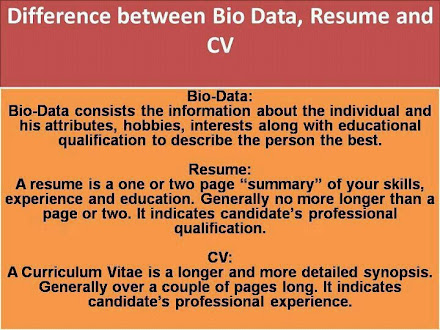
Biodata, Resume and CV
Social Issues Headline Animator
Popular Posts
-
History of Social Work Thanks: Thiru. S. Rengasamy, Lecturer, MISS, Tamil Nadu, India
-
THIS INDENTURE made at (name of City/Town/Village), this (date) day of (month) 19 (year), BETWEEN Mr./Mrs./Ms.______________________________...
-
Tamilnadu Vazhndhu Kaattuvom Project is an empowerment and poverty alleviation project implemented by the Rural Development and Panchayat Ra...
-
If you want something you never had, do something you have never don e........ As the new year blossoms, may the journey of your life be fra...
-
I. Summary A. Types of Organizations 1. Trusts Public...
-
Set up with financial resources contributed by Azim Premji, Chairman, Wipro Corporation, Azim Premji Foundation aims at making a tangible im...
-
Understanding the Narcissistic Phenomenon The so called ‘narcissistic personality disorder’ is a complex and often misunderstood diso...
-
Introduction A public charitable or religious institution can be f...
-
If you were given the task of setting up a new Human Resource Department in a small company where would you begin? Such a task would be extr...
-
Behavior Change Communication (BCC) is a tool for promoting and sustaining risk-reducing behavior change in individuals and communit...
My Headlines
Guidelines to set up a NGO or NPO
- Procedures for registering a NGO under Trust, Society and not-for-profit Companies act
- Starting a NGO or a NPO
- Registeration of a NGO under the Societies Registeration Act
- Formation, registeration and transfering the property of a Trust
- Article of Association format
- Income-tax Act procedure for an NGO
- Registering an NGO under Companies Act
- Registration of a NGO under under Foreign Contribution (Regulation) Act, 1976 (FCRA)
- Fund raising methodology for running a NGO / NPO
- Trust Deed sample
Disclaimer:
Some Indiansocialworker.blogspot.com web pages may provide links to other Internet sites for the convenience of users. Indiansocialworker.blogspot.com is not responsible for the availability or content of these external sites, nor does Indiansocialworker.blogspot.com endorse, warrant, or guarantee the products, services, or information described or offered at these other Internet sites. Users cannot assume that the external sites will abide by the same Privacy Policy to which Indiansocialworker.blogspot.com adheres. It is the responsibility of the user to examine the copyright and licensing restrictions of linked pages and to secure all necessary permissions.
- Indian Social Worker Team