Search This Blog

Showing posts with label Article. Show all posts

Introduction to Nation Rural Livelihoods Mission (NRLM)

The Government of India’s $5.1 billion National Rural Livelihoods Mission (NRLM) is one of the world’s largest initiatives to improve the livelihoods of poor rural people and boost the rural economy. It aims to make a multidimensional impact on the lives of India’s rural poor by mobilizing them, particularly the women, into robust grassroots institutions of their own where, with the strength of the group behind them, they will be able to exert voice and accountability over providers of educational, health, nutritional and financial services. This, based on past experience, is expected to have a transformational social and economic impact, supporting India’s efforts to achieve the Millennium Development Goals on Nutrition, Gender, and Poverty.

National Rural Livelihoods Mission (NRLM) recognizes that the poor people have the potential to come out of poverty with proper handholding, training and capacity building and credit linkage. The handholding support to the SHGs will be in the form of external and internal. External support structure will consist of dedicated professional institutions at the State level, district level and sub – district level whereas internal support structure will evolve in the form of SHG federations at the village level, and block level and later on at district level. NRLM also recognizes that poor people have multiple livelihoods – wage employment and self employment. It will stabilize and enhance incomes from both the livelihoods. It will also promote diversification of livelihoods.

NRLM aims to reach out to all the rural poor families (BPL families) and link them to sustainable livelihoods opportunities. It will nurture them till they comeout of poverty and enjoy a decent quality of life.To achieve this, NRLM will put in place dedicated and sensitive support structures at various levels.These structures will work towards organising the poor, building their capacities and the capacities of their organisations, enabling them access to finance and other livelihoods resources. The support institutions will play the roles of initiating the processes of organising them in the beginning,providing the livelihoods services and sustaining the livelihoods outcomes subsequently. The support structures will also work with the unemployed rural poor youth for skilling them and providing employment either in jobs, mostly in high growth sectors, or in remunerative self-employment and micro-enterprises.

The core belief of National Rural Livelihoods Mission (NRLM) is that the poor have innate capabilities and a strong desire to come out of poverty. They are entrepreneurial, an essential coping mechanism to survive under conditions of poverty. The challenge is to unleash their capabilities to generate meaningful livelihoods and enable them to come out of poverty.

NRLM mission is to reduce poverty by enabling the poor households to access gainful self-employment and skilled wage employment opportunities resulting in appreciable improvement in their livelihoods on a sustainable basis, through building strong and sustainable grassroots institutions of the poor.

Introduction to National Urban Sanitation Policy

The vision of the National Urban Sanitation Policy is that all Indian cities and towns become totally sanitised, healthy and liveable and ensure and sustain good public health and environmental outcomes for all their citizens with a special focus on hygienic and affordable sanitation facilities for the urban poor and women. The focus of the Policy is on Awareness Generation and Behavioural Change by generating awareness about sanitation and its linkages with public and environmental health amongst communities and institutions and also promoting mechanisms to bring about and sustain behavioural changes aimed at adoption of healthy sanitation practices;

In order to achieve this goal, the following activities shall be undertaken:
  • Promoting access to households with safe sanitation facilities (including proper disposal arrangements);
  • Promoting community-planned and managed toilets wherever necessary, for groups of households who have constraints of space, tenure or economic constraints in gaining access to individual facilities;
  • Adequate availability and 100 % upkeep and management of Public Sanitation facilities in all Urban Areas, to rid them of open defecation and environmental hazards;

National Urban Sanitation Policy


Introduction to Interest Subsidy Scheme for Housing the Urban Poor (ISHUP)

Interest Subsidy Scheme for Housing the Urban Poor (ISHUP) has been designed for providing interest subsidy on housing urban poor to make the housing affordable and within the repaying capacity of EWS/LIG. The scheme encourages poor sections to avail of loan facilities through Commercial Banks for the purposes of construction of houses and avail 5% subsidy in interest payment for loans upto Rs. 1 lakh.

Loan will be available for construction of new houses. Loan repayment periods will be permissible generally ranging form 15-20 years. The subsidy will be 5% p.a. for EWS and LIG, admissible for a maximum loan amount of Rs. 1 lakh over the full period of the loan. Beneficiary borrowers may choose fixed or floating rates (the consequences clearly explained to the borrowers by PLIs).

Under the scheme, preference (subject to beneficiaries being from EWS/LIG segments) will be given to Scheduled Caste, Schedule Tribe, Minorities, Person with disabilities and women beneficiaries in accordance with their proportion in the total population of city/urban agglomerate during the 2001 census.

ISHUP Guidelines:

Introduction to Integrated Low Cost Sanitation (ILCS) Scheme

The “Integrated Low Cost Sanitation” Scheme aims at conversion of individual dry latrine into pour flush latrine thereby liberating manual scavengers from the age old, obnoxious practice of manually carrying night soil.

ILCS scheme was initially started in 1980-81 through the Ministry of Home Affairs and later through Ministry of Social Justice & Empowerment. The scheme was transferred in 1989-90 to Ministry of Urban Development & Poverty Alleviation and from 2003-2004 onwards to Ministry of UEPA/HUPA. The scheme has helped in constructing/converting over 28 lakh latrines to liberate over 60000 scavengers so far. While implementing the ILCS scheme, it was observed that the scheme did not perform well due to various reasons. To make the scheme more attractive and implementable the Guidelines have been revised w.e.f. 17th January, 2008.

The main objective of the Scheme is to convert low cost sanitation units through sanitary two pit pour flush latrines with superstructures and appropriate variations to suit local conditions (area specific latrines), but 25% of the funds of the scheme are also made available for construction of new latrines where EWS households have no latrines.

The Scheme, as revised with effect from January 2008, envisages conversion of dry latrines into low cost twin pit pour flush latrines and construction of new individual toilets to Economically Weaker Section (EWS) house holds who have no latrines in the urban areas of the country.

Under the scheme the pattern of assistance is 75% Central Subsidy, 15% State Subsidy and 10% beneficiary share. An Upper ceiling cost of Rs.10,000/- is provided for the complete unit of a two pit pour flush individual latrine with superstructure (excluding States falling in difficult / hilly areas). For the States falling in the category of difficult and hilly areas, 25% extra cost is provided for each two pit pour flush latrine. The Scheme is limited to Economically Weaker Section (EWS) households only and does not entail a loan component. The Scheme is implemented by Ministry of Housing & Urban Poverty Alleviation directly.

The States have to select NGOs having adequate experience in this field who will be funded to a maximum extent of 15% over and above the total project cost to be borne by the Centre and States based on the ratio of 5:1 at different stages of implementation. 1% of total Central allocation is retained by the Ministry every year, to be utilized for Management Information System (MIS), Monitoring System, Capacity Building and Information, Education and Communication (IEC) components.

The urban local bodies or the state agencies designated/selected by the State Governments may send their proposals to the State Government, who after approval of the proposals by the State Coordination Committee will forward the same to the Regional Offices of HUDCO. Regional Offices of HUDCO after appraisal of the same will send the same to the HUDCO Headquarters. HUDCO Headquarters will scrutinize the proposals and send them to the Central Coordination Committee.

Integrated Low Cost Sanitation (ILCS) Scheme revised Guidelines:

Introduction to Swarna Jayanti Shahari Rozgar Yojana (SJSRY)

With a view to provide gainful employment to the urban unemployed or underemployed through encouraging the setting up of self-employment ventures or provision of wage employment, a new urban poverty alleviation programme, namely, Swarna Jayanti Shahari Rozgar Yojana (SJSRY) was launched on 01.12.1997 after subsuming the earlier three Urban Poverty Alleviation Schemes, namely Urban Basic Services for the Poor (UBSP), Nehru Rozgar Yojana (NRY) and Prime Minister’s Integrated Urban Poverty Eradication Programme (PMI UPEP).

The Swarna Jayanti Shahari Rozgar Yojana (SJSRY) seeks to provide gainful employment to the urban unemployed or underemployed poor through encouraging the setting up of self-employment ventures (Individual of Group) or provision of wage employment. This programme relies upon creation of suitable community structures like Community Development Society (CDS), Neighbourhood Groups (NHGs), Neighbourhood Committees (NHC) etc. and delivery of inputs under this programme shall be through the medium of urban local bodies and such community structures.

The three key objectives of the revised Swarna Jayanti Shahari Rozgar Yojana (SJSRY) are:
• Addressing urban poverty alleviation through gainful employment to the urban unemployed or underemployed poor;
• Supporting skill development and training to enable the urban poor have access to employment opportunities provided by the market or undertake self-employment; and
• Empowering the community to tackle the issues of urban poverty through suitable self-managed community structures and capacity building programmes.

The revamped SJSRY has five major components,namely-
(i). Urban Self Employment Programme (USEP)
(ii). Urban Women Self-help Programme (UWSP)
(iii). Skill Training for Employment Promotion amongst Urban Poor (STEP-UP)
(iv). Urban Wage Employment Programme (UWEP)
(v). Urban Community Development Network (UCDN)

The above programmes have to be implemented in convergence with other programmes relating to slum development/urban poverty alleviation such as Jawharlal Nehru National Urban Renewal Mission(JNNURM), Prime Minister’s Employment Generation Programme (PMEGP), Aam Aadmi Bima Yojana (AABY), Rashtriya Swasthya Bima Yojana (RSBY), National Rural Health Mission (NRHM), Sarva Shiksha Abhiyan (SSA), Mid-day Meals Scheme (MMS), Integrated Child Development Scheme(ICDS), Janani Suraksha Yojana (JSS), National Social Assistance Programme (NSAP), Skill Development Initiative Scheme (SDIS) – Modular Employable Skills (MES), etc.

Swarna Jayanti Shahari Rozgar Yojana (SJSRY)revised Guidelines:


Introduction to Rajiv Awas Yojana (RAY)

With an aim of creating a slum-free India, the Government of India has launched the phase-1 of Rajiv Awas Yojana (RAY) to facilitate affordable housing for slum dwellers.

The Centre would provide financial assistance to States willing to assign property rights to slum dwellers for provision of shelter and basic civic and social services for slum re-development and for creation of affordable housing stock under the RAY scheme.

The scheme has been designed on the basis of experience of the Jawaharlal National Urban Renewal Mission (JNNURM) sub-mission of Basic Services to the Urban Poor (BSUP) and the Integrated Housing and Urban Development Programme (IHSDP).

Under these schemes, government had sought to take action for inclusive urban growth by enabling re—development of slums with basic amenities and decent housing with security of tenure.

The foundation laid by the JNNURM is now being built upon by aiming at creation of a slum—free India through assignment of property rights to slum dwellers with greater inflow of additional Central assistance for slum re-development and creation of new affordable housing stock.

As in JNNURM, the Central assistance is conditional to reforms by the States. The reforms required here are directly linked to the objectives of the scheme and necessary for the scheme to be successful.
These reforms include the enactment of law and the assigning of property rights as also reforms in the policy to ease the land and affordable housing shortages.

The scheme is expected to begin in 250 cities which have an estimated 32.10 million people living in slums. They will benefit by way of property rights and access to decent shelter, basic amenities and a dignified life.

The inclusive city growth process will lead to enactment of productivity at the bottom of the pyramid and will sustain the contribution of cities to the Gross Domestic Product.

Rajiv Awas Yojana (RAY) Guidelines

Compact Fluorescent Light (CFL) Bulbs versus Incandescent bulbs

A compact fluorescent lamp (CFL), also known as a compact fluorescent light or energy saving light (or less commonly as a compact fluorescent tube), is a type of fluorescent lamp. Many CFLs are designed to replace an incandescent lamp and can fit into most existing light fixtures formerly used for incandescents.  The typical household still uses incandescent light bulbs, spending more amount on electricity bills. Use of compact fluorescent light (CFL) can reduce this expense markedly.  Moreover, replacing energy-hogging incandescents with energy-saving fluorescents (CFLs) is a simple, effective way to slow the rate of global climate change while saving money. It's good for the environment, it's economical, it's efficient, and it's easy

How is light produced in CFLs?

CFL bulbs emit light that is a mixture of three phosphors exposed to ultraviolet light produced by mercury atoms. This process is unlike incandescent bulbs, which use filaments. Though CFLs cost more at the onset, they are tested to provide 8,000 hours of light as against the 500-2,000 hours from incandescent bulbs.  Here is the math—an 18-watt CFL saves you from purchasing ten ordinary 75-watt incandescent bulbs.  Mercury is used in many household items: thermostats, thermometers, fluorescent lights, batteries and switches for appliances, lights and automobiles. Exposure to large quantities of mercury in our air, water and fish we eat is a documented risk to human health. An extremely small amount of mercury-an average of four milligrams-is sealed within the glass tubing of a CFL. This is said to be about the size of the period at the end of this sentence. It is an essential, irreplaceable element in CFLs, and it's what allows the bulb to be such an efficient light source. The mercury in a CFL is no threat to the environment unless the glass is broken. For a basis of comparison, there are about one to three grams of mercury in your average home thermometer. It would take between 250 to 1000 CFLs to equal that same amount. Ironically, a regular incandescent light bulb actually releases much more mercury into the environment than a CFL.

Why are CFLs more cost-efficient than incandescent bulbs?

Incandescent bulbs manage to convert only 10% of electricity to visible light, with the remaining 90% converting to heat. Hence, using more efficient lighting can substantially curtail electricity consumption. Replacing the commonly used incandescent bulbs with CFLs is expected to cut electricity use for lighting by half, further reducing the annual carbon dioxide emissions by about 125 billion pounds.

Different types of CFLs

  • CFLs can be used in various types of light fixtures like table lamps, ceiling lights, spotlights, etc. and they come in a variety of styles too.
  • Twin Tube Lamps have two tubes in the lamp, aligned in a parallel manner. Also called Biax or Dulux, they fit into lamps, recessed ceiling lights, and wall lights.
  • Quad Tube Lamps are the same as twin tubes of similar wattage at half the length. These bulbs fit better in smaller fixtures like lamps. They are also called double Biax, PL Clusters or PLC lamps.
  • Triple Biax Lamps generate more light in a shorter body. Providing a high amount of light output in a small-sized bulb shape, they easily fit into fixtures meant for incandescent bulbs.
  • Spiral Lamps are a spirally-shaped continuous tube lamp. In shape and light output qualities, it equals a standard incandescent bulb. Therefore, it is the most popular model of CFLs.
  • F lamps are similar to quad tubes except that their two tubes are aligned from top to bottom instead of side to side. Therefore, the shape resembles an F. They are frequently used as task lights and in low-profile recessed fixtures.
  • Circular (Circline) lamps are usually designed for reading lamps. They come in two types: one giving the 'cool white' light, like the common bulbs, and the other having the warm light.
  • As substitutes to the prevalently used bulbs, CFLs are available in various sizes and shapes, and produce warm light similar to that produced by an incandescent bulb. Earlier, CFLs were larger than ordinary light bulbs. Now they are getting smaller and fit in most light fixtures. Newer models are fitted with electronic circuitry, making them lighter and more compact.
  • CFLs use only up to one-fourth to one-third of the electric requirement of incandescent bulbs while having ten times the life of the latter. Their regular use can have tremendous environmental benefits. Since electricity is usually produced from coal, and each CFL cuts down carbon dioxide emissions by about 1,300 pounds over its lifetime, using CFLs amounts to a lot of energy savings in the environment.

Tips to get the most out of your CFLs

  • Avoid turning off the bulbs too frequently as that shortens their lifespan and wastes energy.
  • Check the packaging to learn about the intended functionality of the bulb and use it accordingly. If you use a CFL that does not work well in conditions of high heat or humidity like bathrooms, then you will not get the maximum output from your CFL.
  • Using dimmers is a very effective way to reduce power consumption for all bulbs.
  • Look for appropriate certification products for guaranteed quality and performance.

Source(s):  

1. http://www.concernergy.com/residential_lighting_compact-fluorescent-light-bulbs_8#more  
2. http://www.michigan.gov/deq/0,1607,7-135-3585_30068_30172-90210--,00.html

World Health day 2011

World Health Day is being observed on 7 April  every year to mark the founding of WHO. Each year, the Organization selects a key health issue, and encourages people from all ages and all backgrounds to hold events that highlight the significance of this issue for good health and well-being. World Health Day provides a unique opportunity for communities from across the world to come together for one day to promote actions that can improve our health.

The theme of the current World Health Day, marked on 7 April 2011, is "Antimicrobial resistance and its global spread" and focuses on the need for governments and stakeholders to implement the policies and practices needed to prevent and counter the emergence of highly resistant microorganisms.

When infections caused by resistant microorganisms fail to respond to standard treatments, including antibiotics and other antimicrobial medicines - also known as drug resistance - this may result in prolonged illness and greater risk of death. For World Health Day 2011, WHO is calling for intensified global commitment to safeguard antimicrobial medicines for future generations.

To know more about the activities carried out during the day, visit this site

Introduction to Euthanasia

Recently, we might have heard a case of Mercy Killing or Euthanasia (Greek: good death),which was turned down by Supreme Court of India through its judgment in the Aruna Shanbaug case.  Aruna Shanbaug was a nurse working in KEM hospital in Mumbai who was sexually assaulted by a sweeper. The incidence left the nurse in a vegetative state since 1973.

 
Euthanasia: the intentional killing by act or omission of a dependent human being for his or her alleged benefit. (The key word here is "intentional". If death is not intended, it is not an act of euthanasia)
Voluntary euthanasia: When the person who is killed has requested to be killed.
Non-voluntary: When the person who is killed made no request and gave no consent.
Involuntary euthanasia: When the person who is killed made an expressed wish to the contrary.
Assisted suicide: Someone provides an individual with the information, guidance, and means to take his or her own life with the intention that they will be used for this purpose. When it is a doctor who helps another person to kill themselves it is called "physician assisted suicide."
Euthanasia By Action: Intentionally causing a person's death by performing an action such as by giving a lethal injection.
Euthanasia By Omission: Intentionally causing death by not providing necessary and ordinary (usual and customary) care or food and water.

What Euthanasia is NOT: There is no euthanasia unless the death is intentionally caused by what was done or not done. Thus, some medical actions that are often labeled "passive euthanasia" are no form of euthanasia, since the intention to take life is lacking. These acts include not commencing treatment that would not provide a benefit to the patient, withdrawing treatment that has been shown to be ineffective, too burdensome or is unwanted, and the giving of high doses of pain-killers that may endanger life, when they have been shown to be necessary. All those are part of good medical practice, endorsed by law, when they are properly carried out.

To know more about Euthanasia and debates revolving mercy killing, visit this link: http://www.euthanasia.com/

Related links:

Introduction to Rajiv Gandhi National Institute of Youth Development (RGNIYD)

Rajiv Gandhi National Institute of Youth Development (RGNIYD) is an autonomous organization of the Ministry of Youth Affairs & Sports, registered as a Society under the Societies Registration Act, 1860, fully funded by the Government of India.

The Institute is located at Sriperumbudur only 40 minutes away from Chennai, the commercial and cultural capital and a buoyant metropolis of the third most idustrialised State in India

RGNIYD endeavours to facilitate our nation’s youth with a conducive environment and tools that will enable them to make the most of their natural potential to realize their aspirations.

RGNIYD functions as vital resource centre coordinating Training, Orientation, Research, Extension and Outreach initiatives for State, Central Governments and national level youth organizations.

To know more about this Institute and their programmes, visit this link: RGNIYD


Contact Details:

Rajiv Gandhi National Institute of Youth Development
(An Autonomous Organization of Ministry of Youth Affairs and Sports, GOI)
Sriperumbudur – 602 105, Tamil Nadu.
Phone : (091)044 - 27162741, 27162612
Fax : (091)044 - 27162705
E-Mail : info@rgniyd.gov.in


Introduction to Census of India 2011

India has started one of the world's greatest exercises in population counting which began on May 1, 2010 and is going to end on February 28, 2011. This has been named as Census India 2011. The Census in our country is a statutory requirement under the provisions of the Census Act 1948 and rules made there under. The history of the census in India started in 1872. The Census India 2011 is the 15th National Census since then. The Census India 2011 will be different from the earlier censuses since it would help compile a National Population Register (NPR) for all the usually resident Indians, in addition to the routine census work.

Census India 2011 will be the most reliable source of information on population data, the economic activities of its people, literacy and education, housing and household amenities, urbanisation, fertility and morality, scheduled castes and scheduled tribes, languages, religions, migration, disability etc. The purpose of the census will be to provide valuable information to country's planners, who would then formulate the policies to be followed by the central and state governments. The data from the census will also be used by many other national and international agencies. The demographic data of the country would also help in making changes in the delimitation and reservation of constituencies at all levels of governance i.e. parliamentary, assembly and local bodies. The slogan of the Census 2011 has been chosen be: "Our Census, Our Future". This would lay guidelines for the authorities to make efforts for the future development of India for the coming decade.

The task involving the census operation will be a gigantic one. The process would involve enumerating more than hundred crores persons by about twenty seven lakh enumerators through the length and breadth of of this vast country. They would be required to visit over 240 millions households. Let us all cooperate with them and welcome them to our houses with a smiling face and give them all the information they need to complete this mammoth task.

The Census India 2011 will give us an NPR, the National Population Register of the usual residents of the country, which is an exciting feature of the census India 2011. This register would provide to the authorities a complete and comprehensive identity database of the country's population. It would help the government to target the particular sectors of the society. It would help the government to review its economic decisions. The Census India 2011 would enable the Government to formulate schemes and programmes for the welfare of its people. The Planning Commission would make improvements in its planning strategy. The National Population Register prepared by the census India 2011, would help strengthen security of the country. The information collected by the enumerators will be kept absolutely confidential,. Even the law courts would not have access to this information. After the enumerators complete their field work, the data will be sent to the data processing centres located at 15 cities of India. Here the data will be processed using the world's most modern software called Intelligent Character Recognition Software (ICR),. We should feel proud of our scientists who enabled us to use this technology in our last census. Since then it is beig used in the census operations of many other countries of the world. This technolgy has helped to make such huge process of counting of the country's population at a low cost saving much of our labour and time.

In the Census India 2011, the data collected will be used for making and issuing unique ID Numbers. to all Indian citizens. The identity cards will be prepared for all the people aged 15 years and above on the basis of the biometric data collected by the enumerators. The UID number of persons under 15 will be linked to their parents. The government has planned to issue the National Identity Cards in a phased manner. It is reported that these cards will be first in the coastal villages of the country. Then after covering the coastal areas, the rest of the country will be gradually covered for the issue of these unique identity cards which would replace the multitude of IDs cards used by the country men to prove their idenity for various purposes.

The first phase of the census has been completed and the second phase has started on 9 February 2011 with the Hon'ble President of India releasing a special postage stamp on census India 2011 on 8 February 2011. This gigantic task is scheduled to be completed by 28 February 2011. Providing wrong information will attract a fine of Rs.1000 and a jail term of three years, under the Census rules.

Some of the new features introduced in Census 2011 are:

• Question on date of birth and age is added in place of age in 2001 census.
• Separate codes are assigned to 'separated' and divorced women.
• Placement of question on disability is changed and more types of disability including multiple disorders have been added.
• Category 'other' has been introduced to cover the transgender population.
• For the first time the marital status of women will be taken by assigning separate codes to 'separate' and 'divorced' women.
• Literacy status for 'other' sex has been introduced besides the existing 'male' and 'female'.

Special Thanks: India Study Channel 

To know more about Census of India 2011, visit this link:  CENSUS INDIA

Introduction to Right To Information Act, 2005

Every citizen has a right to know how the Government is functioning. Right to Information empowers every citizen to seek any information from the Government, inspect any Government documents and seek certified photocopies thereof. Some laws on Right to Information also empower citizens to official inspect any Government work or to take sample of material used in any work.

Right to Information includes the right to:

1. Inspect works, documents, records.
2. Take notes, extracts or certified copies of documents or records.
3. Take certified samples of material.
4. Obtain information in form of printouts, diskettes, floppies, tapes, video , cassettes or in any other electronic mode or through printouts.

"information" means any material in any form, including records, documents, memos, e-mails, opinions, advices, press releases, circulars, orders, logbooks, contracts, reports, papers, samples, models, data material held in any electronic form and information relating to any private body which can be accessed by a public authority under any other law for the time being in force.

"record" includes:

a) Any document, manuscript and file
b) Any microfilm, microfiche, and facsimile copy of a document
c) Any reproduction of image or images embodied in such microfilm (whether enlarged or not); and
d) Any other material produced by a computer or any other device;

An applicant cannot ask for opinions/advice/views under the RTI Act, unless the opinion/advice/view is already on "record".

However, under Section 4(1)(d), an applicant can ask for "reasons" behind a administrative or quasi judicial decision of a public authority, especially if he is a "affected person".

Information Source: RTI India


----------------------------------------------------
To view the entire content of Right To Information ACT 2005 online, visit this link: http://righttoinformation.gov.in/webactrti.htm

To download the Right To Information ACT 2005 in PDF format, visit this link: http://rti.gov.in/rtiact.htm

To download the circulars issued by GoI related with RTI Act 2005, visit this link: http://rti.gov.in/circulars/CircularReportForRTI.asp

More related links:

ROLE FUNCTIONS AND SKILLS OF SOCIAL WORKER IN POLICY PROCESS


Green Peace action against 'Genetic Pollution'

Genetically engineered or genetically modified organisms (GMOs) are created by taking genes from organisms like bacteria or virus and inserting them into other, often unrelated, species like crops or animals. Since foods derived from GMOs are not natural, there are unpredictable health and environmental risks associated with these foods.

Bt brinjal, the first genetically modified food crop has been put on hold after serious objections were raised about the necessity and safety in the long run. Even though no GM food crop is commercially cultivated in India, more than 11 major food crops are undergoing field trials across the country, which threaten to contaminate our food chains, as do unchecked import of raw food grains.

Greenpeace believes that GMOs should not be released into the environment as there is not adequate scientific understanding of their impact on the environment and human health.

Watch the below given video:


To know more about GMOs, visit this site: http://greenpeace.in/safefood/faq/  

Introduction to Multiple Personality Disorder

More than two million cases can be found altogether in psychological and psychiatric records of multiple personality disorder also called dissociative identity disorder. It is often thought that multiple personality disorder is a trick, a bizarre form of "play-acting" that is committed by manipulative, attention-seeking individuals. It is not. Multiple personality disorder is a "disorder of hiding" wherein 80-90% of multiple personality disorder patients do not have a clue that they have the disorder. Most know that there is something wrong with them; many fear that they are crazy, but few know that they have a disorder.

What is Multiple Personality Disorder?

Multiple personalities is a dissociate reaction to stress in which the patient develops two or more personalities. Each personality has a distinct, well-developed emotional and thought process and represents a unique and relatively stable personality. The individual may change from one personality to another at periods varying from a few minutes to several years. The personalities are usually very different and have different attitudes; one may be happy, carefree and fun loving, and another quiet, studious, and serious.

People can have up to fifty personalities or more. All personalities usually will have their own name and their own role. For example one personality can be the keeper of pain, his role is to take and feel all the pain that the other personalities come in contact with. The personality also can have their own appearance, but this does not mean the person changes its outer image it is just the way he/she sees inside his/her head. The personalities will also have different ages, talents, and likes and dislikes. For example: In the novel, The Minds of Billy Miligin, there was a man who had twenty-four personalities. All of his twenty-four personalities were different. They had different ages, their own appearance, and some were of the opposite sex. The personalities all had their own role and their own talents. There was one personality that was right handed all others were left handed, only one smoked, one had a British accent another Slavic. Many used their own talents some liked to paint, one was an escape artist, one was a karate expert and another a sculptor.

Various types of relationships may exist between the different personalities. Usually the individual alternates from one personality to the other, and can not remember in one, what happened in the other. Occasionally however while one personality is dominant and functions consciously, the other continues to function sub-consciously and is referred to the co conscious personality.

Relationships may become highly complicated when there is more than two personalities.
In many cases of multiple personalities the personalities will talk of a spotlight. The spotlight is how they come into the conscious world. All the personalities live around the spotlight whoever stands on it finds himself or herself in the conscious world leaving the other personalities unaware of the personality's actions. This leaves the next personality that comes into consciousness in total amnesia.

Causes of Multiple Personality Disorder

Multiple personality disorder often forms with a person who has been deprived of love and friendship and with a person who has been abused. These people make up friends for themselves, but not just and imaginary friends these friends form there own personalities. These people may also make up other people who are not scared or people, who can not feel pain to turn deal with abuse, which also turn into separate personalities. These people usually deny what is happening and may live their lives without anyone finding out about their disorder.

The degree of vulnerability of the child has a great impact on the amount of personalities the person will have. The typical female multiple has about 19 personalities; male multiples tend to have less that half of that. For example a male multiple from ages 7 to 10 who was sexually abused a half-dozen times by a distant relative is going to have far fewer personalities than a female multiple who was severely physically, sexually, and emotionally abused by both parents from infancy to age 16. The female could easily develop 30 to 50 (+) personalities, even in the hundreds. Although its important to remember that every person is different so there may be some people with many personalities and not that much abuse. Or allot of abuse and not that many personalities.

Signs that a person has multiple personality disorder:

Some signs that a person has multiple personality disorder are:

1. History of depression or suicidal behavior.

2. Childhood history of physical, sexual, emotional, or psychological abuse... reports one parent was very cold and critical reports of "wonderful" parents by a person who is clearly emotionally troubled.

3. Abusive relationships in adulthood

4. Strong attacks of shame; sees self as bad or undeserving sacrifices self for others feels does not deserve help; is a burden, reluctant to ask for help is sure you do not want to be troubled with seeing him or her

5. Reports being able to turn off pain or "put it out of my mind."

6. Self-mutilation or self-injuring behavior.

7. Hears voices.

8. Flashbacks (visual, auditory, somatic, affective, or behavioral)

9. History of unsuccessful therapy.

10. Multiple past diagnoses (e.g.: major depression, schizophrenia, bipolar disorder, borderline personality disorder, and substance abuse).

11. History of shifting symptom picture.

12. Reports of odd changes or variations in physical skills or interests.

13. Described by significant other as having 2 personalities or being a "Dr. Jekyll & Mr. Hyde." 14. Family history of dissociation.

15. Phobia or panic attacks.

16. Substance abuse.

17. Daytime enuresis or encopresis.

18. History of psychophysiological symptoms.

19. Seizure-like episodes.

20. History of nightmare and sleep disorders.

21. History of sleepwalking.

22. School problems.

23. Reports psychic experiences.

24. Anorexia or Bulimia.

25. Sexual difficulties.

Treatment for Multiple Personality Disorder

There is treatment for multiple personality disorder, but the disorder usually can not be cured completely. The personalities can be combined to form one core personality the "original" person. This process of integrating all the personalities into one is complicated and does not work in several cases. The personalities will fuse together for awhile, but than break apart when put in a stressful or unsafe situation. Recovery from multiple personality disorder and childhood trauma takes of five years or more. It is a long and difficult process of mourning. The important thing to remember is that recovery does and can happen.

Conclusion

For many observers, multiple personality disorders are a fascinating, exotic, and weird phenomenon. For the patient, it is confusing, unpleasant, sometimes terrifying, and always a source of the unexpected. The treatment of multiple personality disorder is excruciatingly uncomfortable for the patient. Their childhood traumas and memories must be faced, experienced, digested, and integrated into the patient's view of him/herself. Similarly, the nature of one's parents, one's life, and the day-to-day world must be re-thought. As each issue or trauma is dealt with the alter personality that deals with it can disappear. The personality is no longer needed to contain undigested trauma.

In a sense we are all multiple personalities in that we have many conflicting tendencies and frequently do things that surprise both others and ourselves. This is illustrated by common sayings such as, "I don't know why I did it" or "I didn't think he had it in him." But most of us do not develop distinct separate personalities.

Impact of Childhood history in Adults

Childhood history has a lot to do with how we live as adults because certain childhood events could trigger something that would last a life time. Take for example if a child fails at something and the parent does nothing to help the child, the child will grow up thinking that failing is alright and that he or she will have a hard time in life with their job or in school or life in general. Many events from a persons’ life can stick with the person throughout their life like a thorn in the side. The event will every so often reappear in the persons mind when some event in the present triggers a familiarity with the past event and the person could go in to a state of worry or even worse shock. In this occurrence it could immobilize the person and result in a lackluster in the persons life and might not be able to carry on until the issue is resolved.

Many events that have happened in a persons childhood could result in how they live for example: a child who lived a certain way might become a custom to that way and live like that for the rest of his or her life and may not ever come out of that comfort zone until he or she is addressed with the issue. They may not want to try new things or meet new people or anything for that matter. The childhood history also has an affect on the relationship with the persons’ parents. Events that occurred in the past redevelop and the person might love their parent or hate their parent depending on their child hood. This is also true with relationships with a life partner. However they were brought up will affect their relationship with their partner.

Many psychiatrists believe that child hood events could show want might be troubling people, and when they find out what happened they usually could solve the problem. The person’s surroundings as a child is also a factor on how the person will live when they are adults. Usually when a person is surrounded by comfort the person will be a warm gentle person, but a person who is surrounded by violence and anger as a child will usually grow up to be and angry and violent person. In conclusion I believe that the child hood of a person or persons’ will greatly decide what his or hers adult life. Their child hood memories will stick with them either in their mind which they always remember a certain event that changed their life, or a memory will stay with them subconsciously and at a certain time a event in their life might trigger that memory that was in their mind subconsciously and arise and cause some pain and might be hard for the person to deal with in their adult life. Thus we should try to life a good life and not let too many things trouble you as a child because we still have our adult life to let things trouble us.

Alcoholism

Alcoholism refers the drinking of alcohol to such a degree that major aspects of one's life are seriously and repeatedly interfered with. These aspects include work, school, family relationships, personal safety and health. Alcoholism is considered a disease. It has known physical, psychological and social symptoms. An alcoholic continues to drink even despite the destructive consequences. Alcoholism is serious and progressive. It can be fatal if not treated. Alcoholism is a very complex disorder. An alcoholic who stops drinking for a while is considered recovering, not cured.

A person does not have to drink every day in order to be considered an alcoholic. Likewise, someone who drinks frequently or gets drunk every once and a while is not necessarily and alcoholic. It is possible to abuse alcohol for a short period of time without developing alcoholism. For example, some people may drink abusively during a personal crisis and then resume normal drinking. College students tend to drink more heavily than other age groups.

It is often difficult to distinguish such heavy and abusive drinking from the early stages of alcoholism. How well the person can tolerate giving up alcohol for an extended time and the effects of drinking on the family, friends, work, and health, may indicate the extent of the alcohol problem.

Some common symptoms of alcoholism in the early stages are constant drinking for relief of personal problems, an increase in one's tolerance for alcohol, memory lapses or blackouts while drinking, and an urgent craving for alcohol. In the middle and late phases, dependence on alcohol causes tremors and agitation only relievable by alcohol.

Most likely, a combination of biological, psychological, and cultural factors contribute to the development of alcoholism in any individual. Alcoholism often seems to run in families.

Although there is no conclusive indication of the alcoholic family member is associated, studies show that 50 to 80 percent of all alcoholics have had a close alcoholic relative. Some researchers believe that one inherits an addiction for alcohol. Studies on animals and twins seem to support this theory. One study suggests that a susceptibility to alcoholism may be linked to a gene on chromosome eleven.

Alcoholism may also be related to emotional problems. For example, alcoholism is sometimes associated with a family history of maniac-depression. Some alcoholics have used alcohol medicate a depressive disorder. Alcoholics commonly drown their depressed or anxious feelings with alcohol. Some may drink to reduce inhibitions or negative feelings. Many alcoholics share experiences of loneliness, frustration, or anxiety but there is no single personality type that will become an alcoholic.

Alcoholism is a complex disorder for which a combination of treatments may be necessary for recovery. If the alcoholic is in the acute phase of alcoholism and is suffering from complications such as delirium tremens or serious health problems, hospitalization may be necessary. Because alcoholism is a chronic condition however, hospitalization is only the first step toward recovery.

Many alcoholics go through several hospital stays of detoxification, before committing themselves to a program for recovery. A comprehensive treatment plan can include various facilities. Facilities are available in most cities. No one can make an alcoholic commit himself to recovery. Some therapists suggest, however, that family members may influence the alcoholics by not supporting drinking activities, by seeking therapy for themselves, and not joining the alcoholic's denial of the problem. The involvement of family members can aid the progress of recovery.

Introduction to Depression

Depression is often used to describe someone who is feeling low about themselves at the moment, when in reality it is a whole lot more than that. It is a total body illness that no mater how hard a person try to talk them selves out of it they still feel bad. It can effect a person in every aspect of their life from home to work to their social life.

Depression is thought to be caused by a combination of factors including genetic, psychological, and environmental ones. It can be caused by living a stressful life or just living a bad life, but it doesn't have to be. It also occurs in all economic classes with about the same consistency. There are often times now clues as to what triggered the onset of the depression. About fifteen million Americans a year are faced with the illness.

Depression effects the thinking of the person who has it so they are often not aware that they are suffering from it. Thus the family is often forced to acted upon it before they sufferer even knows they have a problem. It is important that the family does act one in because the number one cause of suicide is depression that went untreated.

The signs of depression that one should be on the look out for in a suspected sufferer include: hopelessness, sadness, inability to make decisions, inability to concentrate, sudden weight changes, constant complaining, and many others. The treatment for such sufferers often include talk therapy and a prescription for antidepressants.

The most important think that can be done for some one facing a depression is for their friends and family to be there for them. 80- 90% of those faced with depression can be helped but they can¹t beat it alone.

HOW TO COPE WITH STRESS IN AN ORGANIZATION

Since the beginning of mankind there has always been some kind of stress affecting how people feel, act and cope with situations. In this paper we will look at the definition of stress and what causes people to have stress. Then we will see how different people handle stress and show how not all individuals have the same tolerance for stress. The next thing that will be discussed is how managers in organizations can recognize and reduce the negative effects that stress has on the worker and the organization. Finally we will consider what kind of stresses there are in military organizations and how they can be controlled.

DEFINING STRESS

Robert C. Dailey, in his book Understanding People In Organizations, defines stress as "any demand made on the body that requires psychological or physical adjustment." Many people think of stress as always being something bad. However, stress sometimes can be good. Stress is part of our every day life. It can have a motivating effect or a demotivating effect. Each of us have our own level of how much stimulation or stress we need in our lives to keep us from getting bored. Others however, have a much lower tolerance for stress stimuli. So managers must be able to look at each individual and decide if the individual has a high or low tolerance for stress. Managers can do this only if they have a good understanding of what causes stress.

TYPES OF STRESS

Stress can come from a multitude of different reasons, but for simplicity lets break it down into two forms: individual induced stress and physical environment stress. Individual stress includes things such as role conflict, role ambiguity, work overload, and responsibility for others. Role conflict occurs when accomplishing one job inhibits or greatly reduces the chance at completing another assigned task. In this case the person who is tasked to do the jobs will incur some type of stress while trying to figure out how to get both tasks accomplished in the given amount of time. How much stress and if it will impact the individual positively or negatively will depend on the experience level of the individual. Role ambiguity is when an individual is not sure of what their job entails. It makes it hard for a person to decide on what their priorities are and how to manage their time. Ambiguity can come from a number of different things. A transfer, promotion, new boss, or new co-workers can all cause an individual to experience some type of role ambiguity and added stress. Both role conflict and role ambiguity relate to job dissatisfaction, lower level of self-confidence, and sometimes elevated blood pressures. When these occur an individual's motivation decreases, family problems surface, and depression sets in.

Another form of individual induced stress is work overload. There are two forms of work overload: quantitative and qualitative. Quantitative occurs when a person has too many things to accomplish and not enough time to do them in. Qualitative overload on the other hand is when the individual doesn't have enough experience or expertise to accomplish the task(s) at hand. Both of these type of stressors are very detrimental to an individual's health. In fact because employees feel as if they are doing two or more jobs at once and have no time to themselves they experience elevated cholesterol, blood pressure, and pulse rate.

Another factor which affects employees is when they have or feel they have the responsibility for other co-workers. This can happen not only to managers but also to other employees who may be group leaders or even union leader. When you start adding up all of these individual responsibilities the potential for employees having some sort of job related stress is very high. Now lets move on to physical work environment stressors.

When people think of physical work environment they usually think of some type of hard labor. But its not confined only to physical labor, it also encompasses other factors such as noise, temperature, lighting, and pollution. So that means even people in business and people in construction both have some kind of physical work environment stressors. Stress from noise doesn't have to be caused from loud sounds. It could be the sound of the air conditioner or maybe even the silence of some one who is sitting next to you and you know they are watching what you do. Temperature also adds to frustration and therefore causes stress. Whether its from working out in the blazing sun or from sitting beside the air conditioner, they both can lead to stressful situations. Light can cause stress because of being to high, to low, or the wrong type. Any of these can make a person strain their eyes thus make them more susceptible to stress. When you put all the individual and physical stressors together you can see why job stress is drawing more and more attention.

RECOGNIZING STRESS

The best way to learn how to notice signs of stress in other people is to become aware of your own types of symptoms. There are many warning signs available to us. A few of them include dryness of the mouth, insomnia, chest pain with no known cause, rapid breathing, stomach pain, and changes in appetite. When you feel these type of symptoms pay attention to how you react to them. More than likely what you do will probably be the same way others cope with stress. Here are some of the things you might not see in your self that you might notice in your co-workers; drug use, excessive drinking, absenteeism, and emotional outbursts. One of the more serious stress-related sickness is depression. This happens when a person loses their self-esteem and they feel that they have no control over their job. Two signs associated with depression are the inability to meet deadlines and having trouble making decisions while at the same time worrying about both of them excessively. Managers need to be able to recognize these signs of stress in the work place so productivity won't be hurt and the quality of life for the employees remain high.

What exactly can be done about stress? The most important thing that organizations can do is try to keep stress at a minimum on the job. Employers need to make sure that they educate their employees about how to handle stress. This can be in done at a formal meeting, at informal group meetings, or by newsletter. The main thing is to get the word out about stress and heighten individuals awareness of it. There are many avenues to take that help relieve stress. Physical fitness, nutrition, weight loss, and smoking programs are some of the more popular ways to help ward off stress. One way that employers are responding to employees' emotional, physical, and personal problems are employee assistance programs(EAP). These programs are set up by the employer with a local medical organization that has the capability of helping employees that have some type of problem whether it be drug dependency, alcoholism or smoking. The employer in these programs pay for part or all the expenses of the program.

Another way organizations are helping their employees to deal with stress are wellness programs. Many organizations are using these programs and are reporting great results from them. Companies are beginning to realize that programs dealing with stress-related problems before they become chronic can be a major contributor to the quality of work life for employees thus enhancing their job performance. Some companies spend millions of dollars each year on wellness programs. One company even paid their employees bonus' for any weight they lost. Although these programs sound like they cost a lot they actually save companies money in the long run. This is because of several factors some of which are less hospital stays, less health insurance claims, reduced accidents rates, and increased employee satisfaction. All of these lead to a more productive individual and better work force.

One other aspect of reducing stress deals with specific behavioral techniques for mental relaxation. These are brought out in stress management courses that some companies let their employees attend. They focus their attention on the concept that the central nervous system can't differentiate between a real experience and an imagined experience. These classes teach things like deep breathing, muscle relaxation, biofeedback, and how stress can affect them personally and what they can do about it. In today's society where pressures are becoming more and more extreme organizations, leaders, and managers need to be aware of the stress that their work force encounters and set up some type of program to help them deal with them.

HOW TO HANDLE STRESS

Although every person handles stress in their own particular way they all basically go through the same stages. Professor Hans Selye called these stages the 'general adaptation syndrome'.5 He says that the body adjust to stress in three stages; (1) alarm reaction, (2) adaptation, and (3) exhaustion. Alarm reaction is where a person first becomes aware of whatever the stressor is. In this stage the body activates its defensives. Some of the notable traits are higher blood pressure, rapid breathing, faster heart rate, and muscle tension. In the adaptation stage the body tries to identify which system it needs to use to deal with the long term effect of what ever is causing stress. Then the body moves into the exhaustion stage. This is where the body is totally depleted of its adaptive energy. The body also can revert back to the symptoms of the alarm reaction stage. From having a basic understanding of how a person's body reacts to stress, managers have a better insight on what to look for when trying to figure out what the limits are of their personnel.


We have taken a look at what the definition of stress and some of the causes of stress in the work place. It is important to try and reduce these causes as much as possible so that employees won't get any stress related symptoms. Also it was stated how a persons' body reacts when it encounters stress. Then the signs of stress that managers need to look for were discussed. After that some of the ways organizations can help it employees manage stress were looked at. Finally, it was shown how the military is handling stress among its members. As the world gets more diverse stress in the work force will continue to grow. It is imperative for managers and leaders to be able to recognize stress, understand its causes, and know how to alleviate it in their organizations so that it can continue to grow and be productive.

Introduction to Narcissistic Personality Disorder

Understanding the Narcissistic Phenomenon

The so called ‘narcissistic personality disorder’ is a complex and often misunderstood disorder. The cardinal feature of the narcissistic personality is the grandiose sense of self importance, but paradoxically underneath this grandiosity the narcissist suffers from a chronically fragile low self esteem. The grandiosity of the narcissist, however, is often so pervasive that we tend to dehumanize him or her. The narcissist conjures in us images of the mythological character Narcissus who could only love himself, rebuffing anyone who attempted to touch him. Nevertheless, it is the underlying sense of inferiority which is the real problem of the narcissist, the grandiosity is just a facade used to cover the deep feelings of inadequacy.

The Makeup of the Narcissistic Personality

The narcissist’s grandiose behavior is designed to reaffirm his or her sense of adequacy. Since the narcissist is incapable of asserting his or her own sense of adequacy,the narcissist seeks to be admired by others. However, the narcissist’s extremely fragile sense of self worth does not allow him or her to risk any criticism. Therefore, meaningful emotional interactions with others are avoided. By simultaneously seeking the admiration of others and keeping them at a distance the narcissist is usually able to maintain the illusion of grandiosity no matter how people respond. Thus, when people praise the narcissist his or her grandiosity will increase, but when criticized the grandiosity will usually remain unaffected because the narcissist will devalue the criticizing person.

Akhtar (1989) [as cited in Carson & Butcher, 1992; P. 271] discusses six areas of pathological functioning which characterize the narcissist.

In particular, four of these narcissistic character traits best illustrate the pattern discussed above.

(1) a narcissistic individual has a basic sense of inferiority, which underlies a preoccupation with fantasies of outstanding achievement;
(2) a narcissistic individual is unable to trust and rely on others and thus develops numerous, shallow relationships to extract tributes from others;
(3) a narcissistic individual has a shifting morality-always ready to shift values to gain favor; and
(4) a narcissistic person is unable to remain in love, showing an impaired capacity for a committed relationship.

Levels of Narcissism

The most extreme form of narcissism involves the perception that no separation exists between the self and the object. The object is viewed as an extension of the self, in the sense that the narcissist considers others to be a merged part of him or her. Usually, the objects which the narcissist chooses to merge with represent that aspect of the narcissist’s personality about which feelings of inferiority are perceived. For instance if a narcissist feels unattractive he or she will seek to merge with someone who is perceived by the narcissist to be attractive. At a slightly higher level exists the narcissist who acknowledges the separateness of the object, however, the narcissist views the object as similar to himself or herself in the sense that they share a similar psychological makeup. In effect the narcissist perceives the object as ‘just like me’. The most evolved narcissistic personality perceives the object to be both separate and psychologically different, but is unable to appreciate the object as a unique and separate person. The object is thus perceived as useful only to the extent of its ability to aggrandize the false self (Manfield, 1992).

Types of narcissism

Pending the perceived needs of the environment a narcissist can develop in one of two directions. The individual whose environment supports his or her grandiosity, and demands that he or she be more than possible will develop to be an exhibitionistic narcissist. Such an individual is told ‘you are superior to others’, but at the same time his or her personal feelings are ignored. Thus, to restore his or her feelings of adequacy the growing individual will attempt to coerce the environment into supporting his or her grandiose claims of superiority and perfection. On the other hand, if the environment feels threatened by the individual’s grandiosity it will attempt to suppress the individual from expressing this grandiosity. Such an individual learns to keep the grandiosity hidden from others, and will develop to be a closet narcissist. The closet narcissist will thus only reveal his or her feelings of grandiosity when he or she is convinced that such revelations will be safe (Manfield, 1992)

Narcissistic Defense Mechanisms

Narcissistic defenses are present to some degree in all people, but are especially pervasive in narcissists. These defenses are used to protect the narcissist from experiencing the feelings of the narcissistic injury. The most pervasive defense mechanism is the grandiose defense. Its function is to restore the narcissist’s inflated perception of himself or herself. Typically the defense is utilized when someone punctures the narcissist’s grandiosity by saying something which interferes with the narcissist’s inflated view of himself or herself. The narcissist will then experience a narcissistic injury similar to that experienced in childhood and will respond by expanding his or her grandiosity, thus restoring his or her wounded self concept. Devaluation is another common defense which is used in similar situations. When injured or disappointed the narcissist can respond by devaluing the ‘offending’ person. Devaluation thus restores the wounded ego by providing the narcissist with a feeling of superiority over the offender. There are two other defense mechanisms which the narcissist uses. The self-sufficiency defense is used to keep the narcissist emotionally isolated from others. By keeping himself or herself emotionally isolated the narcissist’s grandiosity can continue to exist unchallenged. Finally, the manic defense is utilized when feelings of worthlessness begin to surface. To avoid experiencing these feelings the narcissist will attempt to occupy himself or herself with various activities, so that he or she has no time left to feel the feelings (Manfield, 1992).

The Therapeutic Essence of Treating Narcissism

The narcissist who enters therapy does not think that there is something wrong with him or her. Typically, the narcissist seeks therapy because he or she is unable to maintain the grandiosity which protects him or her from the feelings of despair. The narcissist views his or her situation arising not as a result of a personal maladjustment; rather it is some factor in the environment which is beyond the narcissist’s control which has caused his or her present situation. Therefore, the narcissist expects the therapist not to ‘cure’ him or her from a problem which he or she does not perceive to exist, rather the narcissist expects the therapist to restore the protective feeling of grandiosity. It is therefore essential for the therapist to be alert to the narcissists attempts to steer therapy towards healing the injured grandiose part, rather than exploring the underlying feelings of inferiority and despair.

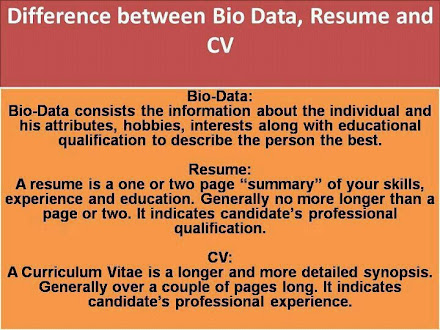
Biodata, Resume and CV

Biodata, Resume and CV

Social Issues Headline Animator

Popular Posts


free counters

My Headlines


Disclaimer:

This blog is designed to provide and encourage access within the social work community to sources of current and comprehensive information. Therefore, Indiansocialworker.blogspot.com itself places no restrictions on the use or distribution of the data contained therein.

Some Indiansocialworker.blogspot.com web pages may provide links to other Internet sites for the convenience of users. Indiansocialworker.blogspot.com is not responsible for the availability or content of these external sites, nor does Indiansocialworker.blogspot.com endorse, warrant, or guarantee the products, services, or information described or offered at these other Internet sites. Users cannot assume that the external sites will abide by the same Privacy Policy to which Indiansocialworker.blogspot.com adheres. It is the responsibility of the user to examine the copyright and licensing restrictions of linked pages and to secure all necessary permissions.

- Indian Social Worker Team