Search This Blog

Showing posts with label Human Resources. Show all posts

Essential Characteristics of an Effective Appraisal System

Performance appraisal system should be effective as a number of crucial decisions are made on the basis of score or rating given by the appraiser, which in turn, is heavily based on the appraisal system. Appraisal system, to be effective, should possess the following essential characteristics:

Reliability and validity

Appraisal system should provide consistent, reliable and valid information and data, which can be used to defend the organization – even in legal challenges. If two appraisers are equally qualified and competent to appraise an employee with the help of same appraisal technique, their ratings should agree with each other. Then the technique satisfies the conditions of inter-rater reliability. Appraisals must also satisfy the condition of validity by measuring what they are supposed to measure. For example, if appraisal is made for potential of an employee for promotion, it should supply the information and data relating to potentialities of the employee to take up higher responsibilities and carry on activities at higher level.

Job relatedness

The appraisal technique should measure the performance and provide information in job related activities/areas.

Standardization

Appraisal forms, procedures, administration of techniques, ratings, etc., should be standardized as appraisal decisions affect all employees of the group.

Practical viability

The techniques should be practically viable to administer, possible to implement and economical to undertake continuously.

Legal sanction

Appraisals must meet the laws of the land. They must comply with provisions of various acts relating to labor.

Training to appraisers

Because appraisal is important and sometimes difficult, it would be useful to provide training to appraisers viz., some insights and ideas on rating, documenting appraisals and conducting appraisal interviews. Familiarity with rating errors can improve rater’s performance and this may inject the needed confidence in appraisers to look into performance ratings more objectively.

Open communication

Most employees want to know how well they are performing the job. A good appraisal system provides the needed feedback on a continuing basis. The appraisal interviews should permit both parties to learn about the gaps and prepare themselves for future. To this end, managers should clearly explain their performance expectations to their subordinates in advance of the appraisals period. Once this is known, it becomes easy for employees to learn about the yardsticks and, if possible, try to improve their performance in future.

Employee access to results

Employees should know the rules of the game. They should receive adequate feedback on their performance. If performance appraisals are meant for improving employee performance, then withholding appraisal result would not serve any purpose. Employees simply cannot perform better without having access to this information. Permitting employees to review the results of their appraisal allows them to detect any errors that may have been made. If they disagree with the evaluation, they can even challenge the same through formal channels.

Due process

It follows then that formal procedures should be developed to enable employees who disagree with appraisal results (which are considered to be inaccurate or unfair). They must have the means for pursuing their grievances and having them addressed objectively.

Performance appraisal should be used primarily to develop employees as valuable resources. Only then it would show promising results. When management uses it as a whip or fails to understand its limitations, it fails. The key is not which form or which method is used (Mathis and Jackson).

Employees Performance Appraisal - Introduction

Introduction

After an employee has been selected for a job, has been trained to do it and has worked on it for a period of time, his performance should be evaluated. Performance Evaluation or Appraisal is the process of deciding how employees do their jobs. Performance here refers to the degree of accomplishment of the tasks that make up an individual’s job. It indicates how well an individual is fulfilling the job requirements. Often the term is confused with efforts, which means energy expended and used in a wrong sense. Performance is always measured in terms of results. A bank employee, for example, may exert a great deal of effort while preparing for the CAIIB examination but manages to get a poor grade. In this case the effort expended is high but performance is low.

Definition

Performance appraisal is method of evaluating the behavior of employees in the work spot, normally including both the quantitative and qualitative aspects of job performance. It is a systematic and objective way of evaluating both work-related behavior and potential of employees. It is a process that involves determining and communicating to an employee how he or she is performing the job and ideally, establishing a plan of improvement.

Performance appraisal is broader term than Merit Rating. In the past managers used to focus on the traits of an employee while ranking people for promotions and salary increases. Employee’s traits such as honesty, dependability, drive, personality, etc., were compared with others and ranked or rated. The attempt was to find what the person has (traits) rather than what he does (performance); the focus was on the input and not on the output. This kind of evaluation was open to criticism because of the doubtful relationship between performance and mere possession of certain traits.

Features

The main characteristics of performance appraisal may be listed thus:
  • The appraisal is a systematic process. It tries to evaluate performance in the same manner using the same approach. A number of steps are followed to evaluate an employee’s strength and weaknesses.
  • It provides an objective description of an employee’s job’s relevant strengths and weaknesses.
  • It tries to find out how well the employee is performing the job and tries to establish a plan for further improvement.
  • The appraisal is carried out periodically, according to a definite plan. It is certainly not a one-shot deal.
  • Performance evaluation is not job evaluation. Performance appraisal refers to how well someone is doing an assigned job. Job evaluation, on the other hand, determines how much a job is worth to the organization, and therefore, what range of pay should be assigned to the job.
  • Performance appraisal may be formal or informal. The informal evaluation is more likely to be subjective and influenced by personal factors. Some employees are liked better than others and have, for that reason only, better chances of receiving various kinds of rewards than others. The formal system is likely to be more fair and objective, since it is carried out in a systematic manner, using printed appraisal forms
Objectives

Performance appraisal could be taken either for evaluating the performance of employees or for developing them. The evaluation is of two types: telling the employee where he stands and using the data for personnel decisions concerning pay, promotions, etc. The developmental objectives focus on finding individual and organizational strengths and weaknesses; developing healthy superior-subordinate relations; and offering appropriate counseling/coaching to the employee with a view to develop his potential in future.

Appraisal of employees serves several useful purposes:

(a) Compensation decisions: It can serve as a basis for pay raises. Managers need performance appraisal to identify employees who are performing at or above expected levels. This approach to compensation is at the heart of the idea that raises should be given for merit rather than for seniority. Under merit systems, employee receives raises based on performance.

(b) Promotion decisions: It can serve as a useful basis for job change or promotion. When merit is the basis for reward, the person doing the best job receives the promotion. If relevant work aspects are measured properly, it helps in minimizing feelings of frustration of those who are not promoted.

(c)Training and development programs: It can serve as a guide for formulating a suitable training and development program. Performance appraisal can inform employees about their progress and tell them what skills they need to develop to become eligible for pay raises or promotions or both.

(d)Feedback: Performance appraisal enables the employee to know how well he is doing on the job. It tells him what he can do to improve his present performance and go up the ‘organizational ladder’.

(e)Personal development: Performance appraisal can help reveal the causes of good and poor employee performance. Through discussions with individual employees, a line manager can find out why they perform as they do and what steps can be initiated to improve their performance.

What is to be appraised?

Every organization has to decide upon the content to be appraised before the programme is approved. Generally, the content to be appraised is determined on the basis of job analysis. The content to be appraised may be in the form of contribution to organizational objectives (measures) like production, savings in terms of cost, return on capital, etc. Other measures are based on: (1) behaviors which measure observable physical actions, movements, (2) objectives which measure job related results like amount of deposits mobilized, and (3) traits which are measured in terms of personal characteristics observable in employee’s job activities. The content to be appraised may vary with the purpose of appraisal and type and level of employees.

Who will appraise?

The appraiser may be any person who has thorough knowledge about the job content, contents to be appraised, standards of contents and who observes the employee while performing a job. The appraiser should be capable of determining what is more important and what is relatively less important. He should prepare reports and make judgments without bias. Typical appraisers are: supervisors, peers, subordinates, employees themselves and users of services and consultants.

Supervisors

Supervisors include superiors of the employee, other superiors having knowledge about the work of the employee and departmental head or manager. The general practice is that immediate superiors appraise the performance, which in turn, is reviewed by the departmental head/manager. This is because supervisors are responsible for managing their subordinates and they have the opportunity to observe, direct and control the subordinates continuously. Moreover, they are accountable for the successful performance of their subordinates. Sometimes other supervisors, who have close contact with employee work also appraise with a view to provide additional information.

On the negative side, immediate supervisors may emphasize certain aspects of employee performance to the neglect of others. Also, managers have been known to manipulate evaluations to justify their decisions on pay increases and promotions. However, the immediate supervisor will continue to evaluate employee performance till a better alternative is available. Organizations, no doubt, will seek alternatives because of the weaknesses mentioned above and a desire to broaden the perspective of the appraisal.

Peers

Peer appraisal may be reliable if the work group is stable over a reasonably long period of time and performs tasks that require interaction. However, little research has been conducted to determine how peers establish standards for evaluating others or the overall effect of peer appraisal on the group’s attitude. Whatever research was done on this topic was mostly done on military personnel at the management or pre-management level (officers or officer candidates) rather than on employees in business organizations. More often than not in business organizations if employees were to be evaluated by their peers, the whole exercise may degenerate into a popularity contest, paving the way for the impairment of work relationships.

Subordinates

The concept of having superiors rated by subordinates is being used in most organizations today, especially in developed countries. For instance in most US universities students evaluate a professor’s performance in the classroom. Such a novel method can be useful in other organizational settings too provided the relationships between superiors and subordinates are cordial. Subordinates’ ratings in such cases can be quite useful in identifying competent superiors. The rating of leaders by combat soldiers is an example. However, the fear of reprisal often compels a subordinate to be dishonest in his ratings. Though useful in universities and research institutions, this approach may not gain acceptance in traditional organizations where subordinates practically do not enjoy much discretion.

Self-appraisal

If individuals understand the objectives they are expected to achieve and the standards by which they are to be evaluated, they are to a great extent, in the best position to appraise their own performance. Also, since employee development means self-development, employees who appraise their own performance may become highly motivated.

Users of services

Employees’ performance in service organizations relating to behaviors, promptness, speed in doing the job and accuracy can be better judged by the customers or users of services. For example, a teacher’s performance is better judged by students and the performance of a conductor a bus is better judged by passengers.

Consultants

Sometimes consultants may be engaged for appraisal when employees or employers do not trust the supervisory appraisal and management does not trust the self-appraisal or peer appraisal or subordinate appraisal. In this situation, consultants are trained and they observe the employee at work for sufficiently long periods for the purpose of appraisal.

In view of the limitations associated with each and every method discussed above, several organizations follow a multiple rating system wherein several superiors separately fill out rating forms on the same subordinate. The results are then tabulated.


360 Degree performance appraisal

What is 360 Degree?
360-Degree Appraisal is basically a Multi-Rater Appraisal and Feedback System. Almost every Fortune 500 Company is using this in some form or the other. In this system:
  • The candidate is assessed periodically (once in a year and some times even half yearly) by a number of assessors including his boss, immediate subordinates, colleagues, internal customers and external customers.
  • The assessment is made on a questionnaire specially designed to measure behaviors considered as critical for performance.
  • Others do the appraisal anonymously and the assessment is collected by an external agent (consultant) or specially designated internal agent.
  • The Assessment is consolidated; feedback profiles are prepared and given to the participant after a workshop or directly by his boss or the HRD department in a performance review discussion session.
T.V Rao and team as Top Management Styles And organization Effectiveness program started 360-degree feedback in mid-eighties at the Indian Institute of Management, Ahmedabad; it was not branded till 1998 as 360-degree appraisal. Once it was branded in the US as 360-degree appraisal, it caught the attention of many corporations and today a large percentage of Fortune 500 companies use it in some form or the other. Experiences with it as a development tool have been good, though experiences as an appraisal tool are mixed.

Objectives of 360 Degree Feedback
It is possible to aim at the following through 360-degree or MAFS:
  • Insights into the strong and weak areas of the candidate in terms of the effective performance of roles, activities, styles, traits, qualities, competencies (knowledge, attitudes and skills), impact on others and the like.
  • Identification of developmental needs and preparing development plans more objectively in relation to current or future roles and performance improvements for an individual or a group of individuals.
  • Data generation to serve as a more objective basis for rewards and other personnel decisions.
  • Reinforcement of other change management efforts and organization effectiveness directed interventions. These may include: TQM efforts, customer focused or internal customer satisfaction enhancing interventions, flat structures, quality enhancing and cost reducing interventions, decision process changes etc.
  • Basis for performance linked pay or performance rewards.
  • Alignment of individual and group goals with organizational vision, values and goals.
Aid in:
  • Culture building.
  • Leadership Development.
  • Potential Appraisal and Development.
  • Career Planning and Development.
  • Succession Planning and Development.
  • Team building.
  • Planning Internal customer satisfaction improvement measures.
  • Role clarity and increased accountabilities.
Advantages of the 360 Degree or MAFS
360-Degree appraisal systems have certain advantages. These advantages are not substitutes for those of traditional appraisals but in addition to them. Normally MAFS should be viewed as supplements to the regular KPA or KRA based appraisal systems rather than as replacements of the same.

Additional advantages offered by MAFS are:
  • It is more objective than a one-person assessment of traits and qualities.
  • It adds objectivity and supplements the traditional appraisal system.
  • It provides normally more acceptable feedback to employee.
  • It can serve all the purposes served by the traditional appraisal system like identifying the developmental needs, reward management, performance development etc.
  • It helps focus on internal customer satisfaction.
  • It has the potential of pointing out the supervisory biases in the traditional appraisal systems.
  • It is a good tool for enhancing customer service and quality of inputs and service to internal customers.
  • It provides scope for the candidate to get multiple inputs to improve his role, performance, styles and ideas and enhances the acceptability of the individual.
  • It is more participative and enhances the quality of HR decisions
  • It is suitable for new organizational cultures being promoted by most world-class organizations (participative culture, learning culture, quality culture, competency based performance culture, team work, empowering culture, leadership culture, etc.)

HOW TO COPE WITH STRESS IN AN ORGANIZATION

Since the beginning of mankind there has always been some kind of stress affecting how people feel, act and cope with situations. In this paper we will look at the definition of stress and what causes people to have stress. Then we will see how different people handle stress and show how not all individuals have the same tolerance for stress. The next thing that will be discussed is how managers in organizations can recognize and reduce the negative effects that stress has on the worker and the organization. Finally we will consider what kind of stresses there are in military organizations and how they can be controlled.

DEFINING STRESS

Robert C. Dailey, in his book Understanding People In Organizations, defines stress as "any demand made on the body that requires psychological or physical adjustment." Many people think of stress as always being something bad. However, stress sometimes can be good. Stress is part of our every day life. It can have a motivating effect or a demotivating effect. Each of us have our own level of how much stimulation or stress we need in our lives to keep us from getting bored. Others however, have a much lower tolerance for stress stimuli. So managers must be able to look at each individual and decide if the individual has a high or low tolerance for stress. Managers can do this only if they have a good understanding of what causes stress.

TYPES OF STRESS

Stress can come from a multitude of different reasons, but for simplicity lets break it down into two forms: individual induced stress and physical environment stress. Individual stress includes things such as role conflict, role ambiguity, work overload, and responsibility for others. Role conflict occurs when accomplishing one job inhibits or greatly reduces the chance at completing another assigned task. In this case the person who is tasked to do the jobs will incur some type of stress while trying to figure out how to get both tasks accomplished in the given amount of time. How much stress and if it will impact the individual positively or negatively will depend on the experience level of the individual. Role ambiguity is when an individual is not sure of what their job entails. It makes it hard for a person to decide on what their priorities are and how to manage their time. Ambiguity can come from a number of different things. A transfer, promotion, new boss, or new co-workers can all cause an individual to experience some type of role ambiguity and added stress. Both role conflict and role ambiguity relate to job dissatisfaction, lower level of self-confidence, and sometimes elevated blood pressures. When these occur an individual's motivation decreases, family problems surface, and depression sets in.

Another form of individual induced stress is work overload. There are two forms of work overload: quantitative and qualitative. Quantitative occurs when a person has too many things to accomplish and not enough time to do them in. Qualitative overload on the other hand is when the individual doesn't have enough experience or expertise to accomplish the task(s) at hand. Both of these type of stressors are very detrimental to an individual's health. In fact because employees feel as if they are doing two or more jobs at once and have no time to themselves they experience elevated cholesterol, blood pressure, and pulse rate.

Another factor which affects employees is when they have or feel they have the responsibility for other co-workers. This can happen not only to managers but also to other employees who may be group leaders or even union leader. When you start adding up all of these individual responsibilities the potential for employees having some sort of job related stress is very high. Now lets move on to physical work environment stressors.

When people think of physical work environment they usually think of some type of hard labor. But its not confined only to physical labor, it also encompasses other factors such as noise, temperature, lighting, and pollution. So that means even people in business and people in construction both have some kind of physical work environment stressors. Stress from noise doesn't have to be caused from loud sounds. It could be the sound of the air conditioner or maybe even the silence of some one who is sitting next to you and you know they are watching what you do. Temperature also adds to frustration and therefore causes stress. Whether its from working out in the blazing sun or from sitting beside the air conditioner, they both can lead to stressful situations. Light can cause stress because of being to high, to low, or the wrong type. Any of these can make a person strain their eyes thus make them more susceptible to stress. When you put all the individual and physical stressors together you can see why job stress is drawing more and more attention.

RECOGNIZING STRESS

The best way to learn how to notice signs of stress in other people is to become aware of your own types of symptoms. There are many warning signs available to us. A few of them include dryness of the mouth, insomnia, chest pain with no known cause, rapid breathing, stomach pain, and changes in appetite. When you feel these type of symptoms pay attention to how you react to them. More than likely what you do will probably be the same way others cope with stress. Here are some of the things you might not see in your self that you might notice in your co-workers; drug use, excessive drinking, absenteeism, and emotional outbursts. One of the more serious stress-related sickness is depression. This happens when a person loses their self-esteem and they feel that they have no control over their job. Two signs associated with depression are the inability to meet deadlines and having trouble making decisions while at the same time worrying about both of them excessively. Managers need to be able to recognize these signs of stress in the work place so productivity won't be hurt and the quality of life for the employees remain high.

What exactly can be done about stress? The most important thing that organizations can do is try to keep stress at a minimum on the job. Employers need to make sure that they educate their employees about how to handle stress. This can be in done at a formal meeting, at informal group meetings, or by newsletter. The main thing is to get the word out about stress and heighten individuals awareness of it. There are many avenues to take that help relieve stress. Physical fitness, nutrition, weight loss, and smoking programs are some of the more popular ways to help ward off stress. One way that employers are responding to employees' emotional, physical, and personal problems are employee assistance programs(EAP). These programs are set up by the employer with a local medical organization that has the capability of helping employees that have some type of problem whether it be drug dependency, alcoholism or smoking. The employer in these programs pay for part or all the expenses of the program.

Another way organizations are helping their employees to deal with stress are wellness programs. Many organizations are using these programs and are reporting great results from them. Companies are beginning to realize that programs dealing with stress-related problems before they become chronic can be a major contributor to the quality of work life for employees thus enhancing their job performance. Some companies spend millions of dollars each year on wellness programs. One company even paid their employees bonus' for any weight they lost. Although these programs sound like they cost a lot they actually save companies money in the long run. This is because of several factors some of which are less hospital stays, less health insurance claims, reduced accidents rates, and increased employee satisfaction. All of these lead to a more productive individual and better work force.

One other aspect of reducing stress deals with specific behavioral techniques for mental relaxation. These are brought out in stress management courses that some companies let their employees attend. They focus their attention on the concept that the central nervous system can't differentiate between a real experience and an imagined experience. These classes teach things like deep breathing, muscle relaxation, biofeedback, and how stress can affect them personally and what they can do about it. In today's society where pressures are becoming more and more extreme organizations, leaders, and managers need to be aware of the stress that their work force encounters and set up some type of program to help them deal with them.

HOW TO HANDLE STRESS

Although every person handles stress in their own particular way they all basically go through the same stages. Professor Hans Selye called these stages the 'general adaptation syndrome'.5 He says that the body adjust to stress in three stages; (1) alarm reaction, (2) adaptation, and (3) exhaustion. Alarm reaction is where a person first becomes aware of whatever the stressor is. In this stage the body activates its defensives. Some of the notable traits are higher blood pressure, rapid breathing, faster heart rate, and muscle tension. In the adaptation stage the body tries to identify which system it needs to use to deal with the long term effect of what ever is causing stress. Then the body moves into the exhaustion stage. This is where the body is totally depleted of its adaptive energy. The body also can revert back to the symptoms of the alarm reaction stage. From having a basic understanding of how a person's body reacts to stress, managers have a better insight on what to look for when trying to figure out what the limits are of their personnel.


We have taken a look at what the definition of stress and some of the causes of stress in the work place. It is important to try and reduce these causes as much as possible so that employees won't get any stress related symptoms. Also it was stated how a persons' body reacts when it encounters stress. Then the signs of stress that managers need to look for were discussed. After that some of the ways organizations can help it employees manage stress were looked at. Finally, it was shown how the military is handling stress among its members. As the world gets more diverse stress in the work force will continue to grow. It is imperative for managers and leaders to be able to recognize stress, understand its causes, and know how to alleviate it in their organizations so that it can continue to grow and be productive.

Process involved in setting up a New Human Resource Department

1. Pre-Recruitment Process
a. Receipt of requirement of manpower from various department heads.
b. Scutinise them and take approval from concerned authorities if the post is new.
c. Prepare a recruitment budget and CTC for the employee and take approval.
d. Select the appropriate Recruitment process.

2. Recruitment Process
a. Prepare Advertisements etc for the recruitment.
b. Scrutinise and shortlist the applications received.
c. Send interview call letters/mails as required.
d. Conduct Interviews through panels.
e. Preparation of offer letters as required.

3. Joining Formalities:
a. Administrating Joining formalities.
b. Pre Employment Reference checks.
c. Preparation of Appointment Advice and intimating the same to other departments.
d. Preparing and entering new hire paperwork.
e. Co ordinating to get Employee ID Cards.
f. Handing over the New hire to the concerned HOD/Manager.
g. Preparation of Job Profiles co ordination with HOD/Managers for new posts.

4. Employee Personal File Maintenance:
a. Opening new file and Closing the Resigned employee’s File.
b. Make sure all Employee files are maintained safely with care.
c. Make sure all personal records are available in the files.
d. Periodic Personal File Auditing.

5. Employee Data Base:
a. Keeping Track of Knowledge Management Software.
b. Maintenance of HRIS.

6. Confirmation Formalities:
a. Intimating the concerned HOD/Manager about the due dates for confirmation.
b. Conducting Confirmation Appraisals.
c. Co ordinating for Skill Gap Analysis.
d. Co ordinating to set Quality Objectives for each job profile.
e. Ensuring updation of the existing Job Profiles.
f. Processing the Confirmation.

7. ISO Compliance:
a. Ensuring all the updation of the ISO documentation and HR Formats.
b. Learning and enforcing Standard Operating Procedures (SOP).
c. Facing the Internal and External Audits, accountable to enforce the correctional actions.

8. Statutory Compliance:
a. Handling PF and ESI formalities and co ordinating with other departments.
b. Handling Apprentice Training, Submitting Periodic Returns to Board.
c. Submitting other returns to the labour Department as per Shops and establishment Act.

9. Training And Development:
a. Conducting Induction Training for new hires.
b. Training Need Analysis based on Skill Gap Analysis, Appraisal Feedback and suggestions.
c. Co ordinating External and Internal Training Programs.
d. Maintaining Training Records.
e. Analysis of Training Feedback.

10. Performance Appraisal:
a. Prepared the new Appraisal Form.
b. Educated employees about self-appraisal.
c. Provided inputs to HOD’s for Appraisals.
d. Prepared Appraisal Letters.

11. Employee Relation:
a. Having formal and Informal counselling with employees.
b. Prepared Event Calendar of monthly recreation to motivate employees.
c. Handling Corporate Medical Insurance.
d. Processing required letters on employee’s request.

12. Report Generation:
a. Generating and analyzing Employee Attrition Reports, Training Evaluation, and Manpower Status.
b. Weekly and monthly recruitment reports
c. Report generation of Pre appraisal, Appraisal and Post Appraisals.
d. Salary Details Reports to Accounts Department.
e. Reports as per the HOD’s request.

13. Exit Formalities:
a. Administering Exit paper work including all Statutory requirements.
b. Conducting Exit Interviews.
c. Preparing Exit Interview Summary.
d. Giving post employment reference for relieved employees.
e. Processing File to Accounts Department for final settlement.

How to set up a New Human Resource Department?


If you were given the task of setting up a new Human Resource Department in a small company where would you begin? Such a task would be extremely daunting, but not impossible, if you follow a few tips. To begin, you need to answer some basic questions:

* Why do you want to set one up?
* What’s changed to make you or the organization believe that an HR department is needed now?
* What do you want the HR department to do? How will this function contribute to the success and bottom-line of the organization? Will it add value?

In other words, before you begin the task, you need to have a clear definition of the mission and goals of the department and secondly, what role you will play as “head” of the HR function. Once you have clear direction, there are some key “audit” issues that you need to focus on.

* Do you have personnel files on all your employees? Are they current? Do you have all the legally required documentation? Do you have items in the files that don’t belong there?

* Do you have policies and procedures? Are they up-to-date? Are they followed?

* Do you have an employee handbook? Do you have the right language in it? Have you inadvertently created a contract between you and your employees?

* Do you have policies dealing with sexual harassment, workers’ compensation, safety, benefits, discipline, etc.?

* Are you in compliance with state regulations?

* Do you have a working knowledge of the law? Do you have all the required postings, forms, and documentation required by the respective governmental agencies? Are all the managers aware of their legal responsibilities and liabilities?

* Are you recruiting and selecting the right people? Are you aware of the talent and skills needed to move your organization forward? Do you know where to find these people? Are you recruiting in a cost effective manner? Are your managers trained in interviewing techniques?

* What kind of compensation plan do you have? Is it meeting the organization’s needs? Is it motivating your employees? Is it competitive and fair?

* How about your benefits? Are you getting the best coverage for your people at a price the employees and the organization can afford? Is your total compensation attractive enough to retain existing people and be an incentive to new people?

* What’s it like working at your company? Are people productive and motivated? Are you looking at the indicators of a productive and motivatedworkforce (absenteeism, tardiness, turnover, grievances, high workers’compensation rates, poor quality, missed deliveries, and poor productivity)?

* What about your training? Are manager’s and employee’s skills current? Is training a “way-of-life”? Are you growing your people or do you have to go to the outside every time you need someone with a specialization? Are supervisors effectively managing their employees?

* Are managers and employees kept informed? Do they know what’s going on? Is the grapevine the main source of communication? What are the sources of communication?

As you begin the process, get some professional help, whether through networking with peers, other organizations, or outside expertise. It is a big task, but one that is critical to the organization.

When Is An HR Department Necessary?

How many employees should a company have before there is a need for an HR Department? As companies grow, there is a need to administer the HR function, but that doesn't necessitate an HR Department. In fact, 30 years experience has shown that until the company has at least 50 employees, that "department" -- really a function -- can consist of or be handled by one person.

Between outsourcing such things as payroll and the initial writing of an employee handbook, and with the plethora of software for HR today, one person should be able to develop and administer the function.

Of course, there are variations to this theme. In some companies where recruiting has been a major activity, there may well be a need to have an HR administrator or recruiter. But in most small companies an Office Manager can suffice.

STEPS TO ESTABLISH HUMAN RESOURCE DEPARTMENT

The first step is to determine what the expectations are of the manager who realized the necessity of HR function.

After that, determine the compliance issues which pertain to your company. The most basic of these have to do with wages and hours of work, classification of employees, leaves of absence including maternity leaves, harassment, and others.

Then, determine whether or not you need to have an employee handbook or other formal policies and procedures manual to cover everything from establishing the company as an at-will employer to benefits. If a handbook already exists, be certain that it is in compliance with state regulations and that the policies and the way they are written are in the best interests of the company.

Are all the basic policies included? These can be thought of as grouped into conditions of employment, benefits, and disciplinary processes. Is there a balance between stated corporate and employee rights and obligations?

Take a look at existing employee files or, if no files exist, gathering all the papers into coherent personnel files. Minimally, you should have an Application for Employment form or resume, , any insurance forms that the employee may have signed, and performance appraisals.

Who takes care of payroll? There used to be an ongoing fight between HR and accounting as to who gets payroll.. So make sure of this point to have a clear picture on this.

One person should be responsible for new employee orientation. In order to inform new employees of their benefits and the policies of the company, you will very simply have to be the expert in benefits and policies of the company.

HR has an information function that you should think through. Changes in policies, changes in benefits, even changes in laws must be communicated to all employees. Major changes may call for training such as in harassment a few years back. Therefore, HR becomes a kind of pass-through in the information cycle.

To summarize the steps to set up an HR DEPT , the following things should kept in mind.

1) Recruitment and selection (i.e. job descriptions, selection tools, background checks, offers)
2) Compensation (i.e. methods, consistency, market)
3) Employee relations (i.e. labor agreements, performance management, disciplinary procedures, employee recognition)
4) Mandated benefits (i.e. social security, , worker's compensation, )
5) Optional group benefits (i.e. insurance, time off benefits, flexible benefits, retirement plans, employee assistance programs, perks)
6) Payroll (i.e. internal vs. external options, compliance)
7) Recordkeeping (i.e. HRIS, personnel files, confidential records, other forms)
Training and development (i.e. new employee orientation, staff development, technical and safety, leadership, tuition reimbursement, career planning)
9) Employee communications (i.e. handbook, newsletter, recognition programs, announcements, electronic communication)
10) Internal communications (i.e. policies and procedures, management development, management reporting)

Once you have carefully evaluated each of these areas, you are ready to put together your strategic human resources business plan. This will help you map out exactly what you need to do and how it impacts the bottom line, plus when you will need to do it. With a good grasp on this plan, you are ready to sell it to management

SWOT = Strengths Weaknesses Opportunities Threats

It is a framework for analyzing strengths, weaknesses, opportunities, and threats... usually in case of a product, company, or person.

Business SWOT Analysis
P
What makes SWOT particularly powerful is that, with a little thought, it can help you uncover opportunities that you are well placed to exploit. And by understanding the weaknesses of your business, you can manage and eliminate threats that would otherwise catch you unawares.

More than this, by looking at yourself and your competitors using the SWOT framework, you can start to craft a strategy that helps you distinguish yourself from your competitors, so that you can compete successfully in your market.

To carry out a SWOT Analysis, answer the following questions:

Strengths:

· What advantages does your company have?
· What do you do better than anyone else?
· What unique or lowest-cost resources do you have access to?
· What do people in your market see as your strengths?
· What factors mean that you "get the sale"?

Consider this from an internal perspective, and from the point of view of your customers and people in your market. Be realistic: It's far too easy to fall prey to "not invented here syndrome". (If you are having any difficulty with this, try writing down a list of your characteristics. Some of these will hopefully be strengths!)

In looking at your strengths, think about them in relation to your competitors - for example, if all your competitors provide high quality products, then a high quality production process is not a strength in the market, it is a necessity.

Weaknesses:

· What could you improve?
· What should you avoid?
· What are people in your market likely to see as weaknesses?
· What factors lose you sales?

Again, consider this from an internal and external basis: Do other people seem to perceive weaknesses that you do not see? Are your competitors doing any better than you? It is best to be realistic now, and face any unpleasant truths as soon as possible.

Opportunities:

· Where are the good opportunities facing you?
· What are the interesting trends you are aware of?

Useful opportunities can come from such things as:

· Changes in technology and markets on both a broad and narrow scale
· Changes in government policy related to your field
· Changes in social patterns, population profiles, lifestyle changes, etc.
· Local events

A useful approach for looking at opportunities is to look at your strengths and ask yourself whether these open up any opportunities.
Alternatively, look at your weaknesses and ask yourself whether you could create opportunities by eliminating them.

Threats:

· What obstacles do you face?
· What is your competition doing that you should be worried about?
· Are the required specifications for your job, products or services changing?
· Is changing technology threatening your position?
· Do you have bad debt or cash-flow problems?
· Could any of your weaknesses seriously threaten your business?
Carrying out this analysis will often be illuminating - both in terms of pointing out what needs to be done, and in putting problems into perspective.
Strengths and weaknesses are often internal to your organization. Opportunities and threats often relate to external factors. For this reason the SWOT Analysis is sometimes called Internal-External Analysis and the SWOT Matrix is sometimes called an IE Matrix Analysis Tool.
You can also apply SWOT Analysis to your competitors. As you do this, you'll start to see how and where you should compete against them.


Personal SWOT Analysis

Strengths:

* What advantages (for example, skills, education or connections) do you have that others don't have?
* What do you do better than anyone else?
* What personal resources do you have access to?
* What do other people (and your boss in particular) see as your strengths?

Consider this from your own perspective, and from the point of view of the people around you. And don't be modest, be as objective as you can. If you are having any difficulty with this, try writing down a list of your characteristics. Some of these will hopefully be strengths!

In looking at your strengths, think about them in relation to the people around you - for example, if you're a great mathematician and the people around you are great at math, then this is not likely to be a strength in your current role, it is likely to be a necessity.

Weaknesses:

* What could you improve?
* What should you avoid?
* What things are the people around you likely to see as weaknesses?

Again, consider this from a personal and external basis: Do other people perceive weaknesses that you do not see? Do co-workers consistently out-perform you in key areas? It is best to be realistic now, and face any unpleasant truths as soon as possible.

Opportunities:

* Where are the good opportunities facing you?
* What are the interesting trends you are aware of?

Useful opportunities can come from such things as:

* Changes in technology, markets and your company on both a broad and narrow scale;
* Changes in government policy related to your field;
* Changes in social patterns, population profiles, lifestyle changes, etc.; or
* Local Events

A useful approach to looking at opportunities is also to look at your strengths and ask yourself whether these open up any opportunities.
Alternatively, look at your weaknesses and ask yourself whether you could open up opportunities by eliminating them.

Threats:

* What obstacles do you face?
* What are the people around you doing?
* Is your job (or the demand for the things you do) changing?
* Is changing technology threatening your position?
* Could any of your weaknesses seriously threaten you?

Carrying out this analysis will often be illuminating - both in terms of pointing out what needs to be done, and in putting problems into perspective.

Writing a General Report

This short document describes how to write a good general report. This is based on common mistakes we do while writing a report.

General Guidelines

These are some general things, we should know before start writing. This section will try to answer the questions of the purpose of report writing, and the overall approach as well.

Purpose of a report: writing to be read

A key thing to keep in mind right through our report writing process is that a report is written to be read, by someone else. This is the central goal of report-writing. A report which is written for the sake of being written has very little value.

Before we start writing our report, we need to have in mind the intended audience. In the narrowest of possibilities, our report is meant for reading by yourselves, and by your advisor/instructor, and perhaps by our evaluation committee. This has value, but only short-term. The next broader possibility is that our report is readable by peers or our juniors down the line. This has greater value since someone else can continue on our work and improve it, or learn from our work. In the best case possibility, our report is of publishable quality. That is, readable and useful for the technical community in general.

Overall approach: top-down

Take a top-down approach to writing the report (also applies to problem solving in general). This can proceed in roughly three stages of continual refinement of details.
  • First write the section-level outline,
  • Then the subsection-level outline, and
  • Then a paragraph-level outline. The paragraph-level outline would more-or-less be like a presentation with bulleted points. It incorporates the flow of ideas.
  • Once we have the paragraph-level flow of ideas, we can easily convert that into a full report, by writing out the flow of ideas in full sentences.
  • While doing the paragraph-level outline, think also about (a) figures, (b) tables, and (c) graphs, we will include as part of the report at various stages. We will find that many things can be better explained by using simple figures at appropriate places.
  • Another thing to nail-down while doing the paragraph-level outline is the terminology we will be using. For instance, names of various protocols/algorithms/steps in our solution or names/symbols for mathematical notation.
The overall approach also includes multiple stages of refinement, and taking feedback from others (peers/advisor/instructor). Let’s see about these in more detail after talking about the overall report structure.


Structure of a report

The following should roughly be the structure of a report. Note that these are just guidelines, not rules. We have to use our intelligence in working out the details of our specific writing.
  • Title and abstract: These are the most-read parts of a report. This is how we attract attention to our writing. The title should reflect what we have done and should bring out any eye-catching factor of our work, for good impact. The abstract should be short, generally within about 2 paragraphs (250 words or so total). The abstract should contain the essence of the report, based on which the reader decides whether to go ahead with reading the report or not. It can contain the following in varying amounts of detail as is appropriate: main motivation, main design point, essential difference from previous work, methodology, and some eye-catching results if any.
  • Introduction: Most reports start with an introduction section. This section should answer the following questions (not necessarily in that order, but what is given below is a logical order). After title/abstract introduction and conclusions are the two mainly read parts of a report.
  1. What is the setting of the problem? This is, in other words, the background. In some cases, this may be implicit, and in some cases, merged with the motivation below.
  2. What exactly is the problem you are trying to solve? This is the problem statement.
  3. Why is the problem important to solve? This is the motivation. In some cases, it may be implicit in the background, or the problem statement itself.
  4. Is the problem still unsolved? This constitutes the statement of past/related work crisply.
  5. Why is the problem difficult to solve? This is the statement of challenges. In some cases, it may be implicit in the problem statement. In others, we may have to say explicitly as to why the problem is worthy, as the case may be.
  6. How have you solved the problem? Here you state the essence of your approach. This is of course expanded upon later, but it must be stated explicitly here.
  7. What are the conditions under which your solution is applicable? This is a statement of assumptions.
  8. What are the main results? You have to present the main summary of the results here.
  9. What is the summary of your contributions? This in some cases may be implicit in the rest of the introduction. Sometimes it helps to state contributions explicitly.
  10. How is the rest of the report organized? Here you include a paragraph on the flow of ideas in the rest of the report. For any report beyond 4-5 pages, this is a must.
  11. The introduction is nothing but a shorter version of the rest of the report, and in many cases the rest of the report can also have the same flow. Think of the rest of the report as an expansion of some of the points in the introduction. Which of the above bullets are expanded into separate sections (perhaps even multiple sections) depends very much on the problem.
  • Background: This is expanded upon into a separate section if there is sufficient background which the general reader must understand before knowing the details of your work. It is usual to state that "the reader who knows this background can skip this section" while writing this section.
  • Past/related work: It is common to have this as a separate section, explaining why what you have done is something novel. Here, we must try to think of dimensions of comparison of our work with other work. For instance, we may compare in terms of functionality, in terms of performance, and/or in terms of approach. Even within these, we may have multiple lines of comparison -- functionality-1, functionality-2, metric-1, metric-2, etc., Although not mandatory, it is good presentation style to give the above comparison in terms of a table; where the rows are the various dimensions of comparison and the columns are various pieces of related work, with our own work being the first/last column. While in general we try to play up our work with respect to others, it is also good to identify points where our solution is not so good compared to others. If you state these explicitly, the reader will feel better about them, than if we do not state and the reader figures out the flaws in our work anyway). Another point is with respect to the placement of related work. One possibility is to place it in the beginning of the report (after intro/background). Another is to place it in the end of the report (just before conclusions). This is a matter of judgment, and depends on the following aspect of our work. If there are lots of past work related very closely to our work, then it makes sense to state upfront as to what the difference in your approach is. On the other hand, if our work is substantially different from past work, then it is better to put the related work at the end. While this conveys a stronger message, it has the risk of the reader wondering all through the report as to how our work is different from some other specific related work.
  • Technical sections: The main body of the report may be divided into multiple sections as the case may be. We may have different sections which delve into different aspects of the problem. The organization of the report here is problem specific. We may also have a separate section for statement of design methodology, or experimental methodology, or proving some lemmas in a theoretical paper. The technical section is the most work-specific, and hence is the least described here. However, it makes sense to mention the following main points:
  1. Outlines/flow: For sections which may be huge, with many subsections, it is appropriate to have a rough outline of the section at the beginning of that section. Make sure that the flow is maintained as the reader goes from one section to another. There should be no abrupt jumps in ideas.
  2. Use of figures: The cliche "a picture is worth a thousand words" is appropriate here. Spend time thinking about pictures. Wherever necessary, explain all aspects of a figure (ideally, this should be easy), and do not leave the reader wondering as to what the connection between the figure and the text is.
  3. Terminology: Define each term/symbol before we use it, or right after its first use. Stick to a common terminology throughout the report.
  • Results: This is part of the set of technical sections, and is usually a separate section for experimental/design papers. We have to answer the following questions in this section:
  1. What aspects of our system or algorithm are we trying to evaluate? That is, what are the questions we will seek to answer through the evaluations?
  2. Why are we trying to evaluate the above aspects?
  3. What are the cases of comparison? If you have proposed an algorithm or a design, what do we compare it with?
  4. What are the performance metrics? Why?
  5. What are the parameters under study?
  6. What is the experimental setup? Explain the choice of every parameter value (range) carefully.
  7. What are the results?
  8. Finally, why do the results look the way they do?
The results are usually presented as tables and graphs. In explaining tables and graphs, you have to explain them as completely as possible. Identify trends in the data. Does the data prove what you want to establish? In what cases are the results explainable, and in what cases unexplainable if any.

While describing a table, we have to describe every row/column. And similarly while describing a graph, we have to describe the x/y axes. If necessary, we have to consider the use of log-axes.
If you are presenting a lot of results, it may be useful to summarize the main take-away points from all the data in a separate sub-section at the end (or sometimes even at the beginning) of the results section.
  • Future work: This section in some cases is combined along with the "conclusions" section. Here we state aspects of the problem we have not considered and possibilities for further extensions.
  • Conclusions: Readers usually read the title, abstract, introduction, and conclusions. In that sense, this section is quite important. We have to crisply state the main take-away points from our work. How has the reader become smarter, or how has the world become a better place because of our work?
Refinement

No report is perfect, and definitely not on the first version. Well written reports are those which have gone through multiple rounds of refinement. This refinement may be through self-reading and critical analysis, or more effectively through peer-feedback (or feedback from advisor/instructor).

Here are some things to remember:
  • Start early, don't wait for the completion of our work in its entirety before starting to write.
  • Each round of feedback takes about a week at least. And hence it is good to have a rough version at least a month in advance. Given that we may have run/rerun experiments/simulations (for design projects) after the first round of feedback -- for a good quality report, it is good to have a rough version at least 2 months in advance.
  • Feedback should go through the following stages ideally: (a) We read it yourself fully once and revise it, (b) have our peers review it and give constructive feedback, and then (c) have our advisor/instructor read it.
  • Feedback: evaluating someone else's report
  • Evaluation of a report we our self have written can give benefits, but it usually is limited. Even in a group project, it is not good enough to have one person write the report and the other person read it. This is because all the group members usually know what the project is about, and hence cannot critique the paper from outside.
  • It is best to take feedback from our peer (and of course return favours!). The feedback procedure is quite simple. The one reading has to critically, and methodically see if each of the aspects mentioned above in the "structure of the report" are covered. It may even help to have a check-list, although with experience this becomes unnecessary.
  • Check if the title/abstract make sense, are effective/eye-catching.
  • Are all the relevant questions answered in the introduction?
  • Is the overall structure of the rest of the sections meaningful?
  • Is the difference from related/past work crisp and meaningful?
  • Are the technical sections understandable? Are the figures/tables explained properly? Is the terminology clear? Are the symbols used defined appropriately?
  • Are the results explained properly? Are the conclusions drawn from the graphs/tables sound? Or are there technical holes/flaws? Do the results show how the work presented is better/worse that the other cases of comparison?
  • When someone gives feedback on a peer's report or any report, usually it’s good to take a print-out and mark-up at various points in the paper. You may follow a similar procedure, or something suited to you. Be as critical as possible, but with the view that our peer has to improve his/her work, not with the view of putting him/her down. Our comments have to be impersonal. Likewise, while taking feedback from a peer, take the comments on their technical merit. Recommended strategy for producing a high-quality report
  • Based on the above, the following strategies could be adopted by colleagues who want to produce a high-quality report, which would then have a high potential for being turned into a publication:
  • Think through the outline of the report even as we are working on the details of the problem. Such thinking will also lend focus to our work and we will end up optimizing the returns on the time invested.
  • Two months before the actual deadline, we have to have at least a paragraph-level outline of the report, with all details worked out.
  • After one round of critical analysis by ourselves (or by our group), have another colleague or another group review it, perhaps in exchange for you reviewing their work. Have them check your flow of ideas. While it may be good to get someone working in the same area, for much of the feedback, this may not really be necessary.
  • Now we are probably about 6-7 weeks from the deadline. At this point, have your advisor/instructor give feedback on the paragraph-level outline. Getting this early is important since, based on this, we may have to reorganize our report.Have a pre-final version of the report ready 2 weeks before the deadline. Again, go through one round of self/peer-feedback, and then advisor/instructor feedback.
  • With these 3-4 rounds of revision and critical analysis, the quality of our report is bound to improve.

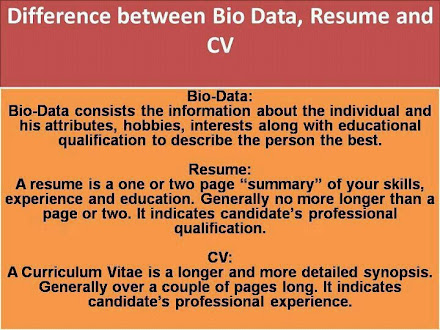
Biodata, Resume and CV

Biodata, Resume and CV

Social Issues Headline Animator

Popular Posts


free counters

My Headlines


Disclaimer:

This blog is designed to provide and encourage access within the social work community to sources of current and comprehensive information. Therefore, Indiansocialworker.blogspot.com itself places no restrictions on the use or distribution of the data contained therein.

Some Indiansocialworker.blogspot.com web pages may provide links to other Internet sites for the convenience of users. Indiansocialworker.blogspot.com is not responsible for the availability or content of these external sites, nor does Indiansocialworker.blogspot.com endorse, warrant, or guarantee the products, services, or information described or offered at these other Internet sites. Users cannot assume that the external sites will abide by the same Privacy Policy to which Indiansocialworker.blogspot.com adheres. It is the responsibility of the user to examine the copyright and licensing restrictions of linked pages and to secure all necessary permissions.

- Indian Social Worker Team