Search This Blog

Showing posts with label Fellowship. Show all posts

ICSSR Institutional Doctoral Fellowships for the year 2009-2010 in Economics and Sociology

Application are invited in the prescribed form (given in the website)for award of ICSSR Institutional Doctoral Fellowships for the year 2008-2009. Institute of Economic Growth has been allocated Six Fellowships (5 ordinary and 1 Salary Protected). Institute offers ICSSR Doctoral Fellowships only in Economics and Sociology.

The selected candidates will be paid a fellowship amount of Rs.6,000/- per month plus Rs.12,000/- per annum as contingency grant. Duration of the fellowship is two years and extendable by one year in exceptional cases only.

Applicants should their applications along with the proposed Research Proposal latest by July 15, 2009 to the Academic Programmes Officer, Institute of Economic Growth, University of Delhi Enclave, North Campus, Delhi- 110007.

For more information about this Institute, visit this link and to download the information about the fellowship which was given in pdf format, go to heading"VACANCY" given in the left side of the website and select "FELLOWSHIP".

UNDP funded The Asia-Pacific Regional Human Development Initiative (APRI) Fellowships

The human development approach puts people at the centre of development. It recognizes economic drivers for change but goes beyond them to raise issues of enlarging human capabilities and expanding people’s choices.

The objective of the Academic Fellowship is to encourage young Ph.D. students from the Asia Pacifific region to analyse critical development issues from a human development perspective, contributing to development theory, applications and policies. Thus, the Fellows are expected to push the frontiers of research on human development while analyzing, through the human development lens, issues directly or indirectly related to human development. The research must focus on a well-defifined aspect of human development under the theme selected for the year and can be theoretical, applied, policy oriented, or a combination.

Theme – Climate Change and Human Development

Human development is about expanding human potential and enlarging human freedom. Climate change is a human development challenge, as it threatens to erode human freedoms and limit choice and plunge large numbers into overty and hardship.

Climate change is hampering efforts to deliver the MDG promise as it undermines international efforts to combat poverty and exacerbates already existing inequalities. Those, in turn, can result in an increase in conflict over sharing natural resources. Climate change is in fact an increasingly powerful driver of wider inequalities between and within countries, also between women and men.

Climate change can result in increased frequency of extreme weather events, flooding, storms, drought, increases in sea temperatures, and melting of glaciers, etc., which effect negatively agriculture and health/nutrition. This has negative implications on the livelihood of poor and vulnerable communities who depend largely on agriculture and natural resource management. In particular, women are affected in their roles of food producers and providers, guardians of health, and care givers. Reduced employment opportunities, for example for women working in agricultural fifields, constitute a net loss in income which leads to a loss in savings, making it even harder for households to cope with disasters.

The magnitude of this long term challenge can be assessed considering that an additional 1.8 billion people are expected to face water stress by 2080, with large areas of Central Asia, northern parts of South Asia and northern China facing a grave ecological crisis as a result of glacial retreat and changed rainfall patterns. Up to 330 million people in coastal and low-lying areas are expected to be displaced through flflooding and tropical storm activity. In the Asia Pacific region, in particular, over 70 million people in Bangladesh and 22 million people in Viet Nam could be affected by global warming-related flflooding.

What are the mechanisms through which the ecological impacts of climate change affect the poor? Are there examples of good practices to ensure climate and human security?

Have climate change and other environmental concerns been integrated in development planning in the context of environment protection elopment planning in the context of environm tion and sustainable development? What has been the effectiveness of policies introduced? What is a possible agenda to promote human development and climate security? These are some of the questions that could be addressed.


The Fellowship

The UNDP Human Development Academic Fellowship for Asia Pacific carries an award of US$ 10,000. The students will be required to submit to UNDP a copy of their fifinal approved dissertation. In addition, Fellows may be expected to present their work in workshops/seminars and other events arranged by UNDP (travelrelated costs will be covered separately).

The thesis will acknowledge UNDP’s support by saying: “The author acknowledges the financial support received from the UNDP Asia Pacific Human Development Academic Fellowship for the research.”


Application Process

All candidates must complete a formal application in English or with an English translation, including:

* Summary statement of the objectives of the proposal
* Project proposal not exceeding 2,500 words
* Curriculum vitae

Incomplete applications or those received after the due date will not be processed.


Eligibility

* Be a citizen of a developing country in the Asia Pacific region (1. Afghanistan,2. Bangladesh,3. Bhutan,4. Cambodia,5. China,6. Cook Islands,7. Democratic People’s,Republic of Korea,8. Federated States of Micronesia,9. Fiji,10. India,11. Indonesia,12. Iran, Islamic Republic of 13. Kiribati,14. Lao People’s Democratic Republic,15. Malaysia,16. Maldives,17. Marshall Islands,18. Mongolia,19. Myanmar,20. Nauru,21. Nepal,22. Niue,23. Pakistan,24. Palau,25. Papua New Guinea,26. The Philippines,27. Republic of Korea,28. Samoa,29. Solomon Islands,30. Sri Lanka,31. Thailand,32. Timor-Leste,33. Tokelau,34. Tonga,35. Tuvalu,36. Vanuatu,37. Viet Nam)
* Submit a proposal approved by her/his direct supervisor at the University in hich Ph.D. is being pursued
* Have a Masters degree in a relevant discipline such as a social science, liberal arts, or management and be currently enrolled as a full time Ph.D. student
* Have identified a human development-related topic (further reading on Human Development topics is encouraged prior to submission of application.
* For a list of readings on human development)
* Not be a UN Staff member
* Be younger than age 30. In exceptional cases the age requirement may be relaxed to 35 years to accommodate candidates who have returned to fulltime study after a period of work and/or family responsibilities

Selection Criteria

* Exceptional degree of creativity in choice of idea or topic
* Stage of development of the proposal
* Value-addition or new direction to the human development concept, methodology, analysis, application or policy relevance
* Track record of past accomplishments
* Time needed for completing the work undertaken

Selection will be based on an assessment of written proposals up to 2,500 words. A review of eligibility and assessment of the proposals submitted will be the basis for short listing. Short listed candidates will be required to participate in an interview. An independent selection committee will review the proposals and interact with the short listed candidates for the fifinal selection.


Deadline


Applications should be submitted by 1st September.


Contact Information


Applications or any queries should be sent, preferably by email, to hdfellowships.rcc@undp.org
Alternatively, you could send them to:

UNDP Asia Pacific Human Development Academic Fellowship
Human Development Report Unit
UNDP Regional Centre for Asia Pacific, Colombo Office
23 Independence Avenue
Colombo 7
Sri Lanka


For more information regarding this fellowship, visit this link

Sir Ratan Tata Masters Scholarships for Development Studies - 2009

The British Council invites applications for Sir Ratan Tata Scholarships for Indian students planning to study in the UK.

The Sir Ratan Tata Trust (SRTT) has set up this new scholarship scheme in Development Studies with British Council support in administering these scholarships.

The programme is aimed at students interested in studying for a full time Masters degree in subjects in Developmental Economics and Science and Technology. Following are some of the examples of courses classified under these broad disciplines.

• Development studies
• Development Economics;
• Studies in Science, Society and Development;
• Economic Development;
• Science, Technology, Medicine and Society;
• Social Informatics and Management;
• Public Health;
• Environment, Science and Society

Eligibility criteria and application form with the guidance can be downloaded from British Council website - http://www.britishcouncil.org/india-scholarships-sirratantata.html/

Completed applications should be submitted to the British Council by Thursday, 2 July 2009. For further information on scholarships, please write to preeti.prabhu@in.britishcouncil.org.

United Nations - the Nippon Foundation of Japan Fellowship Programme

Fellowship Background and Overview

On 22 April 2004, the United Nations and The Nippon Foundation of Japan concluded a trust fund project agreement to provide capacity-building and human resource development to developing States Parties and non-Parties to UNCLOS through a new Fellowship Programme. The Programme is jointly executed by the Division for Ocean Affairs and the Law of the Sea (DOALOS) of the Office of Legal Affairs and the Department of Economic and Social Affairs (DESA). DOALOS serves as the focal point in charge of all substantive elements of the Project. DESA, in its capacity as implementing agency for the Project, is responsible for providing certain administrative services to the Project on behalf of DOALOS.

The objective of the fellowship is to provide opportunities for advanced education and research in the field of ocean affairs and the law of the sea, and related disciplines including marine science in support of management frameworks, to Government officials and other mid-level professionals from developing States, so that they may obtain the necessary knowledge to assist their countries to formulate comprehensive ocean policy and to implement the legal regime set out in UNCLOS and related instruments.

Upon completion of the fellowship, fellows should have an advanced awareness and understanding of key issues and best international practices in ocean affairs and are expected to return to their home-countries to contribute their experience to assist with the effective implementation of UNCLOS and related instruments and programmes. Fellows should be able to design, implement and/or evaluate specific improvement projects in their home countries related to ocean affairs, develop a core leadership capacity and have an in-depth understanding of legal frameworks, methodologies and tools to further improve implementation of instruments and programmes and to provide for their effective enforcement in conformity with international law.

To know more about the present updates, kindly visit the site:

Alumni URL: www.unfalumni.org

For more information, please contact:

The United Nations - The Nippon Foundation of Japan Fellowship Programme
Attn. Dr. Francois Bailet, Programme Advisor
Division for Ocean Affairs and the Law of the Sea
Office of Legal Affairs of the United Nations
Two United Nations Plaza, Room DC2-0414
New York, N.Y. 10017, U.S.A.
Telephone: +1 (212) 963-3962
Facsimile: +1 (212) 963-5847

Nomination for C.S. Fellows

NFI has been organizing a grass roots award-cum-fellowship programme to encourage social leadership for the last few years. The fellows were selected from the cross section of people from different parts of India. So far 36 fellows were selected including 19 males and 17 females. A common background of poverty and the iniquitous system motivated them to become change agents in the society. While some of them took the path of social movement, some others gave leadership in constructive works.


The fellowship has two categories: the Voluntary Sector Workers and the Community Leaders The eligibility criteria is as follows:


  • Voluntary sector workers- giving leadership on constructive work at the grassroots for 8-10 years.
  • Community Leaders- engaged in social movement/constructive at community level.

Women candidates In both the categories of fellowship are encouraged to apply.


Entitlements


Three candidates will be selected for each category. Value of each award cum fellowship will be Rs. 50,000 subject to completing the fellowship programme.


The applications for both the categories should be forwarded by the Chief Functionary of the NGO or may be sent directly by the prospective fellows. The applications should reach to the following address latest by 15th September 2009.


Address for sending application and communication:


Dr. Asok Kumar Ray

National foundation for India, Core 4A, UGF, India Habitat Centre, Lodi Road

New Delhi-110003

Phones: 011-24641864/5: 24648490. Fax: 011-24641867

Email: info@nfi.org.in roy2000@nfi.org.in


The application forms for both the fellowships are given below:


C.SUBRAMANIUM FELLOWSHIP PROGRAMME

Community Leaders

Application Form

Name :

Present address :

Phone: Email:

Permanent address :

Age: Sex:

Educational qualification :

Current employment :

Job profile :

Work experience :


Areas of Interest :


1. Description of your leadership role in constructive work and social movement (in 1000 words).


2. Why are you interested in this fellowship programme? How do you think it will benefit you?


3. Future plans in terms of critical challenges that you might want to deal with.


Reference


Name :

Organization :

Address :

Tel/mobile No:

Remarks about the applicant in 500 words, specially about leadership qualities:

Note: Kindly use additional sheets of paper.

C.SUBRAMANIUM FELLOWSHIP PROGRAMME

Mid-Career Voluntary Sector Workers

Application Form

Name :

Present address :

Phone: Email:

Permanent address :

Age: Sex:

Educational qualification :

Current employment :

Job profile :

Work experience :


Areas of Interest :


1. Description of project (s) in which you have worked and a write up in about 1000 works on the works done.


2. Why are you interested in this fellowship programme? How do you think it will benefit you?


3. Future plans in terms of critical challenges that you might want to deal with.


Reference


Name :

Organization :

Address :

Tel/mobile No:

Remarks about the applicant in 500 words, specially about leadership qualities:

Note: Kindly use additional sheets of paper.

UNDP Asia Pacific Human Development Fellowships

Applications are now open for the 2009 UNDP Asia Pacific Human Development Fellowships. There are two types of Fellowships to apply for - Media or Academic - to support building of HD capacity among nationals from programme countries.

This year the theme for the Media Fellowship is ‘Gender’, linked to the forthcoming APHDR which will contribute to dissemination. The theme for the Academic Fellowship is ‘Climate Change’ to encourage researchers to focus on the theme selected for the APHDR to follow Gender.

Interested prospective students should submit their applications by September 1st, 2009. Applications should be submitted by email to hdfellowships. rcc@undp. org.

To learn more about the Fellowship Programme and to download the two brochures under the “What’s New in Asia Pacific” section on our webpage, visit this link.


JEFFERSON FELLOWSHIPS - late date June 17, 2009

The Jefferson Fellowships provide 10 print and broadcast journalists from the United States, Asia and the Pacific Islands with the unique opportunity to gain on-the-ground perspectives and build a professional network through a one week dialogue seminar at the East-West Center in Honolulu followed by two weeks of study tour travel in the Asia Pacific-U.S. region.

Theme: The Right Climate for Confronting Climate Change?

The new United States presidential administration of Barack Obama has increased attention to climate change in advance of the upcoming United Nations Climate Change Conference to be held in December. With this backdrop, the Fall 2009 Jefferson Fellowships program will explore the ability of U.S. domestic and foreign policy to confront the important economic challenges and opportunities involved in addressing climate change and its consequences. While near-term costs may affect the livelihoods of Americans already struggling in the current U.S. recession, addressing climate change also presents opportunities to strengthen important parts of the economy and create jobs. In addition, the Fall 2009 program will examine how the issue of climate change may serve as a way for the United States to rebuild partnerships and alliances around the world and to bolster national security.

The program will begin in Honolulu with one week of discussions, field visits and participant presentations that explore the challenge of climate change throughout the Asia Pacific-U.S. region. Participants will share impacts, responses and policy challenges from the perspectives of their own countries. The study tour will focus on policy challenges and opportunities for the United States through visits to key destinations on the U.S. mainland.

Who may apply:

Working print, broadcast, and online journalists in the United States, the Pacific Islands, and Asia with a minimum of five years of professional experience. Applicants must have the ability to communicate in English in a professional, multi-cultural environment.

Study Tour Travel:

After one week in Honolulu, all of the Fellows will travel together to Monterey and Palo Alto, CA; Boulder, CO and Washington, DC for a 15-day program of meetings and visits. The East-West Center will coordinate the travel segment of the program, working with on-the-ground partners in each city as well as its network of alumni, including former Jefferson Fellows, who often volunteer to host, guide and advise traveling Fellows, and to arrange appointments and interviews.

Program Purpose and Content:

The Jefferson Fellowships program was launched in 1967 to enhance public understanding through the news media of cultures, issues and trends in the Asia Pacific region, broadly defined as Asia, the Pacific Islands and the United States. The long-range goal is to help news organizations build staff expertise about regional concerns and trends, so that their readers, viewers and listeners may be better informed.

The Fellowships provide the participating journalists with a wide range of perspectives through dialogue with professional colleagues, participation in seminars and meetings with business and government decision-makers, scholars and students, social activists, cultural analysts and others. These contacts, and a network of more than 500 former Jefferson Fellows, provide participants with resources on whom to call when they plan, assign, edit and produce news coverage involving or affecting the region.

The first week of the program consists of dialogue among the Fellows, including a short seminar led by each Fellow; lecture discussions with East-West Center researchers and other experts; and field visits. This will be followed by a study tour to cities in Asia and/or the United States.

Application Deadline:

Wednesday, June 17, 2009

Program Dates:

October 25, 2009 - November 14, 2009

Funding:

The Jefferson Fellowships are supported from a grant from The Freeman Foundation. The grant funds economy class, round-trip airfare to and from Honolulu, Hawaii as well as program-related air and ground transportation, lodging, and meals for participating journalists. A modest Per Diem is also provided. Participants are responsible for all applicable visa fees and any additional visa-related expenses.

News organizations are also asked to support their employees' participation by cost-sharing whenever possible. An "Employers Statement of Support" is a required part of the application. While financial assistance from the employer is not required, employers are encouraged to provide support to their Jefferson Fellows as a demonstration of their commitment to the program.

For a document with all program information please download the Program Announcement

HOW TO APPLY:

Applicants must submit the Jefferson Fellowships application form and a letter outlining your issues of interest, a brief description of your news organization, and what you expect to accomplish if an award is granted. Please suggest topics you propose to address in your paper and presentation at the East-West Center (3 page maximum).

A letter of recommendation on official letterhead from your supervisor describing your suitability for the Fellowship and the benefit the organization hopes to derive from your participation in the program.

Names, addresses, phone/fax numbers and e-mail of three people who may be contacted by the Center as references. Two of these references should be people outside your news organization.
The “Employer’s Statement of Support” form completed by your employer (form is included in the 3-page application).

Note:

Samples of your work are not required. If you wish to include samples, please do so via web links to articles.Program and Application Downloads:

The applications should be send by Wednesday, June 17, 2009 to:

E-mail: jefferson@eastwestcenter.org
Fax: 808-944-7600
Post: Jefferson Fellowships
East-West Seminars
East-West Center
1601 East-West Road
Honolulu, Hawai‘i 96848-1601, U.S.A.
Inquiries: 808-944-7682


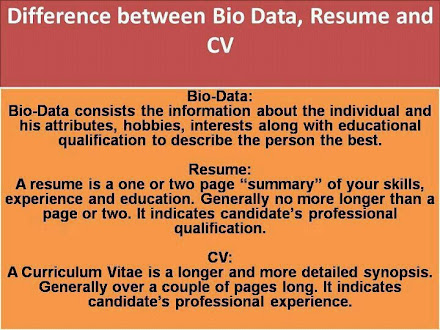
Biodata, Resume and CV

Biodata, Resume and CV

Social Issues Headline Animator

Popular Posts


free counters

My Headlines


Disclaimer:

This blog is designed to provide and encourage access within the social work community to sources of current and comprehensive information. Therefore, Indiansocialworker.blogspot.com itself places no restrictions on the use or distribution of the data contained therein.

Some Indiansocialworker.blogspot.com web pages may provide links to other Internet sites for the convenience of users. Indiansocialworker.blogspot.com is not responsible for the availability or content of these external sites, nor does Indiansocialworker.blogspot.com endorse, warrant, or guarantee the products, services, or information described or offered at these other Internet sites. Users cannot assume that the external sites will abide by the same Privacy Policy to which Indiansocialworker.blogspot.com adheres. It is the responsibility of the user to examine the copyright and licensing restrictions of linked pages and to secure all necessary permissions.

- Indian Social Worker Team