Search This Blog

Project Management Methodologies

Some of you might be quite conversant with these project management methodologies while others may still be trying to navigate the complex but exciting world of project management and these terminologies may sound a bit foreign to you. That’s okay, the purpose of this post therefore, is to totally immerse you in the project management methodologies that project managers, for decades, have come to rely so much on. For the seasoned project manager, here’s another great opportunity to remind yourself of some of the best techniques and methodologies that have birthed some of the world’s greatest products.

Why Project Management Methods?

The answer- why not? Think about it for a second, at one point in your life, you must have placed an order for an equipment or tool with a lot of disconnected parts that cannot be correctly put together with the aid
of an instruction manual. Same goes for project management. There are a lot of interconnected and interdependent tasks; ergo the need for a set of generally accepted instructions to serve as a guide for managing project activities.

12 Common Project Management Methodologies

1. Agile

The Agile Project Management Process is a value-centered methods of project management that allows projects to get processed in small phases or cycles. The methodology is one that is extremely flexible and projects that exhibit dynamic traits would benefit from this process as you would find that project managers working in this environment treat milestones as “sprints”; the goal being to continuously adapt to abrupt changes from client feedback. It is best suited for small software projects made up of a highly collaborative team or a project that requires frequent iteration.

2.Waterfall

The Waterfall Methodology, on the other hand, is a traditional approach to project management and more commonly used in the manufacturing or construction sectors. A lot of experts believe that it was the first model to have been adopted in software engineering. The model takes a linear approach towards project management with the project being broken down into sequences with the kickoff of a phase dependent on the completion of the preceding one.

This method primarily consists of 5 stages:
Idea Engineering – System Design – Implementation – Testing & Validation – Maintenance

3. Scrum

The Traditional Waterfall method reveals a more lengthy process where planning alone could take a couple of months before moving to the next stage – design. The design phase could also take a couple of months; this could lead to the launch of a product that could be termed obsolete in the current marketplace.

With Scrum, however, the planning is just enough to kick off the project as it is based on the Agile framework that was discussed earlier. It’s a great way to prevent delays in product launch because the entire process focuses on team collaboration. The Scrum master facilitates the scrum sessions (sprints) which occur within a time frame of 1-3 weeks. The result is an iterative process that significantly saves the company a lot of time and money.

4. PRINCE2

PRINCE2 is an acronym for Projects in Controlled Environments; it originated from the UK and has come to be accepted in the UK as best practice for project management thanks to its very flexible nature. With Prince2 the outputs are clearly defined and there is a business justification for every project.

This project management method is also characterized by products that are delivered on time and well within cost estimates. The roles are predetermined before the kickoff of the project and every member of the project is well aware of their responsibilities towards to successful execution of the project.

5. PERT

PERT stands for Project Evaluation Review Technique; in an earlier post, we stated, that it most often combined with the Critical Path Method. This project management method is a favorite of most manufacturing companies as it takes into cognizance the time it takes to complete a task. Time is an important factor in project management as it also determines the budget for the project.

6. Adaptive Project Framework

Robert K. Wysocki is an authority on the Adaptive Project Management Framework and in his book, Adaptive Project Framework: Managing Complexity in the Face of Uncertainty, he talks about the discovery of new applications for which the traditional linear approach may not be suitable for. He goes further to identify “…the difficulty in specifying complete requirements at the beginning of the project” as the major reason why present-day projects fail to meet the requirements of the Traditional Project Management Approach.

The solution to this dilemma lies in the adaptive project framework; a process that was created out of the need to adapt to the continuously changing phases of a project.

7. Extreme Programming (XP)

This methodology which also has its roots in the agile framework was developed by in the 1990s by Kent Black. This short life-cycle method has as its main objective, the improvement of product quality, client satisfaction. Its characteristics and principles make for a project management team that strives for excellence in the development process. In his book – Extreme Programming Explained, Kent explains that the methodology is becoming more prominent because “…XP is particularly well-suited to help the small software development team succeed.”

8. Kanban

The Kanban project management process does away with the sprints and milestones that are attributed to the scrum and traditional methods of managing projects respectively. What you would find, is a more visual approach to managing time, project scope and budget; these 3 factors determine the success of any project.

Kanban, a lean scheduling project management method was developed by the Japanese Toyota Corporation based in the 1940s. The idea behind Kanban is continuous delivery, especially when combined with the scrum methodology. It uses a system of visual cues that let the project team know what is expected of tasks within the project in relation to quantity and quality as well as when the tasks are expected to be accomplished.

Source: http://www.nutcache.com/blog/8-top-project-management-approaches-methods-techniques/ 

Mulitple vacancies in a reputed Community based Organization

A reputed Community based Organization invites application from suitable Christian candidates for the following posts on contract basis.

Program Coordinator

The posting will be in Cuddalore, Ranchi, Kurnool, Ganjam & Ghathak

1)  MBA/MSW/MA Sociology/PG in any Discipline
2)  5-7 years’ experience in the community development field.   Experience in working in grassroot level NGO’s will be an added advantage.
3)  Good command over English and Hindi, knowledge of Tamil (desirable)

Salary: INR 18,000-20,000/- per month (consolidated)

Promotions Coordinator

The posting will be in Chennai

1) Masters in Mass Communication / Journalism / MBA/MSW/MA Sociology/PG in any Discipline
2) 5-7 years’ experience in the community development field.   Experience in working in CSR sector will be an added advantage.
3) Excellent command over English and Hindi, knowledge of Hindi & Tamil (desirable)

Salary: INR 18,000-20,000/- per month (consolidated)

Program Facilitator

The posting will be in Cuddalore, Ranchi, Kurnool, Ganjam & Ghathak

1)  MBA/MSW/MA Sociology/PG in any Discipline
2)  2-5 years’ experience in the community development field.   Experience in working in grassroot level NGO’s will be an added advantage.
3)  Good command over English and Hindi, knowledge of Tamil (desirable)

Salary: INR 12,000-15,000/- per month (consolidated)

Executive – Donor Relations

As an integral part of the fundraising team, the Donor Relations Manager will cultivate, steward, and expand the relationships between the organization and its donors at all levels, by providing extraordinary service to donors and exceeding expectations in the areas of maintaining and managing donor information.

The posting will be in Chennai

1) Masters in Mass Communication / Journalism / MBA/MSW/MA Sociology/PG in any Discipline
2) 2-5 years’ experience in the community development field.   Experience in working in CSR sector will be an added advantage.
3) Excellent command over English and Hindi, knowledge of Hindi & Tamil (desirable)

Salary: INR 15,000/- per month (consolidated)


Salary is not a constraint for the suitable candidates

Interested candidates may send their detailed CV to:  

APPLY ON OR BEFORE APRIL 30, 2015

TISS Vacancies: Research Associate, Research Assistant and Field Action Research Fellows

Research
CLIx involves field action research including summative and formative, impact evaluation and thematic research. RA (Research will be expected to assist all aspects of research.

Key Responsibilities:

Literature review, preparing bibliographies, preparing data collection tools, sampling, data analysis, and report writing.
Monitoring involving the use of digital tools and online technology platforms.
Preparation of the research tools, piloting and conducting research at field sites
Organisation and the conduct of orientation/ training for implementation partners and field teams based on capacity needs.
Interacting with and supporting the field research teams as and when required
Preparing reports and communication of research
Work closley with documentation team


Qualifications: Post-graduate in Social Sciences/ Development Studies or equivalent from recognized institutions. Experience: five years of relevant experience of having worked on research projects,

Skills & Competencies Required:

Ability to meet deadlines and work on a range of research tasks
Prepare drafts of research tools
Prepare drafts of reports
Use of research softwares
Good writing skills
Ability to work in teams
Design and conduct training on research
Travel to field locations as and when required


Remuneration: Rs. 4to 6 lakhs (starting about 30,000 per month upwards). Offers shall be commensurate with the qualifications, experience and salary history, of the selected candidate.

Location: Mumbai/ Bengaluru, with frequent travel to implementation sites.

Apply Online

Last Date for application: April 26, 2015
__________________________________________________________________

Field Action Research Fellows
Field Action Research Fellows CLIx involves large scale field implementation where CEIAR may work directly or in collaboration with partners.
Field Action Research Fellows will support implementation and research and monitoring in field sites, and will be based mostly in one or more field location with frequent travel.

Key Job Responsibilities:

Work closely with COO to support the process of field implementation
Technology support
Manage the daily programme activities at the state level. This will include field testing and implementation of curricular offerings, research and monitoring and documentation.
Hand-holding the state level implementation agencies, trouble shoot etc
Work closely with the local ecosystem (educational institutes, volunteers, resource groups) and facilitate their involvement in the programme.
Documenting field interventions and internal communications
Co-ordinate/ organizing orientation/programs, as necessary


Qualifications: Post-graduates in Education/ Development Studies/ Social Work or equivalent from recognized institutions.

Experience:

Field experience-working with schools and teachers.
Experience in working with field teams involving coordination etc,


Skills & Competencies:

Knowledge of field issues in education and familiarity with technology use in education
Excellent written and verbal skills in English Fluency in Hindi and other Indian languages
Self-motivation and ability to multi-task and deal with stressful situations
Ability to undertake extensive travel and for extended periods of time
Ability to support field teams and partners
Knowledge and familiarity with technology
Interest in large scale reform processes and development


Remuneration: Gross annual remuneration for the position is in the range of Rs. 3 to 4 lakhs (starting 30,000 per month).

Location: Rajasthan/Telangana/Chhatisgarh/Mizoram(or North-Eastern states), with frequent travel to intervention districts, Mumbai and Bengaluru

Apply Online

Last Date for application: April 26, 2015


Openings for Social Worker in Prayas, a field action project of TISS

Prayas is a field action project of the Centre for Criminology and Justice, School of Social Work, TISS. Prayas works with women, male youth and children in prisons, custodial institutions for women and children and those released from custody towards the protection of their legal rights and rehabilitation. Prayas focus is on service delivery, networking, training, research and documentation, and policy change with respect to the custodial/institutional rights and rehabilitation of socio-economically vulnerable individuals and groups.


Position: Social Worker (female)
Education: Masters in Social Work
Experience: Preferably 2-3 years of work experience in the field of social work, especially with women in difficult circumstances
Basic computer knowledge
Age: Below 35 years
Should be willing to travel
Fluency to read and write in English and Marathi/Hindi
Salary : Around 18000/- pm

Applications and CVs may be sent to the Project Director at the email address - prayas.rnd@gmail.com

Last date of submitting applications – April 28, 2015

Know about your Right - On your rights if arrested

Arrest of a person
A person is arrested when a police officer or a citizen takes him into custody or otherwise substantially deprives him of his freedom of action so that he may be held to answer for a crime or an offence. The police in India do not have any power to detain anybody for questioning unless he
is arrested with or without warrant.

Warrant of Arrest
It is a written order issued by a Court to a police officer to arrest and produce an offender or to search his premises for a particular thing. A police officer who executes the warrant shall notify the substance thereof to the person to be arrested and if he demands, shall show him the warrant. He is expected to bring the required person before the Court without unnecessary delay.

Valid Warrant
A warrant of arrest should be (i) in writing (ii) signed by the presiding officer of the Court and (iii)should bear the seal of the Court. It should also contain the name of the accused, his address and indicate the offence with which he is charged. If any of these factors is absent, the warrant is not in order and an arrest made in execution of such a warrant is illegal. Warrants are of two kinds:
i) Bailable
ii) Non-Bailable

A bailable warrant is a Court's order which contains a direction that if the person arrested executes a bail with sufficient sureties for his attendance before the Court, he may be released from custody. In that case it shall further state the number of sureties, the amount of the bond, and the time for attending the Court. (Section 71 Cr.P.C.) In case of a non-bailable warrant the direction for bail will not be endorsed on the warrant.

Arrest without Warrant
A police officer has power to arrest a person without warrant if he is suspected of having committed a cognizable offence. Normally in non-cognizable offences a police officer cannot arrest a person without a warrant from a Magistrate.

In the first Schedule of the Criminal Procedure Code (Cr.P.C.) offences have been classified and enumerated as cognizable and non-cognizable. The more serious offences such as murder, rape, robbery, theft, waging war against the State etc. are cognizable.

When can a person be arrested without a warrant?
A person can be arrested without a warrant:
1. If he is concerned in a cognizable offence or if there is a reasonable suspicion, complaint or information that he has committed a cognizable offence;
2. If he possesses implements of house breaking;
3. If he possess stolen property;
4. If he is proclaimed an offender;
5. It he obstructs a police officer on duty'
6. If he escapes from a legal custody;
7. It he is a deserter from the army, navy or airforce;
8. Where he is out of India, if he commits an offence punishable under any extradition law or under the Fugitive Offenders Act;
9. If he is released convict who breaks the restrictions imposed by the Court on his movements;
10. If he is suspected of preparing to commit a cognizable offence;
11. If he is habitual criminal;
12. If he, after committing a non-cognizable offence in the presence of a police officer, refuses to give the police his name and address or has given him a false name and address;
13. If he is required by a police officer of another police station who suspects that he has committed a cognizable offence;

How is Arrest made?
Arrest is complete when there is submission to custody by word or action, and in such a case touching or confining of the body of the person arrested is not necessary, but mere surrounding of a person by the police does not amount to arrest. (Section 46).

What happens if you resist arrest?
If you forcibly resist arrest, the police officer can use all means necessary to effect the arrest. (Sec.46). He can even cause your death provided you are charged with an offence punishable with death or me imprisonment. However, he is not justified in using force more than necessary to obtain the arrest (Sec.46). Therefore, unnecessary restraints or causing physical inconveniences tying of hands and feet are not permissible if there is no necessity for doing so.

What are your rights when you are arrested?
If you are arrested:
1. You must be informed of the reasons for your arrest (Fundamental Rights : Article 22 and Sec.50 Cr.P.C.)
2. You have a right to see the warrant if you are arrested under warrant (Sec.75 Cr.P.C.)
3. You have a right to consult a lawyer of your choice. (Fundamental Rights: Article 22 of the Constitution);
4. You must be produced before the nearest Magistrate within 24 hours (Fundamental Rights: Article 22 of the Constitution);
5. You must be told whether you are entitled to be released on bail. (Sec.50 Cr.P.C.)

Can you be handcuffed?
According to the latest ruling of the Supreme Court, normally an arrested person should not be handcuffed unless he is violent or he is desperate character or he is likely to attempt to escape or to commit suicide. Arrest is not a punishment. Hence unnecessary restraints are not permissible, if there is no necessity for doing so.

Search of a place entered by a person sought to be arrested
Sec.47 of Cr.P.C. compels all persons to afford to the police facilities for search in a place for a person sought to be arrested. Police officers have power to break open any door or window to carry out a search and to liberate himself or any person who is detained inside a premises.

Search of an arrested person
A Police officer has the right to search a person only after he is arrested. After the search the police officer must keep in safe custody all the articles taken from the person and give him a receipt for the same. A search of an arrested female should be done with strict regard to decency. A woman can be searched only by another women. (Sec.51)

Examination of arrested person by medical practitioner
A police officer not below the rank of a sub-Inspector may require an arrested person to be medically examined if he feels that this may provide evidence to prove the offence. (Sec.53)
• He may use reasonably necessary force to have the medical examination performed;
• The accused person can make a request to the Magistrate that he had not committed the offence.(Sec.54);
• A woman has a right to demand that she be examined by a woman doctor. (Sec. 53 A(2), 54);
• In case of torture in police custody, this provision of law must be taken advantage of and the victim should demand in the Court that he be medically examined to prove torture by the police.

Detention of an arrested person
Article 22 (2) of the Constitution lays down that every person who is arrested and detained in custody should be produced before the nearest Magistrate within a period of 24 hours of such arrest exclusive of the time necessary for the journey from the place of arrest to the Magistrate's Court. However, Sec.167 of the Cr.P.C. vests the power in the Magistrate to authorize the detention of the arrested person for more than 24 hours of the investigation cannot be completed within that period. In no circumstances can the accused be detained in custody for a moment more than twenty four hours without a special order of a Magistrate who can order his detention for a term exceeding 15 days on the whole. At the end of the 15 days he must be produced before the Magistrate. If there are adequate grounds for further detention in judicial custody (jail), he can pass an order to that effect, for a period not exceeding 15 days. But the total period of detention cannot exceed 60 days, whether the investigation of offence against him has been completed or not. The order of a Magistrate sanctioning the detention for an indefinite period is illegal. If the accused is not able to furnish bail during the stage of investigation he may be detained in judicial custody beyond 60 days. In case of a non-bailable offence the arrested person may be kept in jail until the trial is over.

Search Warrant
Search warrant is issued by the Magistrate for the following purposes:
• For the recovery of a document or thing which may not be produced in the court otherwise;
• For search of a house suspected to contain stolen property, forged documents, etc;
• Seizing any publication banned by the government;
• For discovery of a person wrongfully confined.

A search warrant gives the power to the police officer to search the required place and to seize the objectionable article known as "Mudammal". Police may use force to effect a legal entry provided that they have come, demanded entry and are unreasonably refused. The police officer executing the warrant may search any person in or about such place if that person is reasonably suspected of concealing on his person any article for which search is made. If the person to be searched is a female, then the search shall be made by another woman with the strictest possible decency.

Procedure to be followed
The officer making a search shall:
• Call upon two or more respectable residents of the locality (called Panches) to attend and witness the search. Failure to attend is an offence under Sec.187 I.P.C.
• Make the search in their presence. So, the search would be illegal if the panches: are kept outside while the search takes place inside the building;
• Make a list of all things seized and of all places in which they are found. (The list is called the panchanama);
• Get the list signed by the witnesses - Panchas
• Permit the occupant of the place to attend the search and give him a copy of the list of things signed at his request;
• Panches are not required to attend the court as witnesses unless specially summoneded by the Court.

Rights of the occupants of the premises searched
• The accused himself cannot be compelled to produce any document or property which is likely to involve him in any criminal charge. Hence police have to get a warrant issued by a Court of Law;
• The police have no general power to enter or search your premises without your consent;
• The court may specify in the warrant a particular place only to which the search will extend;
• It is important that the warrant is read and the directions are taken note of before the police are allowed to make inspection;
• If the police have no legal authority to enter your premises you can refuse the entry;
• If they have no legal authority to remain, you have a right to insist that they leave;
• If they refuse you have the legal right to use reasonable force to remove them. (Sec.97, of I.P.C.)

Bail
Bail means releasing an arrested person from legal custody until his trial. Bail gives the freedom to seek advice from friends to consult a lawyer, to trace witnesses and to collect evidence for one's defence and to continue his job. When bail is not granted, the arrested person will be on remand and will be kept in custody to facilitate the investigation and to obtain evidence. Provisions regarding bail can be classified into 2 categories: i.e.,
(1) Bailable cases
(2) Non-Bailable Cases.

Bailable Cases
In the case of bailable offences, granting of bail is a matter of legal right. This means that bail cannot be refused and shall be granted by a police officer in charge of a police station having the accused in his custody. The release may be ordered on the accused executing a bond, even without sureties.

Non-Bailable Cases
In non-bailable cases, only the Court can order release of the accused person on bail. However, if the police officer or the Magistrate is of the opinion that there is no sufficient material against the accused and that the complaint needs further investigation he may also release the accused on bail.(Sec.437 (2) Cr.P.C.). Normally bail is not granted when the accused person appears, on reasonably grounds, to be guilty of an offence punishable with death or imprisonment for file. But women, children under 16, and sick people can be released on bail by a Magistrate even if charged with offences punishable with death or life-imprisonment. An accused person is entitled to be released on bail as soon as reasonable grounds for guilt cease to appear, between the close of the case and the delivery of judgement. A person released on bail may be taken into custody by an order of the Court, if his conduct subsequent to release is found to be prejudicial to a fair trial Sec.48 Cr.P.C. or if he does not observe the conditions of the bail.

Power of the Court to grant bail
The discretionary power of the Court to grant bail is judicial power and is given by established principles. Before granting bail the Court must consider the seriousness of the charge, the nature of the evidence, the severity of the punishment prescribed for the offences and in some cases the character, means and the status of the accused.

If you are arrested, how to get released immediately from police custody?
• In warrant cases, find out the directions endorsed in the warrant and execute a bond with sureties(Sec.71):
• If the offence charges is bailable and the arrest is made without warrant, ask the police officer in charge of the police station to grant you bail after executing a bond.
• The police officer has the discretion to release a person on his executing a bond without sureties. (Sec. 436 of Cr.P.C.)
• If you are not granted bail immediately you have the right to telephone your advocate, a friend or a relative. Give your advocate the names and addressed of the possible sureties. If you don't have an advocate inform your friend or relative:
• The name of the Court where you will appear;
• The time the Court starts; and request him:
• To take to the Court anyone else who is prepared to stand surety;
• To contact an advocate if possible.
If you can deal with these matters before you go to the Court, you may be saved an unnecessary remand in custody.

Granting of Bail by the Magistrate
If a person is arrested for a non-bailable offence, and there exists a reasonable ground to believe the guilt of the person, he may not be granted bail by the police officer. In such cases the accused person must give a written application to the court to grant bail. The court must grant bail unless he is charged with a crime punishable with death or life-imprisonment. In such cases only the sessions or the High Court can grant bail.

Common police objections to bail
• The accused will not appear at his trial;
• He will interfere with witnesses or material evidence;
• He will commit further offences while on bail;
• Police enquiries are not complete;
• Further charges might follow;
• Stolen properties have not been recovered;
• The co-accused are absconding;
• The weapons with which the crime was committed has not been recovered.

Normally the police make an application for the remand of the accused. In such an application they give their reasons for further detention of the accused in custody. The reasons given by the police must be refuted to the extent possible.

Application for Bail
• If the accused can afford an advocate he can make an application and represent the accused before the judge;
• If the accused cannot afford an advocate he may make a written application to the judge. For this he must get an application form from the prison staff and complete it as fully as possible giving sufficient reasons to convince the judge of the need of granting bail.

The following special grounds for release must be mentioned in the application:
• Condition and state of accommodation; whether there is a possibility of eviction in case bail is not granted;
• Whether he is likely to lose his job;
• How refusal of bail would create hardship to the dependent members of the family;
• How keeping in custody would affect the poor state of health and treatment.

Refusal of Bail by the Magistrate
If bail is refused, the Magistrate must record the reasons for the same. Such a record is necessary to make a proper appeal for bail in higher Courts.

Appeal
If application for bail is rejected by the Magistrate, the accused person can appeal to a Sessions Court or High Court. Disagreement with the objections raised by the police in granting bail or the fact of no objection raised in the Court must be incorporated in the application for bail. If one's application is rejected, one may try again in one's next Court appearance.

Conditions for Bail
The Magistrate may grant a bail:
• Without any condition
• Subject to special conditions;
• Subject to bond with or without sureties.

Special conditions usually state that the accused person must report to the police station at specified times or surrender his passport. One can challenge in a Court any unreasonable condition imposed by the Magistrate. If the Court refuses to change the conditions, the accused person can reject them. But in that case he will not be released until his appeal is heard and disposed of in his favour.

Bond and Sureties
• An accused person may be released on personal bond with or without sureties;
• Sureties are people who guarantee a sum of money for appearance of the accused in the Court on the appointed day and time.
• Those who stand as sureties must be present in the Court and if asked must guarantee the Court under oath that they are prepared to act and have sufficient funds;
• They can file affidavits before the Court stating the fact to show that they have sufficient funds to pay the surety and that they are even otherwise fit to be sureties;
• The Magistrate has the power to reject the surety without giving any reason. If the sureties are not in the Court, the arrested person will be kept in custody until the police have interviewed them and found them to be satisfactory;
• Sureties must be over 18, have a permanent address and have sufficient money to cover the amount of surety after payment of all their debts. The sureties may carry to the Court documents such as ration cards, rent receipts, provident fund slips, salary slips and income tax challans;
• The police and the Magistrate have no right to reject sureties on ground of their personal character, political opinions, criminal records or sex, unless they are professional sureties.

Bail after Conviction
If an accused person is found guilty, the Magistrate will pass the sentence after considering his past record. If the convicted person wants to appeal against his sentence in a higher court, the Court which passed the sentence must release him on bail.
• When the sentence is for imprisonment for a term net exceeding 3 years, or;
• When the offence for which the person is convicted is a bailable one and the person is already on bail. The release will be for a period that will enable the convict to present the appeal and get the orders of the appellate Court. Once a person files an appeal against his conviction, the appellate
Court may suspend the sentence and release him on bail or on personal bond.

Anticipatory Bail
When a person has reason to believe that he may be arrested for a non-bailable offence, he may apply to the High Court or to the Court of Session for a direction that in the event of such an arrest he may be released on bail. If such a person is arrested without a warrant by a police officer and if
he is prepared to give bail, he must be released on bail. In case a warrant is issued against the accused by a Magistrate, it. The purpose of the provision is to relieve a person from disgrace by being detained in jail for some days before he can apply for bail when he is implicated in a false case by a rival.

Recent Observations and Recommendations of the Supreme Court on Bail
• The Bail system prevalent in our country is oppresive and discriminatory against the poor, since the poor would not be able to furnish bail on account of their poverty. The court, by ignoring the differential capacity of the rich and the poor to furnish bail and treating them equally, produces inequality between the rich and the poor.
• The bail system should be thoroughly reformed so that it should be possible for the poor to obtain pre-trail release as easily as the rich without jeopardising the interests of justice.
• The Court and the police must abandon the antiquated practice of release only against bond with sureties, and if the accused has ties in the community and there is no substantial risk of non- appearance, he may be released on his personal bond without monetary obligation, subject to penalty in case of breach.
• The amount of bond the Court fixes to release the accused on personal bond should not be based merely on the nature of the charge but on the financial capacity of the accused and the probability of the absconding.
• When the accused is released on personal bond, the Court or the police should not insist upon inquiring into his solvency as a condition of acceptance of his personal bond.


Aggression - An Introduction

Aggression is difficult to define, it is a complex phenomenon, and depending upon the context the term can be made to carry either positive or negative connotations, it can be attacking behaviour that may be either self-protective and self-assertive or to the infliction of injury toward oneself or toward others, to the total destruction of others. Is aggression biological determined or the product of learning and environmental influences.? This essay, will consider instinctive theory, the frustration - aggression hypothesis, and social learning theory. It should then be possible to draw a conclusion to see if any or all of the theories discussed are the cause of aggression. Brain disorders, hormonal and chemical imbalances, environmental factors, such as heat, noise, air pollution and overcrowding, although contribute to the causes of aggression will not be discussed during the course of this essay. No universally adopted definition of aggression exists, for the purpose of this discussion, the definition of Gross will be used.

Gross defines aggression as "The intentional infliction of some form of harm on others" (Gross page 444). Freud proposed that aggression is an instinctive biological urge. According to Freud this instinct, is made up of the libido (pleasure) and "Thanatos" (the death wish) (pain). This basic instinct is present in the Id from birth, at first the aggression is relatively uncontrolled, but with the development of the Ego and superego it becomes channelled into socially acceptable behaviour If these impulses are not released periodically in safe ways, they soon reach dangerous levels capable of producing acts of violence. Sometimes it is released in the form of physical or verbal abuse against another, (where the anger is displaced onto another). Sometimes the aggressive impulse is turned inward and produces self - punishment action, even suicide. The best that can be hoped for, according to Freud, is that aggressive impulses will be "channelled into socially acceptable forms." such as football, sport etc. (Bernstein et al page 715). However, this theory does not explain why some people are aggressive and others are not, and if aggression is dissipated into sport, why is there football violence and violence at other sporting events?

Lorenz, like Freud believed that aggressive energy builds up in the individual, and eventually has to be discharged in some way. Lorenz's states that aggression is the "fighting instinct" in man, and that man is naturally aggressive. This instinct developed during the course of evolution because it yielded many benefits, for example, fighting serves to disperse populations over a wide area, ensuring maximum use of resources. "Such behaviour often helps to strengthen genetic make-up of a species by assuring that only the strongest individuals manage to reproduce", ( Baron/Byrne page 328). This fighting instinct is both present in man and animals, and that aggression in animals is do with 'Ritualization and appeasement' and through these rituals and series of appeasements animals avoid destroying each other, but aggression in humans, is 'no longer under the control of rituals, and it has become distorted in man" (Gross page 445). However nearly all the evidence of Lorenz's theory comes from research with animals, and many psychologist "doubt whether the results apply to humans, because in the animal world instinct plays a more significant role than with humans". ( Berstein et al page 716). Further It is generally agreed by looking at present day Eskimos, Pygmies, and Aborigines, that man is a 'hunter - gatherer'. and that there is a powerful human tendency to cooperate which is a legacy from our ancient hunting past, when we had to co-operate or starve. People then lived in small tribal groups, were warfare did not exists, there were no armies, and if conflict did occur, from time to time, casualties would be avoided or limited. Mead argues that man is "not naturally aggressive" and points out many societies, such as the Apraesh of New Guinea where 'aggression is rare, and "peaceful coexistence and cooperation is the norm" (Bernstein page 715) Megargee (1966) , supported the theories of Freud and Lorenz, Megargee reported that studies of "people who commit brutal aggressive crimes, are often over-controlled individuals, who repress the anger and over a period of time the pressure to be aggressive builds up". (Gross page 450). Support for instinct theory has also come from Psychologist who study serial killers, they believe that there is genetic pre-disposition to be aggressive, and combined together with other factors, can aggravate a pre-disposition to violent aggressive behaviour. The psychologist also pointed out, that more evidence for this theory comes from studies of twins reared together or apart, which suggest that there may be a genetic link to aggression in humans.

Other psychologist emphasized frustration as a potent cause of why individuals are aggressive. Dollard and Miller developed a "frustration - aggressive hypothesis" they put forward the view that aggression was an inevitable consequence of frustration. The 'occurrence of aggressive behaviour always presupposes the existence of frustration and the existence of frustration always leads to some form of aggression' If an individual is prevented from reaching a goal, they are frustrated by not getting something they want, or suffers "deprivation" where something they want is taken away from them, they will experience an increase in aggression(Hardy/Heyes page 171). This view has been criticized, psychologist point out that it does not explain aggressive behaviour in all circumstances. Frustrated individuals do not always respond with aggressive action, they may show "resignation and despair" (Baron/Byrne page 329), and there are many occasions when aggressive behaviour can be explained more by a breakdown in social norms.

Berkowitz suggested "external conditions, serve to arouse a strong motive to engage in harm producing behaviour," (Baron/Byrne page 329) and that frustration produces not aggression, but a "readiness to respond aggressively". Once this readiness exists, cues in the environment, that are associated with aggression, will often lead a frustrated person to behave aggressively. "Cues such as guns, knives, violent television scenes. Neither the frustration alone or the cues alone are sufficient to set off aggression, but when combined however, they do." Berkowitz went on to say that "unexpected failure at some task tends to create a more intense negative reaction then a failure that is expected". Support for Berkowitz theory is very strong. Studies have found that "frustration may facilitate aggression. and experiments have supported this"(Berstein et al page 718). On the other hand, several experiments have reported that frustration sometimes may actually tend to reduce the level of aggression shown by the individual. Existing evidence points to the conclusion that whether frustration increases or fails to enhance aggression, depends on whether the frustration is intense and whether the aggression is seen as 'just' or 'illegitimate'. However, few researchers currently hold the view that "frustration always leads to aggression", frustration is simply one of many different causes of aggression (Baron/Byrne page 329).

When you look at the frustration hypothesis, it seems that practically any incident of aggression can be ascribed to frustration of acquisitiveness or "assertiveness. Gentry 1970 said that "frustration does not always produce aggression, sometimes it produces depression and withdrawal, and not all aggression is preceded by frustration" ( Berstein et al page 718) According to Leaky and Lewis (1977), "cultural influences are far more important determinants of human aggression than biological factors." Any potential for aggression that man has, is "culturally overridden and re-packaged into behaviour which fits current circumstances. In most cases, cultural forces teach or support non-aggression, but when pro-social aggression is necessary (disciplining children, and wrong doers,) cultural process teach and sustain it" (Gross page 446).

Bandura, Baron, and Zillmann argue that aggressive behaviour is a "learned form of social behaviour, acquired and maintained" in much the same manner as other forms of social activity. (Baron/Byrne page 362) Elicitors of aggression such as personal insults, status threats, and the presence of weapons are all learned sources of aggressive behaviour. Many responses are learned by watching others, further, aggressive actions are often followed by rewards and are therefore likely to be repeated. Bandura said that children were capable of learning aggressive behaviour as a result of being exposed to it, because children tend to imitate what they see. Bandura exposed school children to a film of an adult behaving aggressively toward an inflated doll, ( "Bobo Doll ") Following exposure the children tended to imitate the aggressive behaviour. These finding, Bandura believed, showed that young children learn to be aggressive against others, and that aggressive acts would be imitated. In contrast, critics pointed out, Bandura's experiments were too artificial, that the Bobo Doll was designed specifically to be hit and that the children were aware of this, so maybe they were just expressing the behaviour that was expected of them. Although Bandura was has been criticized, his findings has led to considerable research into the influence of violence in the mass media, especially television, on promoting aggressive behaviour, and there is a growing body of research evidence which indicates that watching violent television is linked to increased tendencies towards subsequent aggression.

Support for the modelling and imitation theory comes from Patterson (1976) who found that "aggressive behaviour is frequently reinforced in the home". (Biechker/Hudson page 415) A young child who finds that anger and aggression are more effective in gaining what they want and which can enable them to control resources such as toys and parental attention, is having his aggression reinforced. Further, "aggressive parents who discipline with physical force act as models for their children and are likely to encourage aggression in their children towards other people" (Hardy/Heyes page 163). Children learn aggression by observing others behave aggressively, and this is supported by a recent national survey by the N.C.H. Action For Children which found that in families where there has been domestic violence, children imitate the aggression they witness between their parents, and "33 per cent of children in homes where the father was violent, became aggressive towards their mothers themselves"

To summarise, ethologists treat aggression as an evolutionary determined instinct, which was necessary for survival. The frustration-aggression model looks beyond the individual, seeing the tension as being triggered by factors in the environment which prevent the individuals attempts to reach a goal. Both the instinctive and the frustration -aggression models suggest that it is something about the individuals psychological make-up which causes aggression, and individual aggressive impulses are triggered by personality dynamics, such as ego, need or frustration, and in which the aggressive drives/impulses build up, and must be dissipated in some way. On the other hand, Social learning theorist view aggressive acts as responses learned through observations and imitation of others and by positive reinforcement for the behaviour. Also, mans cultural heritage and his experience of socialization, and the many traits or characteristics possed by the individual is an important factor in determining his aggressive behaviour.

In conclusion, the reason as to why the individual is aggressive, has many possible sources. It has been suggested that aggression springs from basic drives. However, there is little evidence that supports the catharsis view, that aggression depends on a build up of energy which must be released in some way. On the other hand, there is a large body of research evidence that supports the view that exposure to aggressive models can stimulate similar behaviour among observers. People who behave aggressively act as aggressive models, and through such action can influence others to act in a similar manner. So it can be seen, that there are views that point towards a pre-disposition towards aggression, while others would indicate either frustration, or a learned form of behaviour as to the cause of aggression. It is proposed, that it is more likely that an individual will be aggressive if all of these criteria are met to some degree or other, however, the greater emphasis should be placed upon learnt behaviour. It would seem strange if we, unlike all other mammals, were not genetically equipped to defend ourselves or our children when under attack, and it would be surprising if we lacked the urge to assert ourselves to some degree in competitive social situations. However, the claim that for man all is learned and nothing is genetically inherited, gives the impression that society can be moulded into any shape and a human being is merely a blank canvas in which anything could be written upon.. In answer to the question, why are individuals aggressive? It is clear that there is no single cause as to why an individual is aggressive, many factors contribute to the occurrence of aggression and that aggressive behaviour has multiple, interlinked causes.

Writing a Success Story - Introduction

A success story shows Extension making a difference in people’s lives. More than a list of events or activities, it describes a positive change and shows how that change benefits the target people. A success story is the successful – favourable or desired result or outcome of a program. A good success story uses evidence from evaluation to show the value of Extension.

Success story is about an entire program or part of a program that is particularly noteworthy and significant. It may be about an innovation, emergency response or outstanding effort. The program may be complete or in an earlier stage of development but with important accomplishments to describe. A success story could be written even after several years after a program’s completion with the collected evidence of long-term impact. For a multi-year initiative, a series of success stories may be written that describe significant but different changes that occur over the years.


Why do we need a success story?


Sharing the achievements as the program progresses will put the project implementers in an advantageous position when policymakers or other stakeholders make decisions that affect their program. The more educated they are about the project implementers program’s goals, activities, and successes, the more likely they are to support the program.
  • To show accountability for public funds
  • To verify that we are using resources to make a positive difference in people’s lives
  • To share successes so individuals in and out of Extension can learn from our results
  • To spread the word about Extension as a valuable resource
  • To show that numbers alone don’t tell the whole story of Extension
  • To reflect and learn from our work
  • To practice good scholarship


Formatting the Success Story:


Using the criteria listed below, the success story could be developed:

Title
  • Capture the overall message of the story
  • Include an action verb
  • Capture the reader’s attention.
Problem Overview (Situation)
  • Describe the problem being addressed and why it’s important
  • Use data to frame the problem, including health burden and economic costs
  • Specify the affected population(s)
Program/Activity Description (Response)
  • Identify who was involved, including your partners
  • Describe the program/activity that was implemented, including where and when it took place and how it addressed the problem
  • Identify the target audience of the program/activity
  • Describe how the progress of the program/activity was evaluated
  • State how the funding agency support contributed to the program/activity
Program/Activity Outcomes (Results)
  • Identify the short-term or intermediate outcomes that demonstrate how the program/activity addressed the problem
  • Provide a conclusion to the success story that avoids using broad, sweeping statements such as “There was a noticeable increase in healthy eating habits.” 


Additional Information (Evidence)


The following details should be included along with the above given information:
  • Name of the agency.
  • Name and credentials of program contact.
  • Address, e-mail address, and telephone numbers.
  • Organization’s Web site address (if available).
  • Any other supporting materials you wish to share, such as testimonials, quotes from partners/participants, samples of materials produced, press releases, promotional materials, project photos, video/audio clips, etc.
The type of outcomes achieved by a program may vary depending on the stage and maturity of the program. Sometimes a success story is a “work in progress.” Consider updating or enhancing your story as new information and outcome data become available.


What makes a good success story?


A good success story:
  • Describes results that are valued by clients
  • Contains compelling, significant facts
  • Catches your attention
  • Tells who benefits
  • Answers: “So what?”
  • Spells out Extension’s role in achieving results
  • Is easy to read and understand
  • Identifies key partners and funders


When do you submit success stories?


  • When you have something significant to report and evaluation data to back it up
  • When you are proud of a program or initiative
  • On an on-going basis – don’t wait until the end of the year


Checklist for Success stories:


A) Situation:
  • Clearly describes an important issue or concern - why we should care
  • Shows that issue or need is appropriate for Extension response
  • Includes data demonstrating need
B) RESPONSE (inputs and outputs)
  • Spells out Extension’s role/contribution
  • Identifies participants: numbers and demographics of individuals, businesses, and/or communities that were reached
  • Identifies partnerships, if applicable
  • Identifies funding sources, if applicable
C) RESULTS (outcomes-impact)
  • Tells who benefited and how
  • Uses numeric and/or narrative data to describe important outcomes
  • Answers “So what?” Makes value clear to reader
  • Links story to research, if appropriate
  • States future plans based on results
  • Shows important progress for the reporting period
  • Links work across years
EVIDENCE (evaluation)
  • Describes data collection method
  • Includes sample (number and how selected)
  • Provides response rate
  • Tells when data were collected
WRITING STYLE
  • Active voice
  • Reads like a story
  • Compelling and significant facts
  • No jargon or acronyms
  • Concise, complete sentences
  • Names/titles, not “this agent”

Are you a Professional? - L. Ron Hubbard

Don't ever do anything as though you were an amateur. Anything you do, do it as a professional to professional standards.

If you have the idea about anything you do that you just dabble in it, you will wind up with a dabble life. There'll be no satisfaction in it because there will be no real production you can be proud of.

Develop the frame of mind that whatever you do, you are doing it as a professional and move up to professional standards in it.

Never let it be said of you that you lived an amateur life. Professionals see situations and they handle what they see. They are not amateur dabblers.

So learn this as a first lesson about life. The only successful beings in any field, including living itself, are those who have a professional viewpoint and make themselves and are professionals.


Excerpted from A New Slant on Life
by L. Ron Hubbard

Vacancy at MRDS

Meghalaya Rural Development Society (MRDS) a Project funded by the Govt. of Meghalaya and IFAD for the improvement of livelihood among the poor in the rural areas in the district of Meghalaya, invites application from eligible candidates for the following posts on contract basis of 1 (one) year which is extendable on a yearly basis based on performance.

1) Project Manager
2) Coordination Officer

Details and forms can be seen at MRDS website www.mrds.nic.in. Outstation candidates can send in their application through emails at mrds_pmu@yahoo.com through the prescribe format prescribed by MRDS in their website.

Last date for submission of Application Forms is 10th April 2013.

For more information regarding the postings offered and other relevant information, visit the site link - http://mrds.nic.in/advertisement_8feb2013.pdf

Introduction to Behavior Change Communication (BCC)

 
Behavior Change Communication (BCC) is a tool for promoting and sustaining risk-reducing behavior change in individuals and communities by distributing tailored messages in a variety of communication channels. BCC involves negotiation with the individual or community for behavior change. It uses dialogue, messages, persuasion, interpersonal and group communication as a means of exchanging information, ideas, skills and values aimed at bringing about behavior change or adoption of safe behavior. Negotiation happens at all levels and involves several people. Ultimately it involves negotiation with ‘Self’ to practice desired behavior.

Communication Pyramid
Behaviour change communication uses a science based approach to communication that involves behavioural sciences, social learning, persuasion theory to achieve realistic targets. It emphasises on audience involvement and participation throughout the BCC process and recognises that behaviour change is much a societal process as it is an individual decision making process.

Appreciation of the crucial role of environment to capture attention, interest and most importantly emotions to make learning and change a pleasurable experience is one of the key salient feature of BCC. It focuses on sustainability of communication messages and strategies. It should be understood that behaviour change is a goal, but people move through several stages and steps before they change behaviour.

Difference between BCC and IEC:

Providing people with information and telling them how they should behave (“teaching” them) is not enough to bring about behavior change. While providing information to help people to make a personal decision is a necessary part of behavior change, BCC recognizes that behavior is not only a matter of having information and making a personal choice. Behavior change also requires a supportive environment. Recalling the interventions model, we learned that ”behavior change communication” is influenced by “development” and “services provision” and that the individual is influenced by community and society. Community and society provide the supportive environment necessary for behavior change. IEC is thus part of BCC while BCC builds on IEC.

Points to consider before designing a BCC intervention:

Before designing a BCC intervention, it is important to be clear about exactly whose behavior is to be influenced and which aspect of their behavior should be the focus for change. Communities are made up of different groups with different risk and vulnerability factors. Even within the same broad group, there may be subgroups with distinct characteristics. Different target groups will require different approaches. Therefore, when making decisions about which target groups and which factors to address, it is necessary to consider:
• which target groups are most vulnerable;
• which risk / vulnerability factors are most important;
• which factors may be related to the impact of conflict and displacement;
• which target groups and risk / vulnerability factors the community wants to address;
• what could be motivators for behavior change;
• what could be barriers to behavior change;
• what type of messages will be meaningful to each target group;
• which communication media would best reach the target group;
• which services/resources are accessible to the target group;
• which target groups and risk / vulnerability factors are feasible in terms of expertise, resources and time.

Communication Channels and Media:

Brainstorm ideas about the most effective ways to deliver the messages that was created for the project implementing sector. There are many creative ways to reach a target audience with messages and materials. Some ways that target audiences can be reached include:
1.Interpersonal Methods: Individual counseling, Telephone hot lines, Outreach, Peer education, Group counseling
2. Small Media: Flip charts, Brochures, Slides, Posters, Video, Audio tapes, Pamphlets, Leaflets, Fliers, Flip books
3. Mass Media: Radio, Television, Film/video, Newspaper, Theater, Music, Folk media, Magazines, auto campaign, exhibitions, Cinema slides, Audio tapes, Local arts
4. Training: Training practitioners and training peer educators in communication skills
5. Special Events: Sports games, observing important days, school fairs, holidays

Pretesting:

A successful BCC program requires careful research and thorough pre-testing of communication materials. It is important not to underestimate the effort that is needed to carry out good quality behavioral research, which yields findings that are accurate and useful.

“…Research and proper planning form the foundation of an effective communication campaign. Knowing the needs of the population and the best means of reaching that audience are crucial in achieving the goal of raising awareness and, ultimately, changing attitudes and behaviors…The key is to determine the needs and desires of the audience, then deliver messages and products that offer real benefits. Many social change campaigns fail because the message is not meaningful or relevant and consequently not motivating to members of the target audience…” (AIDSCAP/FHI. Control of Sexually Transmitted Diseases. Chapter 4: An approach to effective communication. Undated: AIDSCAP Electronic library.)

When draft materials have been developed, pretest them with members of the target audience before printing or producing them.

Materials are pretested to a) Assess comprehension and readability b) Assess recall of the messages c) Identify strong and weak points d) Determine whether the personal benefits are strong enough to promote behavior change e) Look for sensitive or controversial elements.

There are two ways to pretest a material:
• Individual interviews
• Focus group interviews

No matter which pretesting method is choosen, it is needed to provide respondents with a environment in which they feel comfortable discussing the messages and materials you show them. Give the respondent a copy of your draft material and ask some of these questions:
1. What information is this page trying to convey?
2. In your own words, what does the text mean?
3. What does this picture show? Is it telling you to do anything? If yes, what?
4. Do the words match the picture on the page? Why or why not?
5. What do you like/dislike about this page?
6. Are there any words in the text you do not understand? Which ones? (If so, explain the meaning and ask respondents to suggest other words that can be used to convey that meaning)
7. Are there any words that you think others might have trouble reading or understanding? (Again, ask for alternatives.)
8. Are there sentences or ideas that are not clear? (If so, have respondents show you what they are. After explaining the intended message, ask the group to discuss better ways to convey the idea)
9. Is there anything you like/dislike about these messages?
10. Is there anything you like/dislike about the pictures (use of colors, kind of people represented, etc.,)?
11. Is there anything controversial or sensitive about these messages or pictures?
12. We want the materials to be as good as possible and easily understood by others. How can we improve the pictures?
13. What other suggestions do you have for improving this material (pictures, words or both)?
14. (After collecting the material say...) “Let’s review. Tell us what you think were the most important messages.”

When pretesting the materials, there could probably need some changes. Answer the following questions to help you decide on any necessary changes:
1. Were the target audience members able to understand the messages and the language in which the messages were presented?
2. Were the target audience members able to remember the messages they were presented?
3. What did the target audience like best about the materials and messages?
4. What did the target audience like least about the materials and messages?
5. Was the target audience able to perceive the benefit(s) recommended in the messages?
6. Were there any controversial or sensitive issues raised by the target audience?
7. What changes, if any, were recommended by the target audience? Explain.

If the answers to these questions seek for changing the messages and materials, be sure to test them again after the revisions.

Interventions:

• Plan the most effective interventions to reach the audience.
• Use a combination of interpersonal, small media, mass media, and other activities to achieve the best results!
• Consider methods that will be entertaining for the target audience (e.g., theater, music, etc.)
• Think about the interventions to reach your target audience with the materials and messages developed.

Measures of Success:

All projects need to include a way for planners to learn whether the project has been successful. Some measures of success require both baseline and post-intervention data to evaluate. Success means that the communication objectives have been met. Depending on the communication objectives, the following indicators may be used:
• Self-reported movement from one stage of change to the next
• Recall of messages in random surveys
• Actual production and distribution of materials among the target group(s)
• Number of people trained
• Number of radio spots aired
• Findings from surveys of reported behavior or attitude
• Questionnaires (with information knowledge exams)
• Observations of activities
• Field reports
• Attendance records
• other?

Way Forward:

Social norms and public policies influence behavior change. A strategic shift must be also be attempted simultaneously. Behavior change communication is not a stand alone strategy. It has to be used in conjunction with other strategies for creation of enabling environment.


Special Thanks:

1. RHRC
2. UNICEF

Young professionals programme - 2012

The United Nations is looking for highly qualified candidates who are ready to launch a professional career as an international civil servant. The young professionals programme (YPP) is a recruitment initiative that brings new talent to the United Nations through an annual entrance examination. For young, high-calibre professionals across the globe, the examination is a platform for launching a career at the United Nations. This programme builds upon the national competitive recruitment examination (NCRE) which was held for the last time in 2010.

Are you eligible to participate in the young professionals programme examination?
Do you hold at least a first-level university degree?
Are you 32 or younger by the end of this year?
Do you speak either English and/or French fluently?
Are you a national of a participating country?

The examination is held worldwide and is open to nationals of countries participating in the annual recruitment exercise - the list of participating countries is published annually and varies from year to year. This year this opportunity is open to Indian natiionals also.


2012 participating countries:

Afghanistan
Algeria
Andorra
Angola
Antigua and Barbuda
Australia
Austria
Azerbaijan
Belarus
Belgium
Bhutan
Brazil
Brunei Darussalam
Central African Republic
Chad
Colombia
Comoros
Cyprus
Estonia
France
Georgia
Germany
Greece
Guinea-Bissau
Honduras
Hungary
India
Indonesia
Iraq
Israel
Italy
Jamaica
Japan
Kiribati
Latvia
Lesotho
Liberia
Liechtenstein
Lithuania
Luxembourg
Malaysia
Mexico
Moldova
Monaco
Montenegro
Mozambique
Namibia
Netherlands
New Zealand
Norway
Oman
Pakistan
Papua New Guinea
Paraguay
Poland
Portugal
Republic of Korea
Romania
Saint Lucia
Samoa
San Marino
Saudi Arabia
Slovakia
Slovenia
Solomon Islands
Spain
St Vincent and the Grenadines
Sweden
Switzerland
Syria
Tajikistan
The former Yugoslav Republic of Macedonia
Togo
Tonga
Turkey
Tuvalu
United Kingdom
United States
Vanuatu

The examination tests the participants substantive knowledge, analytical thinking, drafting abilities, as well as their awareness of international affairs.

Initially the selected candidates will be appointed for two years and then be reviewed for a continuing appointment. The Organization promotes mobility within and across duty stations and job families. As a new recruit the selected candidates are expected to work in at least two different functions and duty stations within your first five years of service. The selected candidates will be offered orientation and mobility training as well as career support. This will help them adapt and accelerate the learning period leading to productive work and job satisfaction as an international civil servant.


2012 examination will be offered in the following job families:

Architecture
Economic Affairs
Information System and Technology
Political Affairs
Radio Producer
Social Affairs

Last date for applying: 12.09.2012

For more information regarding this programme, kindly visit this site - https://careers.un.org/lbw/home.aspx?viewtype=NCE&lang=en-US

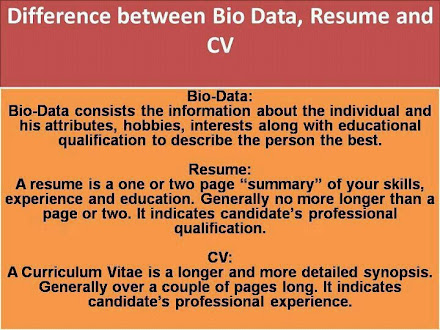
Biodata, Resume and CV

Biodata, Resume and CV

Social Issues Headline Animator

Popular Posts


free counters

My Headlines


Disclaimer:

This blog is designed to provide and encourage access within the social work community to sources of current and comprehensive information. Therefore, Indiansocialworker.blogspot.com itself places no restrictions on the use or distribution of the data contained therein.

Some Indiansocialworker.blogspot.com web pages may provide links to other Internet sites for the convenience of users. Indiansocialworker.blogspot.com is not responsible for the availability or content of these external sites, nor does Indiansocialworker.blogspot.com endorse, warrant, or guarantee the products, services, or information described or offered at these other Internet sites. Users cannot assume that the external sites will abide by the same Privacy Policy to which Indiansocialworker.blogspot.com adheres. It is the responsibility of the user to examine the copyright and licensing restrictions of linked pages and to secure all necessary permissions.

- Indian Social Worker Team